

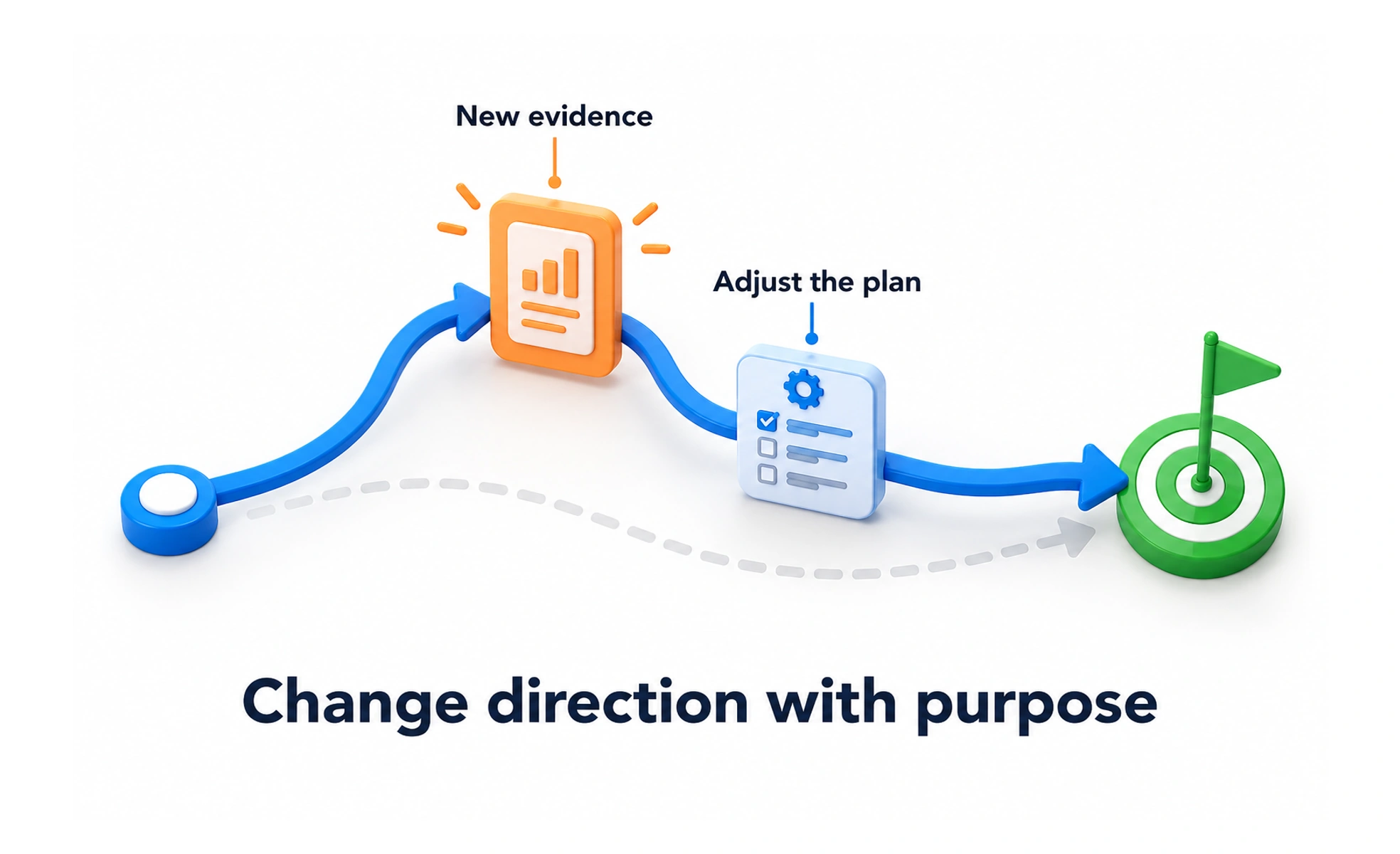
Adaptable teams can revise assumptions and plans without losing sight of the user outcome. They distinguish a meaningful change in evidence from a reaction to every new opinion, and they make the cost of changing direction visible.
A cyclist adjusts balance as the road changes while still steering toward the destination. Adaptability is a similar combination of responsiveness and direction.
Stay open to evidence
New research, support patterns, technical discoveries, or market changes can challenge a plan. Teams should make it safe to surface evidence early and ask what it changes. Revising a decision is a sign of learning when the reason is clear.
Separate flexibility from constant switching
Adaptability does not mean following every request or changing priorities without a reason. A team can evaluate the strength of evidence, user impact, strategic fit, and switching cost before it alters its plan.
Design systems that can evolve
Clear boundaries, reusable patterns, and well-understood data make some changes easier. Avoid overengineering for unknown futures, but notice choices that create high switching costs. Reversibility is especially valuable while uncertainty is high.
Communicate changes clearly
When direction changes, explain what was learned, what will change, and what remains stable. Update plans and affected partners so people are not left working from outdated assumptions. This preserves trust during change.
Frequently asked questions
Key takeaways
- Respond to meaningful evidence without abandoning direction casually.
- Consider user impact and the cost of changing plans.
- Favor reversible decisions while uncertainty is high.
- Explain what changed and why to affected people.