

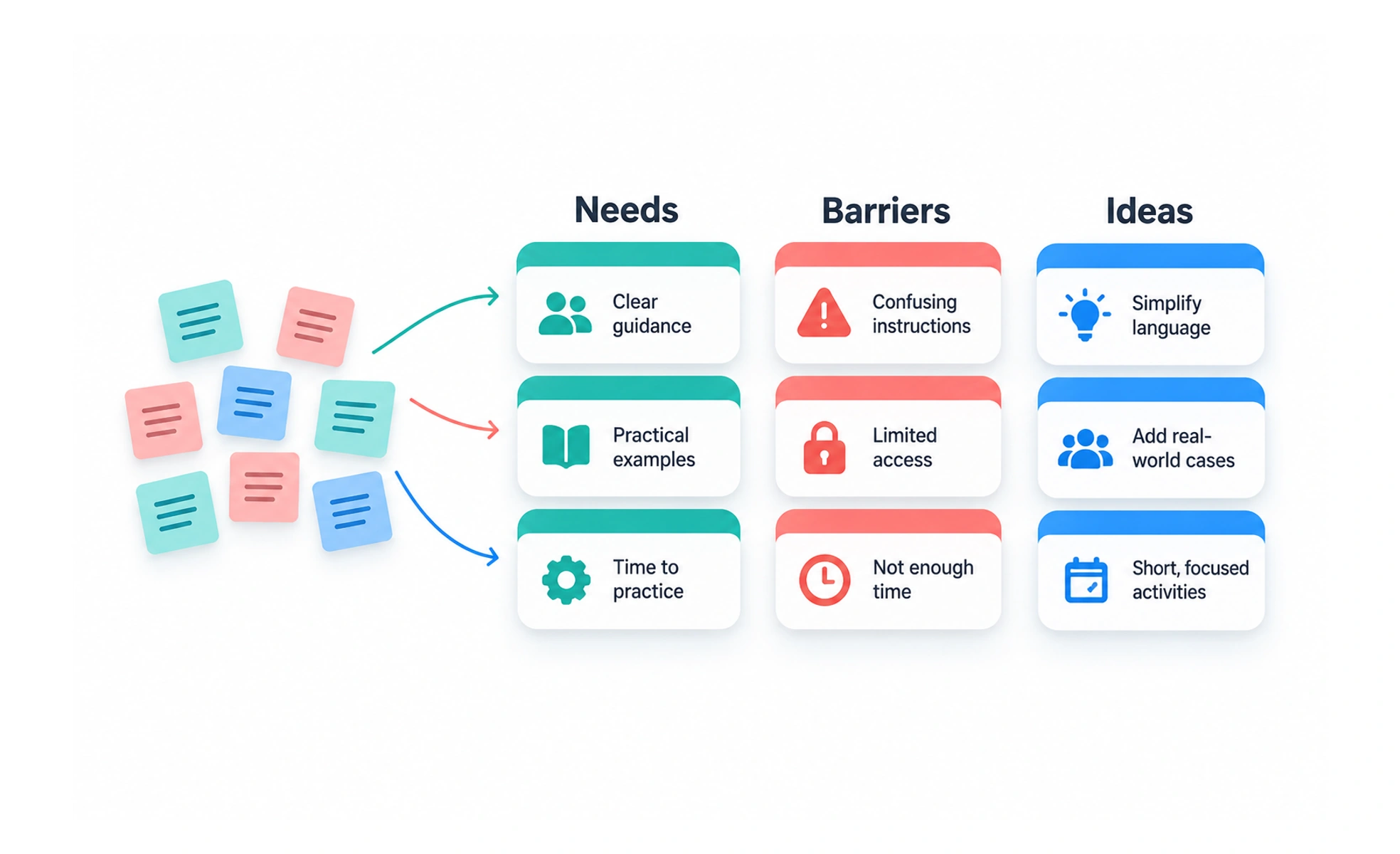
Also called affinity mapping, teams write raw interview quotes and observations on sticky notes and cluster them by similarity. This bottom-up synthesis transforms chaotic research into clear design priorities.
Think of it like this. When sorting hundreds of family photographs, you cluster them into holidays, birthdays and weddings to turn a chaotic shoebox into an organized photo album.
How it works
Affinity synthesis progresses through structured collaborative clustering and consensus building.
- Generating raw data notes transcribes interview quotes, survey feedback and usability observations onto individual sticky notes.
- Silent clustering invites the team to move related notes into adjacent physical or digital groups without speaking.
- Synthesizing category headers assigns concise descriptive labels that capture the core human insight of each thematic group.
- Dot voting and prioritization highlights the most severe customer pain points and promising product opportunities for immediate action.
When to use it
Use affinity diagramming after completing qualitative field studies or discovery sprints.
- Synthesizing user interviews organizes hundreds of unstructured participant transcripts into actionable insight themes.
- Post-usability test debriefs consolidates observations from multiple observers into agreed-upon interface defect clusters.
- Brainstorming workshops clusters divergent creative ideas into structured solution categories during design sprints.
- Customer support ticket triage groups recurring complaint patterns to identify systemic product bugs causing call volume.
Common mistakes
Teams frequently undermine affinity synthesis by forcing notes into pre-existing organizational biases.
- Pre-defining categories upfront, which destroys bottom-up discovery and forces data into familiar corporate buckets.
- Debating placements too early, interrupting silent clustering and allowing loud stakeholders to dominate the board.
- Writing vague header labels like 'Navigation' instead of insightful summaries like 'Users struggle to find nested settings'.
Frequently asked questions
Key takeaways
- Affinity diagramming synthesizes large volumes of unstructured qualitative data into thematic groups.
- Bottom-up clustering lets natural themes emerge from the data rather than imposing preconceived ideas.
- Silent clustering encourages equal participation and prevents dominant personalities from biasing synthesis.
- Write action-oriented theme headers that clearly state the underlying human problem or pattern.