

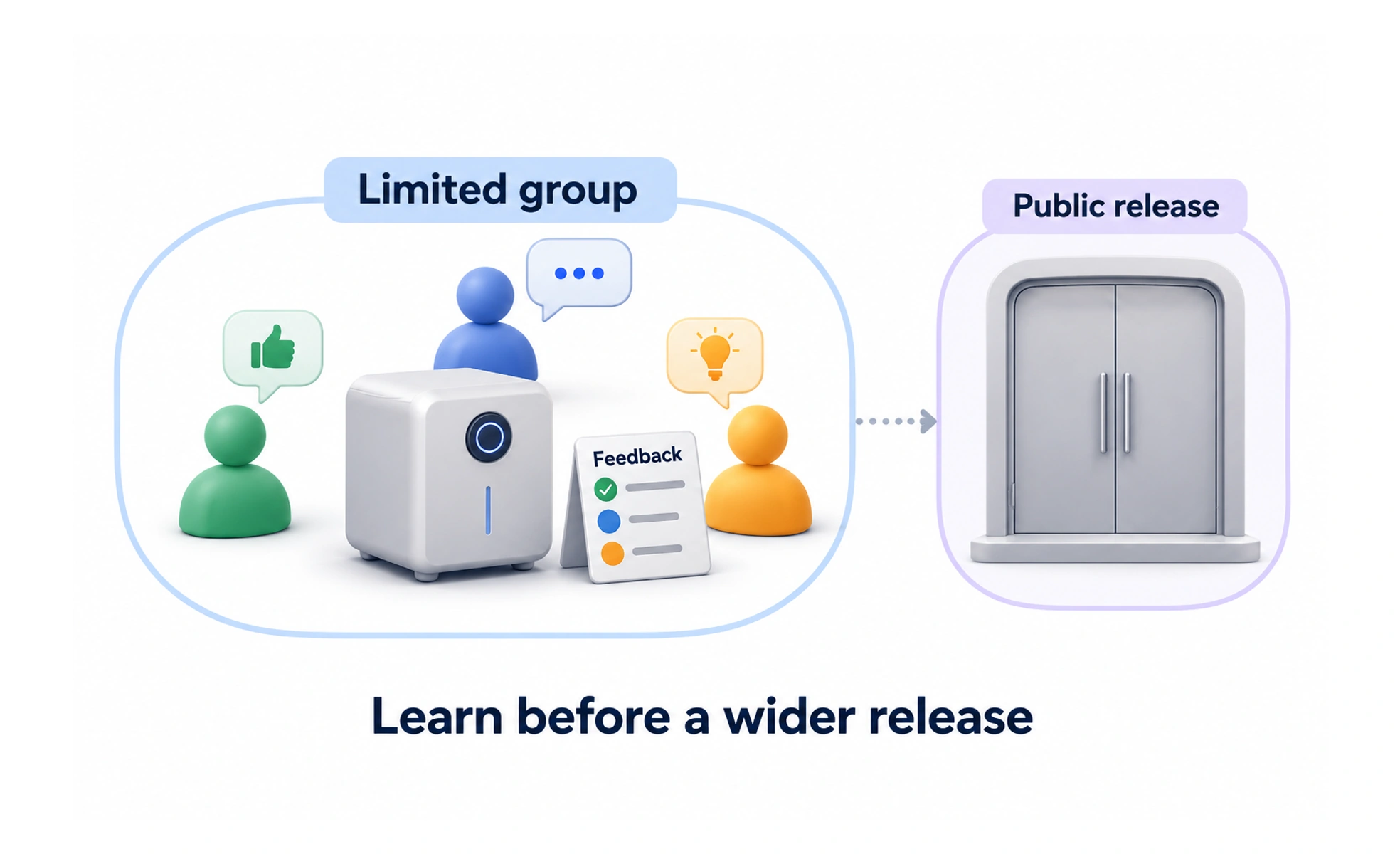
Alpha testing helps teams find serious usability, functional, and operational problems while the product is still changing. The exact meaning of “alpha” differs across organizations, so a team should define its audience, scope, and readiness criteria.
A restaurant may invite a small group to try a new menu before opening it to everyone. Early feedback can reveal missing ingredients or confusing service steps, while the limited audience makes problems easier to contain.
Set boundaries before inviting testers
Define which features are included, who can access the build, what data is safe to use, and where people should report issues. Early products may be incomplete or unstable. Clear boundaries prevent testers from relying on behavior that is not ready.
Recruit people who can expose useful gaps
Employees can identify technical and workflow problems, but they may know too much about the product. Include intended users when practical, especially when the goal is to understand real tasks or language. Different participant groups answer different questions.
Triage findings by risk
Record reproducible issues and distinguish blockers from suggestions. Data loss, privacy problems, and unsafe actions need different attention from minor visual polish. Teams should decide who owns fixes and what must be resolved before expanding access.
Define the next release decision
An alpha result does not automatically mean a product is ready for beta or public release. Review the original goals, unresolved risks, and operational support needs. Document what was learned and what remains unknown.
Frequently asked questions
Key takeaways
- Define alpha scope, access, safety, and reporting rules.
- Use participants appropriate to the questions being asked.
- Prioritize critical risks separately from polish feedback.
- Base expansion decisions on explicit readiness criteria.