

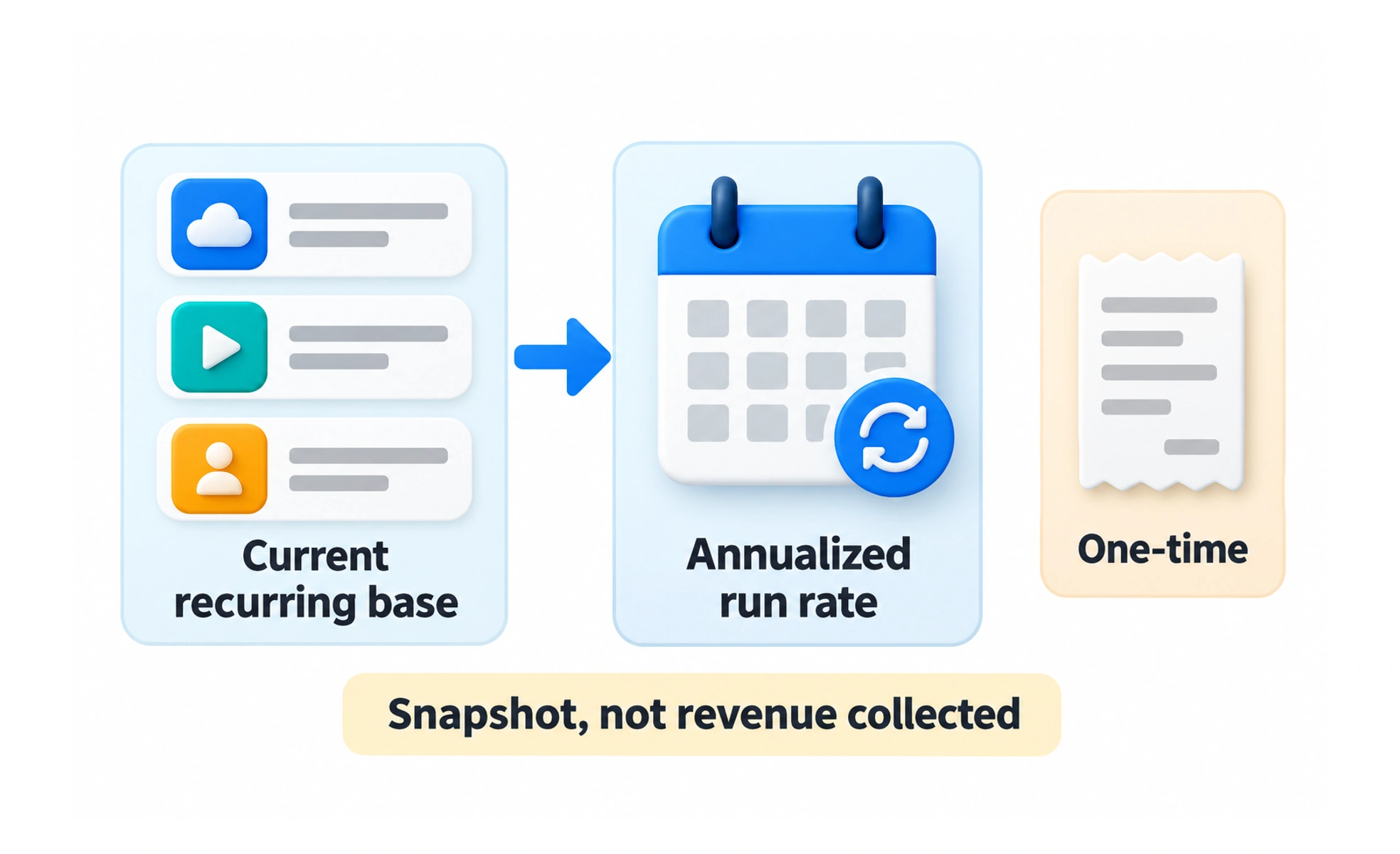
Annual recurring revenue is an annualized measure of recurring subscription revenue at a defined point in time. It describes the recurring run rate rather than all revenue collected or recognized during a year.
A monthly rent can be expressed as a yearly rate, but that rate does not prove the tenant has already paid or will stay for the entire year.
Define the recurring scope
State which active subscriptions, discounts, and recurring charges are included. Separate one-time setup fees and unrelated sales. Usage-based or changing contracts may need specific rules, so the name alone is not enough to make two organizations’ ARR figures comparable.
Distinguish a run rate from accounting results
Under consistent definitions, annualizing monthly recurring revenue uses twelve times MRR. This is a normalized view at a point in time, not a guarantee about future renewals. It also differs from cash received and financial-statement revenue recognized over a period.
Explain changes in the total
Track new recurring business, expansion, contraction, and churn so a headline figure does not hide important movements. Record the measurement date and exchange-rate approach when currencies differ. Sudden changes may reflect billing configuration or data corrections rather than customer behavior.
Example: annual and monthly plans
A service with both annual and monthly subscriptions can normalize them to a shared recurring basis. It should explain how cancellations, trials, and discounts are treated. Stakeholders can then understand the figure without assuming every listed amount is cash currently available to spend.
Frequently asked questions
Key takeaways
- Define included recurring charges and adjustments.
- Treat ARR as an annualized run rate.
- Keep it distinct from cash and recognized revenue.
- Explain movements and measurement rules.