

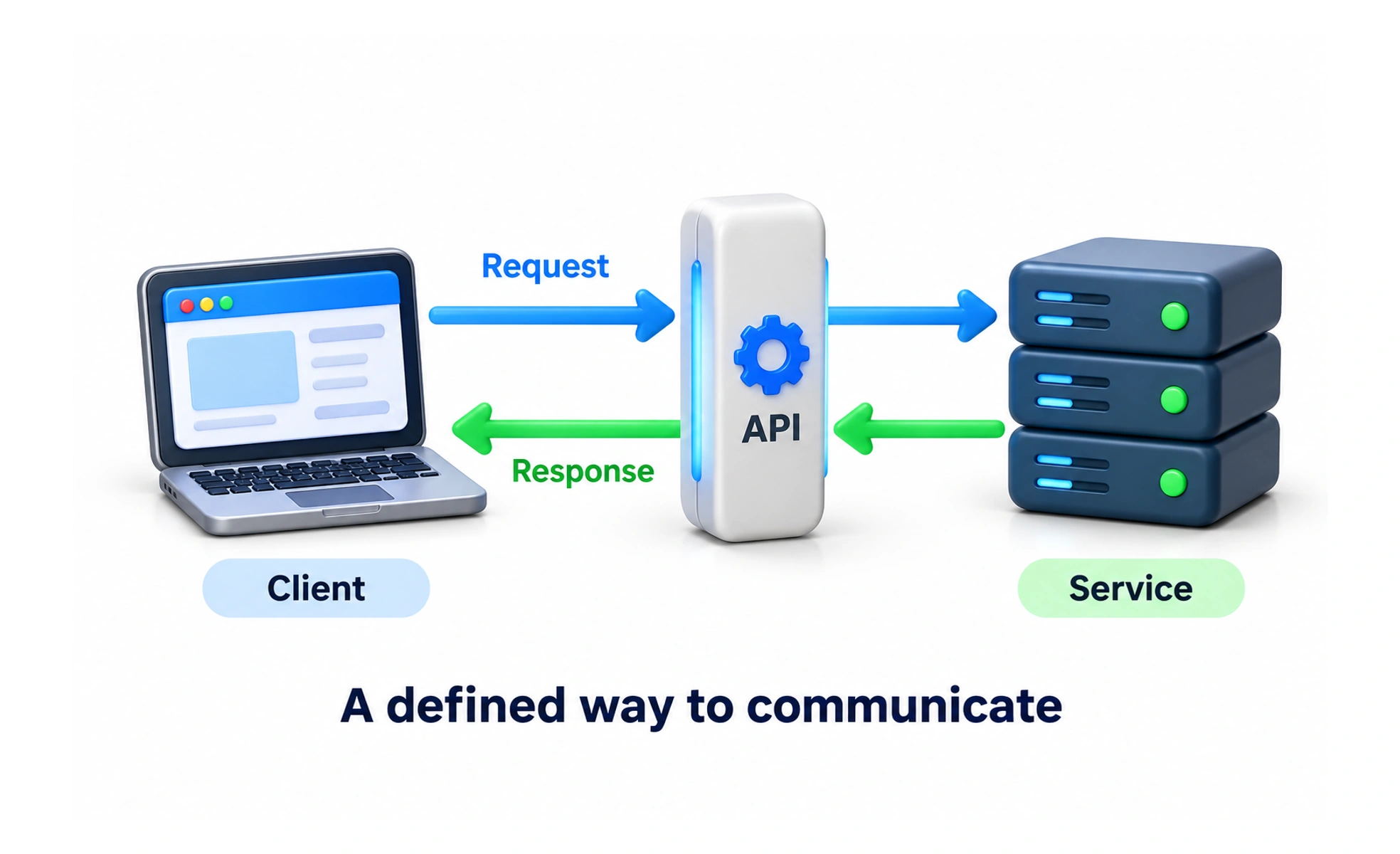
An API is a defined way for software components to request capabilities or exchange information. Its contract describes what can be requested, the expected inputs, and how results or failures are communicated.
A restaurant menu describes what can be ordered without exposing every kitchen operation. An API similarly offers a usable interface to capabilities behind it.
Treat the interface as a contract
Define operations, required data, result shapes, and meaningful error conditions. Clear contracts let different components work together without depending on private implementation details. Documentation should explain important rules such as pagination, ordering, limits, and what a successful response actually confirms.
Connect the contract to user states
A screen may need loading, empty, partial, success, and failure behavior based on the API result. Coordinate those states during design rather than assuming every request returns complete data immediately. Do not present missing or failed data as an invented successful result.
Enforce trusted rules
The service should validate input and enforce access and business rules even when a request bypasses the visible interface. Consider repeated requests and interrupted connections for actions that change data. A retry should not accidentally create duplicate payments, follows, or rewards.
Example: saving an article
The interface can show a responsive saved state while a request persists the relationship. The API must associate it with the authenticated account and confirm the result. If the request fails, the interface needs recovery rather than leaving a permanent success indicator for unsaved data.
Frequently asked questions
Key takeaways
- Define inputs, results, and failures clearly.
- Design interface states around real API behavior.
- Enforce permissions and validation in trusted processing.
- Plan retries and compatibility deliberately.