

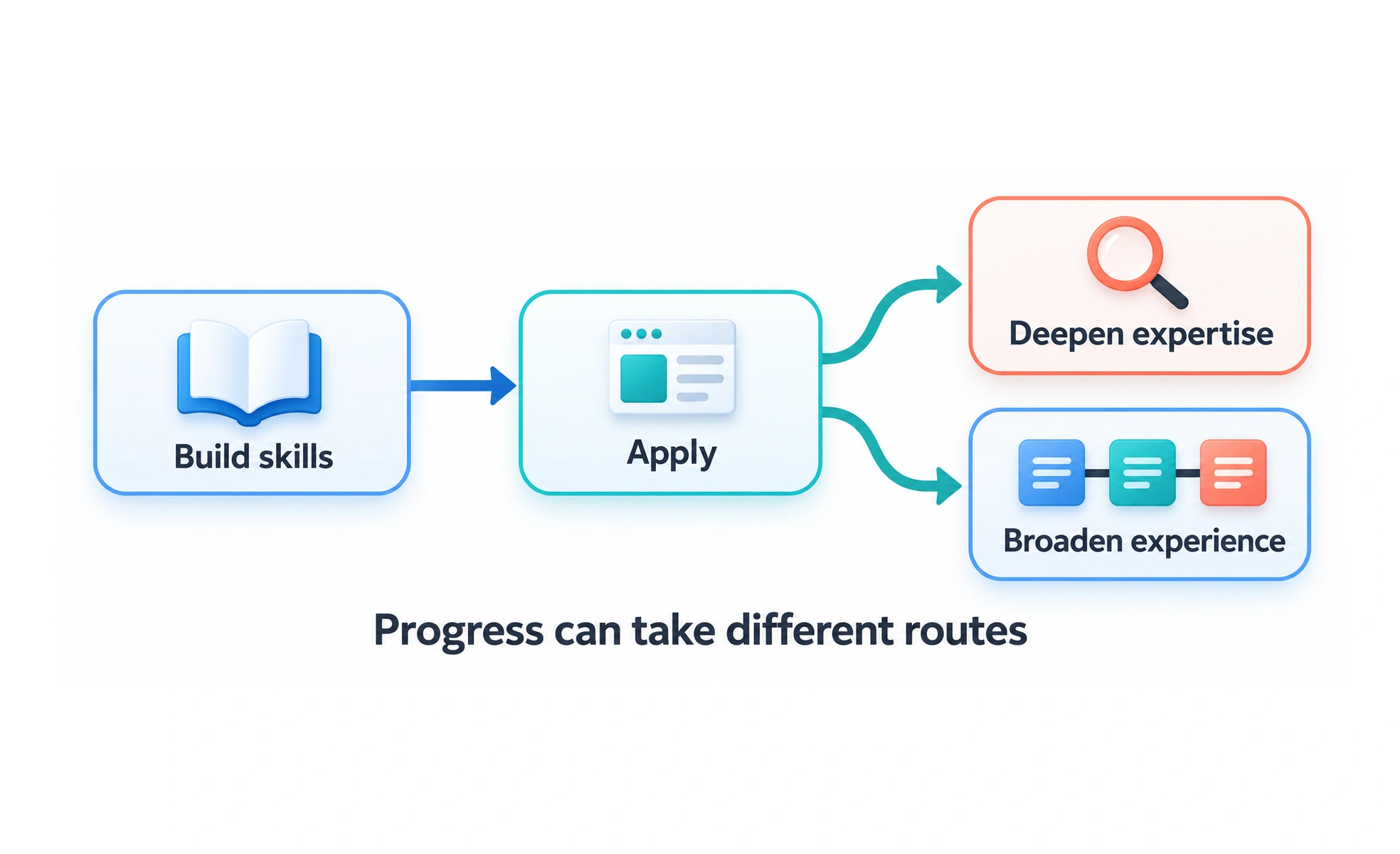
In design and product management, paths branch into individual contributor leadership (Staff or Principal Designer) and managerial leadership (Design Director or VP). Career frameworks clarify promotion criteria and guide lifelong skill mastery.
Think of it as a hiking trail up a mountain with branching routes. You can take the steep technical rock-climbing route or the wide ridge-trail path guiding expedition groups to the summit.
Types
Modern technology organizations structure product design career progression across two parallel leadership tracks.
- Individual contributor (IC) track advances from Junior to Senior, Staff and Principal Designer, focusing on craft and architecture.
- Management track transitions experienced designers into Design Manager, Director, VP and Chief Product Officer roles.
- Specialist paths allow deep domain mastery in user research, design systems, UX writing or interactive motion design.
- Generalist product designer paths blend end-to-end user research, wireframing, UI craft and basic frontend coding.
When to use it
Refer to career frameworks to plan personal professional growth and conduct equitable performance reviews.
- Annual growth and promotion discussions evaluates skill demonstrations against objective company leveling rubrics.
- Mentorship and professional coaching identifies specific competency gaps in business acumen or stakeholder communication.
- Hiring and job description crafting ensures open roles have clear expectations, salary bands and interview assessment criteria.
- Deciding between management and craft helps senior designers choose whether they prefer coaching people or executing complex craft.
Common mistakes
Designers and managers frequently mismanage career progression through poor planning and false assumptions.
- Pushing great designers into management, assuming people management is the only way to earn higher compensation and prestige.
- Focusing solely on visual tool skills, neglecting essential leadership competencies like business strategy and communication.
- Waiting passively for managers to promote you, rather than proactively driving your own growth and documenting business impact.
Frequently asked questions
Key takeaways
- Design career paths offer parallel tracks for technical craft leadership and people management.
- Advancing to senior levels requires mastering business strategy, facilitation and stakeholder communication.
- Management is a career change focused on people coaching, not merely a reward for great visual design.
- Take proactive ownership of your career progression by aligning your daily work with organizational impact.