

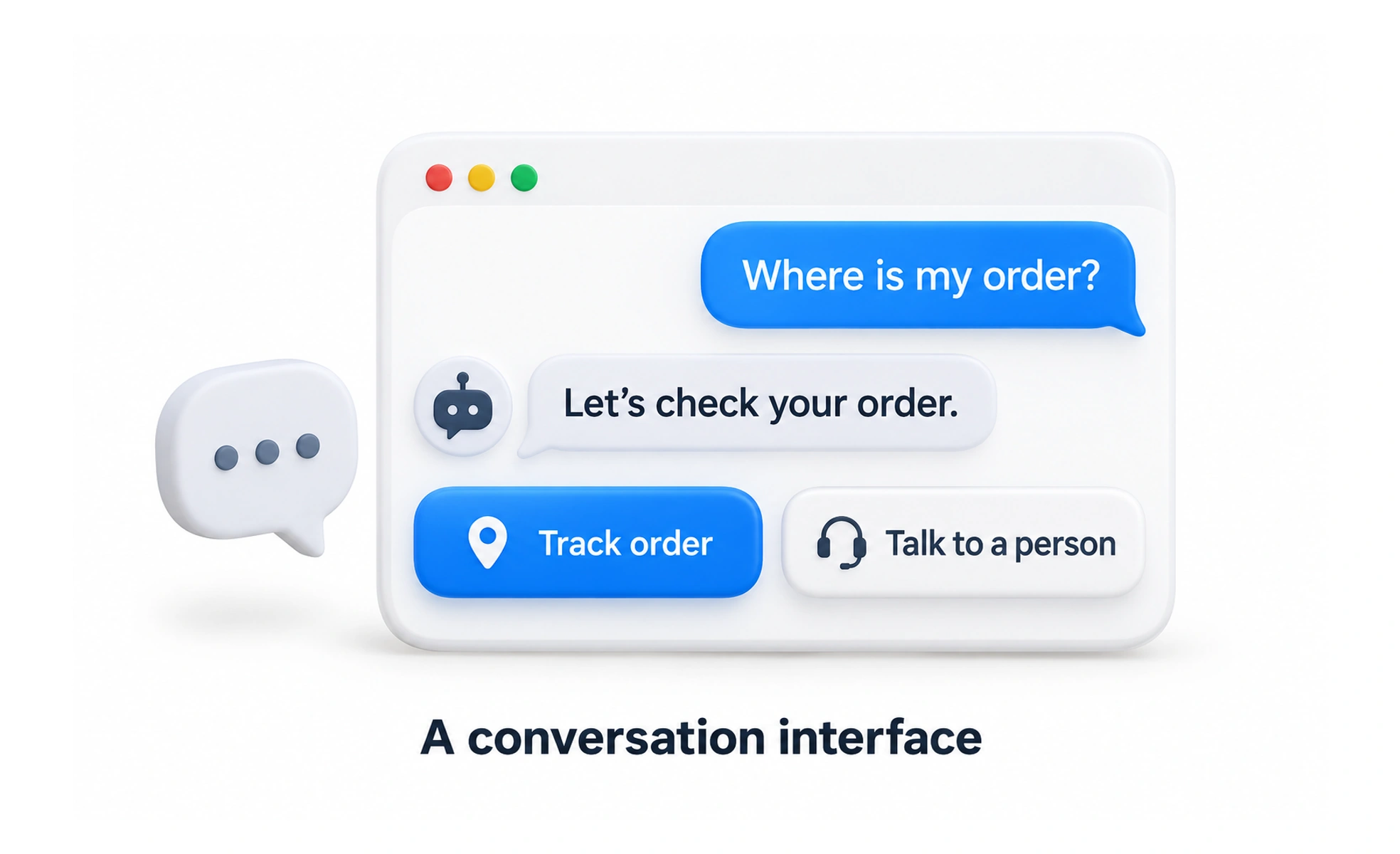
A chatbot is an interface that communicates through conversational messages to answer questions or support tasks. It may use fixed rules, retrieval, language models, or a combination of approaches.
A service desk uses conversation to understand a request and guide the next step. A chatbot offers a digital version whose actual capabilities and limits need to remain clear.
Choose conversation for a reason
A conversational format can help when people describe varied needs or require guided clarification. It may be inefficient for a simple choice that a visible control could handle directly. Compare the task with other interface options instead of adding chat solely because it appears flexible.
Set expectations and maintain context
Explain the bot’s role, supported tasks, and relevant limits. Keep questions focused and allow people to correct earlier information. Avoid pretending to be a human or implying that a generated answer represents a verified action in the underlying service.
Design failure and escalation
Handle unclear requests, unavailable information, and repeated misunderstanding. Offer suitable navigation or human support when conversation cannot resolve the issue. For consequential actions, use trusted checks and an explicit confirmation of what will change before performing the operation.
Example: course support
A bot can help locate a lesson or explain an account setting using approved information. If someone reports lost progress, the service needs real records and an appropriate support path. The bot should not invent a completed lesson or promise a reward it has not confirmed.
Frequently asked questions
Key takeaways
- Use conversation when it helps the task.
- Explain capabilities and limitations clearly.
- Support correction, fallback, and escalation.
- Keep verified actions distinct from generated replies.