

ChatGPT is an OpenAI product that accepts natural-language requests to help with tasks such as explaining, drafting, analyzing, and creating. Its available tools and capabilities depend on the product configuration and access.
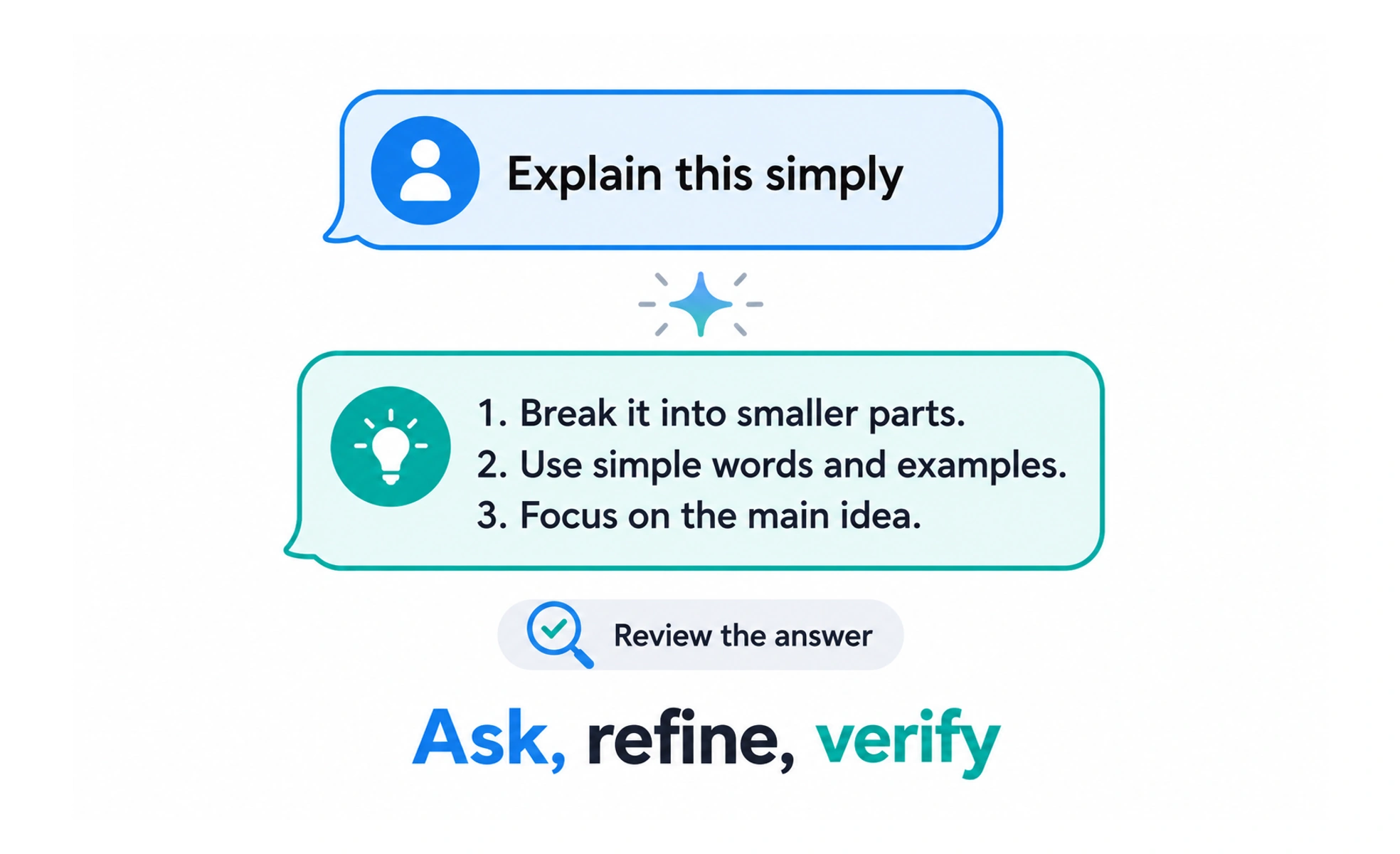
A conversation with an assistant can begin with a rough brief and improve through feedback. ChatGPT supports that iterative style, while its results still need evaluation for the task.
Give the task useful context
Explain the intended result, audience, constraints, and format. Provide relevant source material when the answer depends on a specific product or document. A clear request helps direct the work, but it does not guarantee that every generated detail is correct.
Use it for appropriate design work
Possible tasks include exploring wording, organizing notes, generating alternatives, and asking questions about a proposal. Treat generated ideas as material to evaluate. They do not establish what real users need, and invented quotes or personas should not be presented as research evidence.
Review outputs and data choices
Check important facts, calculations, citations, and implications before using the result. Decide what information is appropriate to share under the organization’s rules and the service settings. Tool access and data controls vary, so avoid assuming every conversation has identical capabilities or handling.
Example: revising an error message
A designer can provide the failure condition and ask for a few clear alternatives. The team should verify that the selected copy matches actual recovery behavior and remains accessible. The assistant can help draft; the product must still do what the words promise.
Frequently asked questions
Key takeaways
- Describe the result, context, and constraints.
- Use generated ideas as candidates to evaluate.
- Verify consequential details and source claims.
- Check available capabilities and appropriate data handling.