

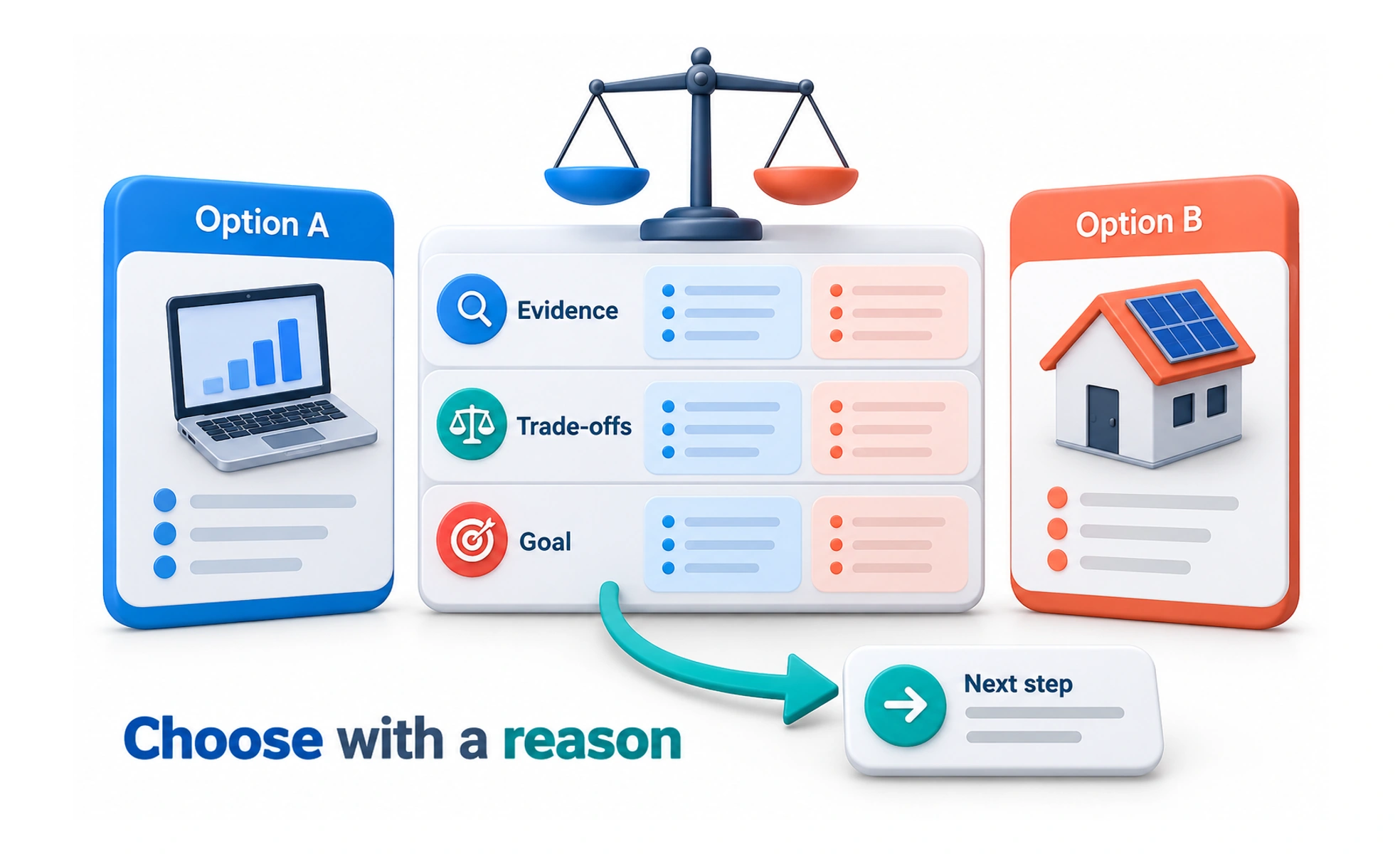
Product teams continuously decide which features to prioritize, which user segments to target and which design trade-offs to accept. Structured frameworks help teams make defensible, transparent choices without falling into analysis paralysis.
Think of it as a courtroom trial where the jury weighs evidence. Rather than acting on gut feelings, jurors listen to witness testimony and examine physical exhibits before delivering a verdict.
How it works
Structured decision making replaces subjective guesswork with transparent, verifiable evaluation criteria.
- Problem framing clarifies the exact decision to be made, its constraints and the cost of being wrong.
- Evidence synthesis combines quantitative telemetry data, user research transcripts and engineering effort estimates.
- Trade-off evaluation weighs competing priorities such as development velocity, visual aesthetic polish and technical scalability.
- Documentation and review records the rationale in decision logs or architecture records to preserve organizational context.
When to use it
Apply structured decision frameworks whenever team consensus stalls or high-stakes trade-offs emerge.
- Feature scope negotiations determines which capabilities are essential for initial MVP launch and which can wait.
- Design system standardizations chooses between conflicting component patterns across diverse web and mobile platforms.
- Technical architecture selections decides whether to build bespoke internal tools or purchase third-party enterprise software.
- Reversible versus irreversible choices moves fast on low-risk decisions while applying deep scrutiny to one-way doors.
Common mistakes
Teams frequently undermine decision quality through cognitive biases and decision fatigue.
- Succumbing to HiPPO influence, deferring automatically to the Highest Paid Person's Opinion over empirical user evidence.
- Paralysis by analysis, endlessly delaying decisions while waiting for complete, unattainable certainty.
- Hiding decision rationale, leaving team members confused about why leadership selected a specific strategic path.
Frequently asked questions
Key takeaways
- Effective decision making balances user research evidence, business goals and technical feasibility.
- Distinguish between reversible two-way doors and permanent one-way door decisions to set appropriate speed.
- Document the rationale behind major decisions to prevent re-litigating settled debates months later.
- Guard against cognitive biases like confirmation bias and deference to executive authority.