

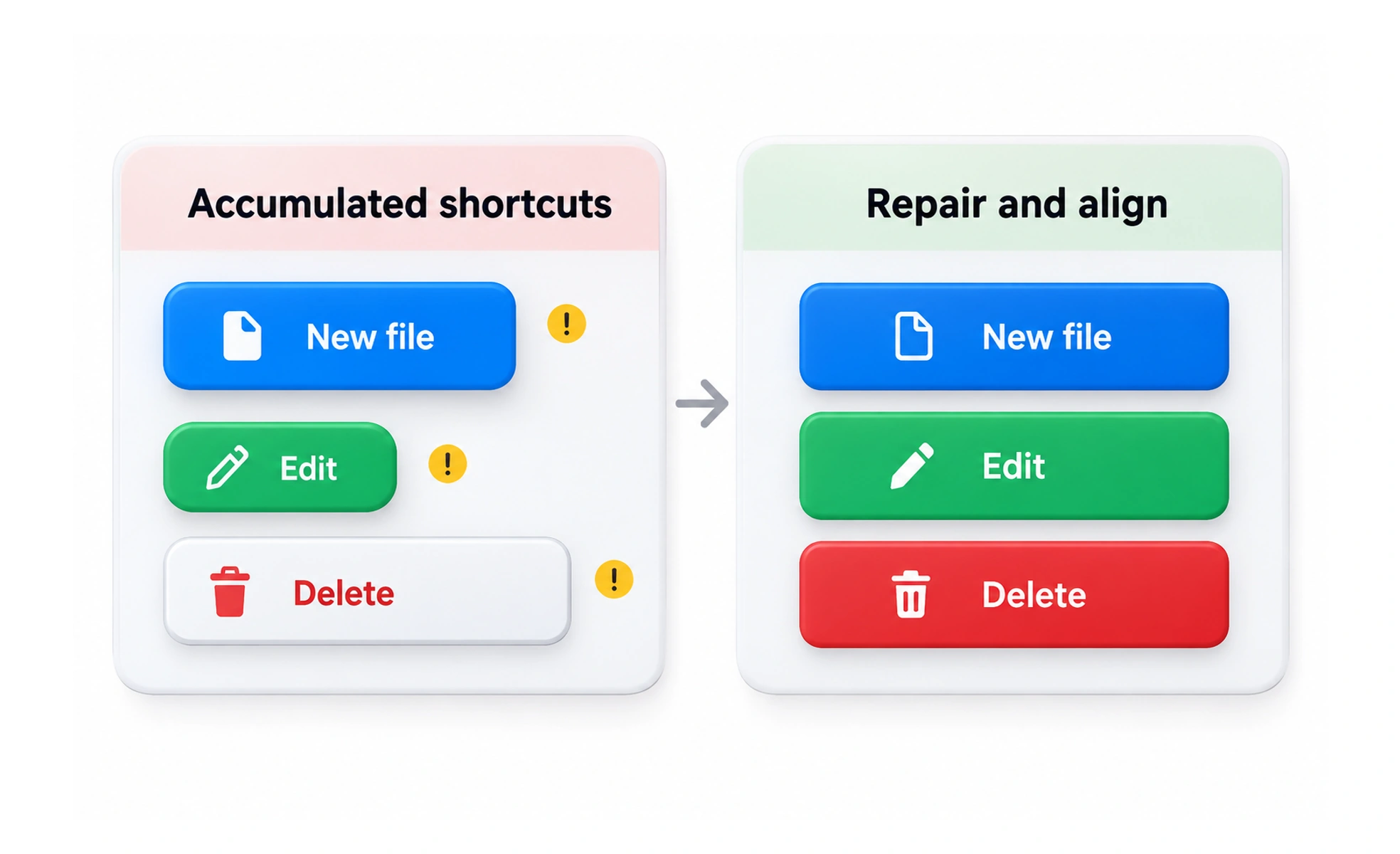
Design debt is the accumulated cost of design shortcuts, unresolved inconsistencies, or outdated decisions. It can make the product harder to use and future changes more expensive.
Temporary repairs can keep a house usable, but leaving them indefinitely may make later repairs harder and the rooms less comfortable.
Identify the actual cost
An inconsistent button, unclear label, or duplicated interaction pattern matters because of its effect on users and contributors. Record the confusion, rework, or risk it causes. Avoid treating every aesthetic preference or unfinished idea as debt without explaining the consequence.
Distinguish deliberate tradeoffs
A team may accept a temporary limitation to learn quickly or meet an important constraint. Make that choice visible, including why it was made and when it should be revisited. Unrecorded shortcuts are harder to manage because future contributors may assume they are intentional standards.
Prioritize repairs with evidence
Compare issues by frequency, severity, affected journeys, and the cost of postponing them. Shared component or token fixes can resolve many repeated problems, but check for legitimate contextual differences before consolidating everything. Verify the resulting experience across relevant states.
Example: inconsistent modal styles
If each modal defines its own colors, spacing, and mobile behavior, improvements require repeated edits and users see uneven interactions. A shared pattern can reduce that cost. The repair should preserve useful behavior, test responsive states, and document when a drawer is appropriate.
Frequently asked questions
Key takeaways
- Describe the user and maintenance cost of each issue.
- Record temporary tradeoffs and revisit conditions.
- Prioritize consequential, recurring problems.
- Repair shared causes while respecting real context differences.