

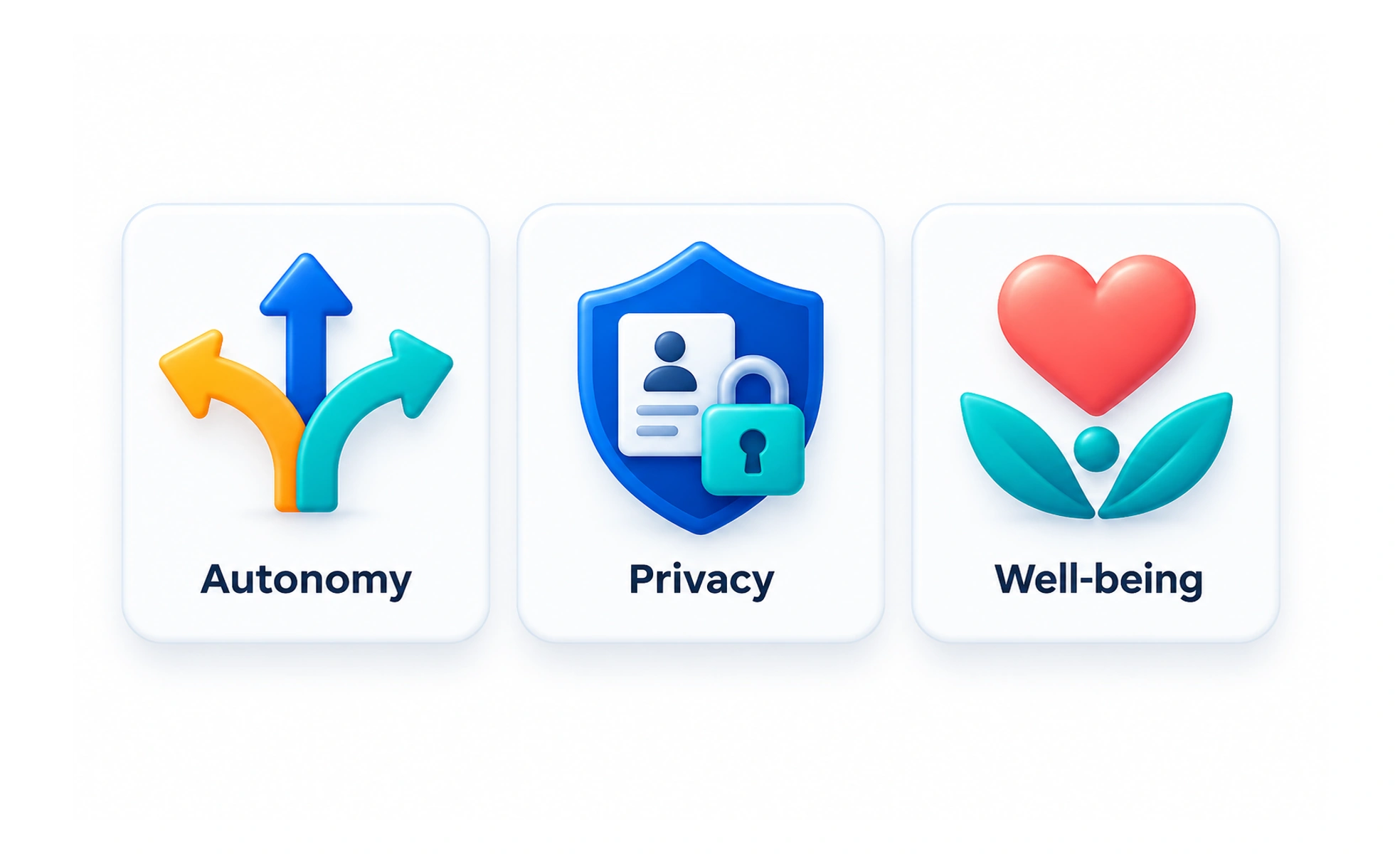
It challenges teams to evaluate not just what can be built, but whether it should be built. Ethical design rejects deceptive manipulation and protects human dignity.
Think of it as the Hippocratic Oath for digital creators. Just as doctors pledge to do no harm, ethical designers pledge never to exploit human psychology for deceptive metrics.
How it works
Design ethics embeds moral inquiry into every stage of the product development lifecycle.
- Honest interaction patterns ensure interfaces never deceive users into buying subscriptions or sharing data.
- Respecting attention avoids addictive reward loops, infinite scroll traps and intrusive notification spam.
- Privacy by default collects only necessary data and makes privacy settings transparent and accessible.
- Inclusive accessibility ensures people with diverse physical and cognitive abilities are never excluded.
How to spot it
You can detect ethical failures through distinct dark patterns and coercive user flows.
- Roach motels make signing up effortless with one click but require frustrating phone calls to cancel.
- Confirmshaming uses guilt-inducing button copy like No thanks, I hate saving money to coerce choices.
- Sneak into basket silently adds warranties, donations or insurance items into checkout summaries.
- Disguised ads mimic interface navigation buttons to trick users into clicking sponsored external links.
Trade-offs
Practicing ethical design sometimes creates tension with aggressive short-term business targets.
- Lower short-term vanity metrics may occur when eliminating coercive clickbait or deceptive upsells.
- Higher engineering investment is required to build comprehensive data deletion and export tools.
- Greater customer loyalty and long-term brand trust ultimately outweigh the quick gains of dark patterns.
Frequently asked questions
Key takeaways
- Design ethics ensures digital products respect human autonomy, dignity and privacy.
- Rejecting dark patterns protects users from manipulative trickery and forced continuity.
- Ethical design prioritizes long-term brand trust and customer loyalty over deceptive quick wins.
- Accessibility and transparent privacy controls are fundamental human rights in software.