

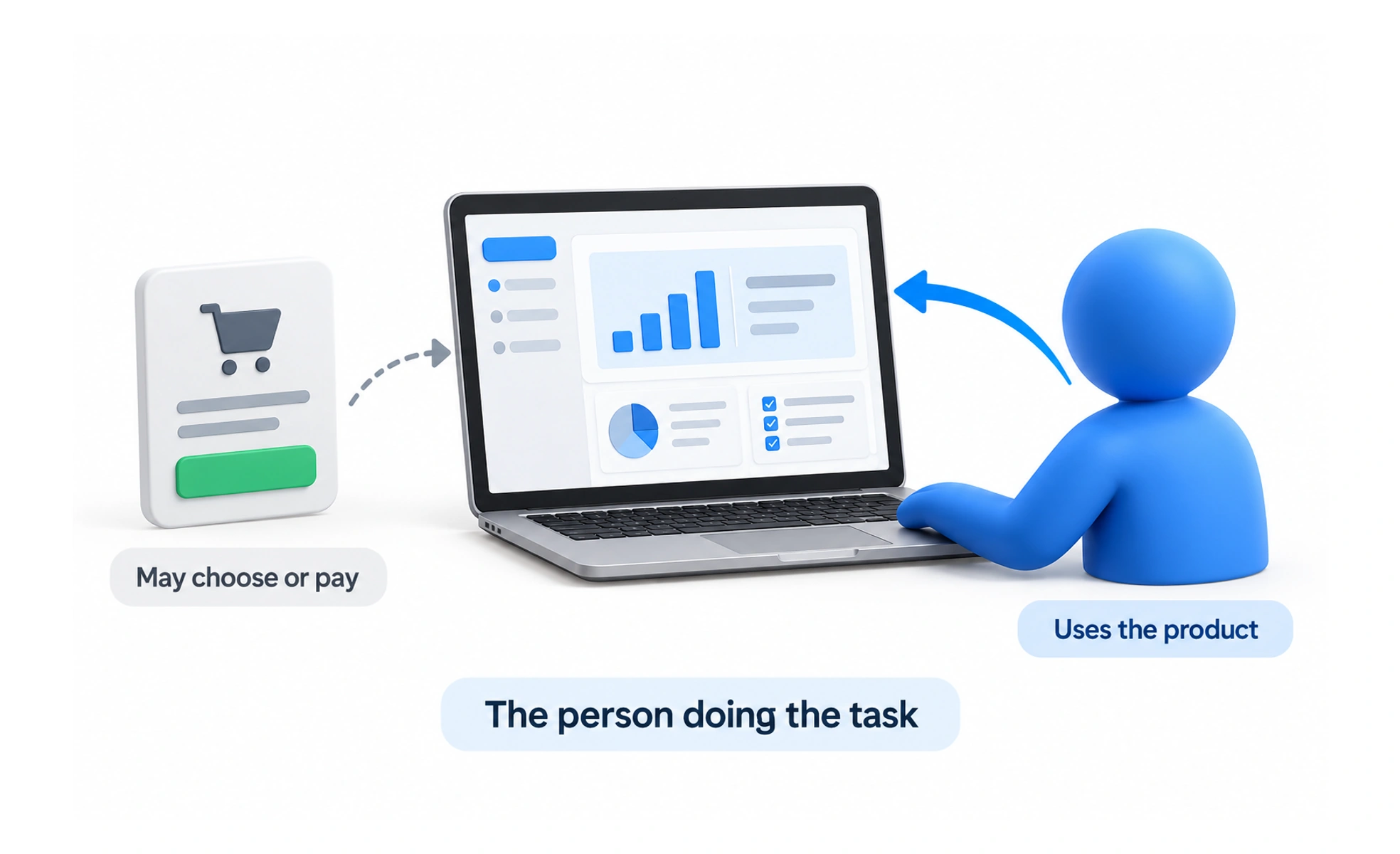
The end user interacts with the finished experience. In organizations, the buyer, administrator, approver, and day-to-day user may be different people, each with distinct goals and constraints.
A school may purchase a learning platform, an administrator may configure it, and a student may use it each day. Designing only for the purchaser can leave the actual learner’s needs unmet.
Distinguish users from other stakeholders
A product can serve buyers, administrators, operators, and end users at the same time. These groups may influence one another but do not share every need. Mapping their responsibilities helps teams avoid treating the loudest stakeholder as the only user.
Study real contexts of use
People use products under constraints such as limited time, shared devices, low bandwidth, physical environments, or assistive technology. Understanding context can reveal needs that demographic labels alone do not explain.
Include users in product decisions
Research, feedback channels, usability evaluation, and support themes can bring end-user evidence into planning. Participation should be accessible and voluntary, and teams should be transparent about how feedback can influence the product.
Avoid treating a user as a single persona
One person can have different goals across tasks, and people within a segment can vary greatly. A useful model captures meaningful behaviors and contexts without pretending it represents every individual.
Frequently asked questions
Key takeaways
- Separate direct users from buyers and administrators.
- Understand the context in which people use the product.
- Bring end-user evidence into decisions through respectful research.
- Use personas carefully and account for variation among people.