

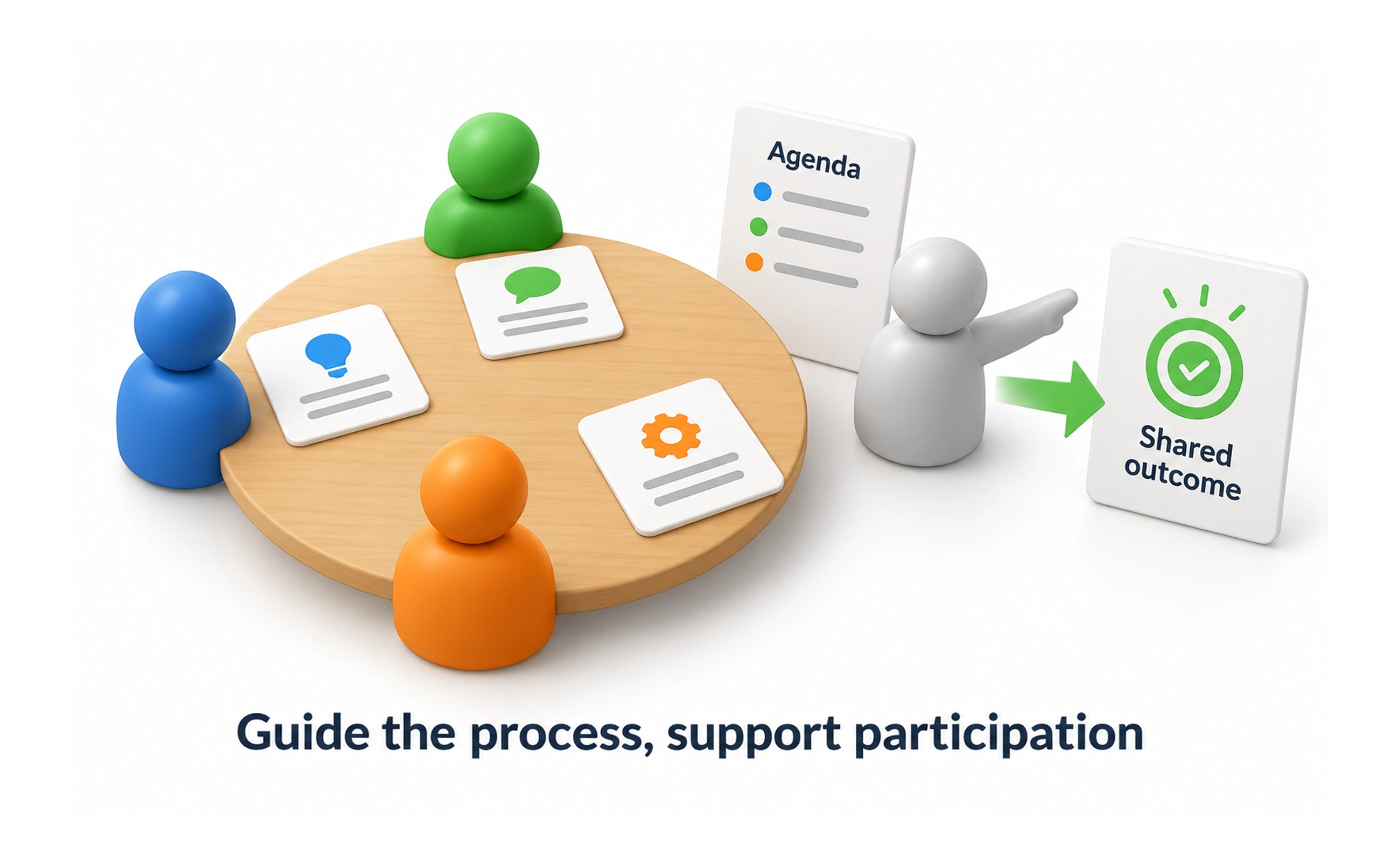
A facilitator remains neutral regarding content while directing the agenda, timekeeping, participation and consensus techniques. Skilled facilitation prevents loud voices from dominating team workshops.
Think of it as a sports referee on a playing field. The referee does not kick the ball or score goals, but enforces fair play, maintains game momentum and resolves disputes calmly.
How it works
Facilitation structures group collaboration through deliberate behavioral and procedural guardrails.
- Agenda and objective design establishes clear workshop goals, activity sequences and timing constraints in advance.
- Equal voice orchestration utilizes silent writing on sticky notes to prevent extroverts from monopolizing discussions.
- Energy and momentum management introduces energizing prompts and timely breaks to sustain high cognitive engagement.
- Synthesis and decision capture summarizes emerging consensus points and assigns clear ownership for post-workshop action items.
When to use it
Deploy skilled facilitation whenever diverse cross-functional teams must solve complex ambiguous problems.
- Design sprint workshops guides multidisciplinary squads through rapid five-day mapping, sketching and prototyping cycles.
- Quarterly team retrospectives creates a safe environment for engineers and designers to discuss interpersonal and process friction.
- Product strategy visioning unifies conflicting executive priorities into a cohesive set of annual strategic themes.
- Cross-functional handoff syncs clarifies shared responsibility between frontend developers and UX designers before sprint kickoffs.
Common mistakes
Novice facilitators often derail collaborative sessions by confusing leadership with personal advocacy.
- Abandoning neutrality, arguing aggressively for personal design preferences rather than drawing ideas out of the group.
- Failing to manage vocal participants, allowing assertive executives to steamroll quieter teammates without intervention.
- Running meetings without tangible deliverables, ending lengthy brainstorming sessions without documented decisions or assigned owners.
Frequently asked questions
Key takeaways
- Facilitation guides teams through structured collaboration while maintaining content neutrality.
- Use silent ideation techniques like sticky notes to ensure equitable participation across all personality types.
- Set clear workshop outcomes upfront so participants understand exactly what success looks like.
- Always close collaborative sessions by documenting agreed action items and assigning clear owners.