

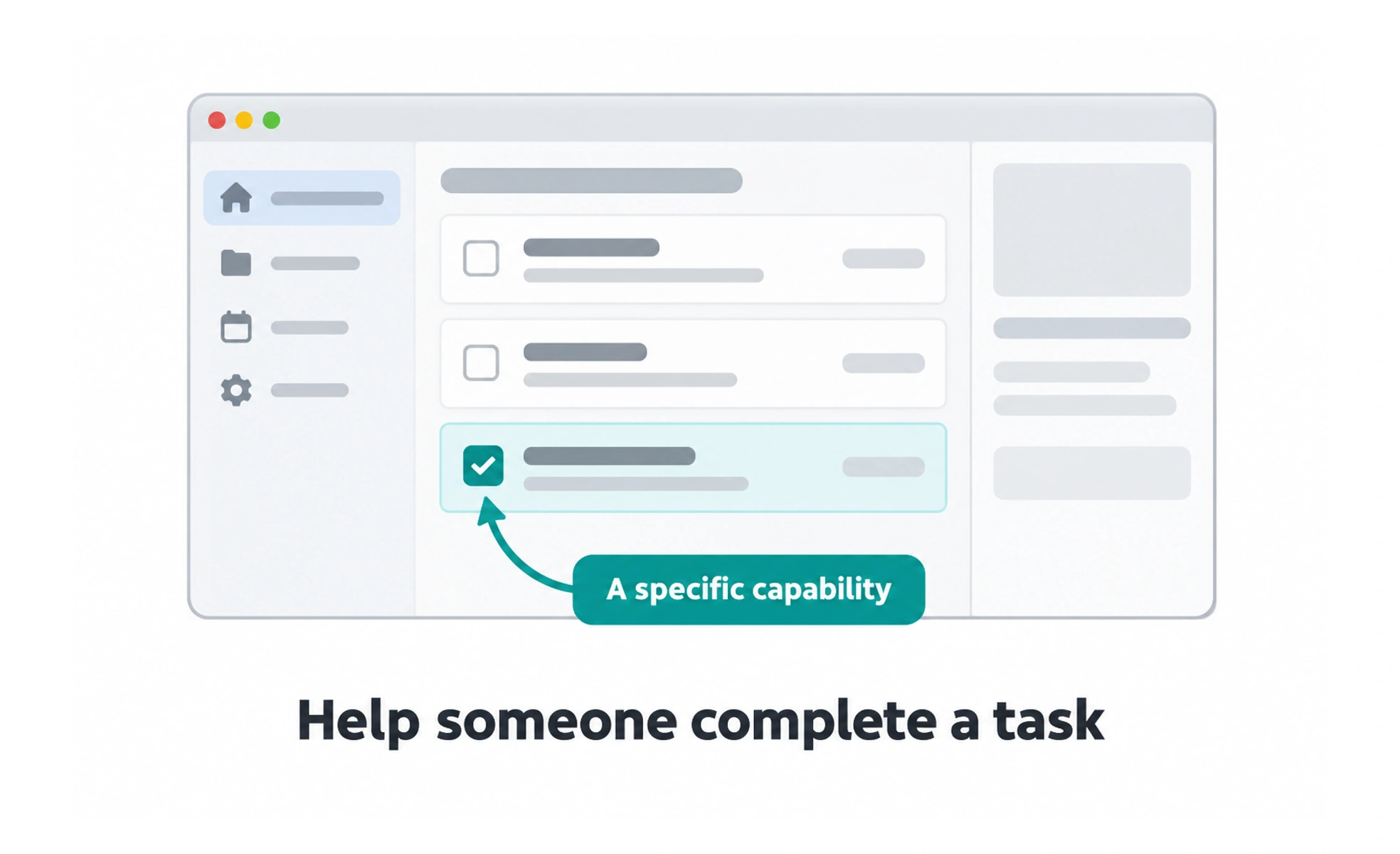
A product feature is a capability that helps someone perform a task or receive a benefit. Its value depends on how well it fits the user’s situation and the wider product experience.
A bicycle’s gears are a capability, while easier climbing is a benefit. The feature matters because of what it enables in a real journey.
Connect capability to a need
Describe who will use the feature, when they need it, and what it helps them achieve. A capability can sound impressive without solving an important problem. Research the situation behind requests so the team can compare different ways to provide the same benefit.
Define the complete behavior
Consider how people discover the capability, use it, and understand its result. Include loading, empty, error, permission, and recovery states where relevant. A feature is not complete simply because its main button works in a demonstration.
Account for ongoing costs
Every capability adds some combination of interface complexity, maintenance, support, and data responsibility. Check how it interacts with existing behavior and whether it remains useful over time. Removing or simplifying an underused capability can sometimes improve the product more than adding another one.
Example: following topics
Following a topic could help learners find relevant material again. The feature includes the control, persistent relationship, followed-topic list, and appropriate recommendations. Evaluate whether those parts help retrieval and discovery rather than treating a growing follow count as sufficient proof of value.
Frequently asked questions
Key takeaways
- Describe the task and benefit behind the capability.
- Design the full set of meaningful states.
- Consider interaction and maintenance costs.
- Evaluate whether use produces the intended benefit.