

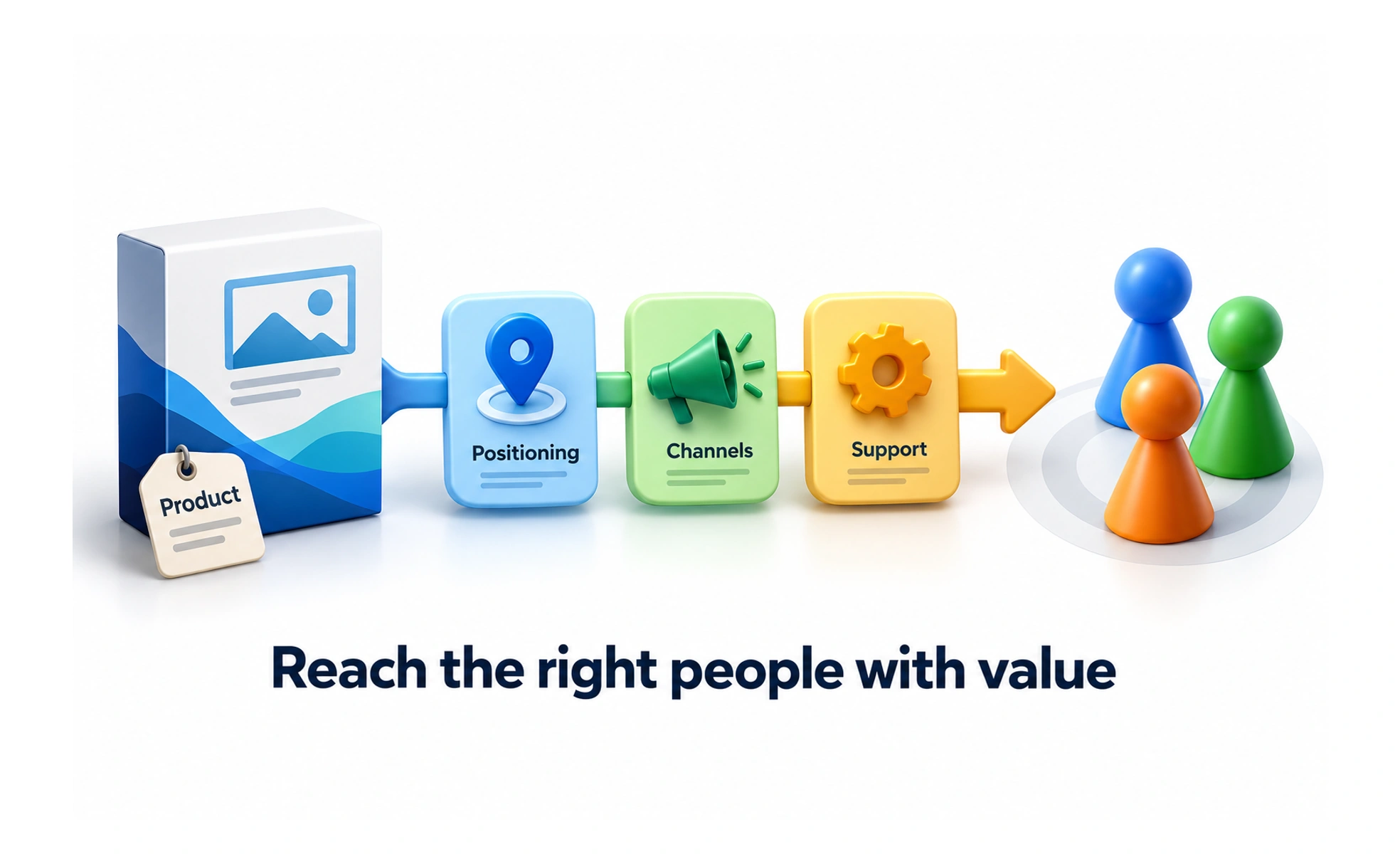
A go-to-market strategy explains how a product will reach a chosen audience and turn interest into sustained customer value. It connects positioning, channels, pricing, sales, and customer support.
Opening a new shop involves more than stocking shelves. The owner must choose whom to serve, how people will find it, and what makes a first visit worthwhile.
Choose the first audience
Start with a segment whose need, buying process, and current alternatives are understood. A focused audience makes messaging and channel decisions more concrete. Distinguish the person using the product from the person approving or paying for it when those roles differ.
Connect message and channel
Explain the product’s value in language the audience recognizes, then choose ways to reach them where they already look for help. A channel’s popularity does not prove that it will reach the right people at a useful moment. Test the fit between message, audience, and channel.
Plan beyond acquisition
Consider evaluation, purchase, onboarding, support, and continued use. A campaign can generate interest that the product or team is not ready to serve. Define responsibilities and check that promises made in marketing can be delivered consistently after signup.
Example: a tool for design agencies
A small agency tool might begin with demonstrations in relevant professional communities and a trial focused on one client workflow. Track whether qualified teams reach that workflow and keep using it. Use the findings to refine the offer before increasing acquisition spending or expanding to unrelated segments.
Frequently asked questions
Key takeaways
- Start with a clearly defined audience and buying situation.
- Test the fit between message and channel.
- Prepare the full experience from evaluation to support.
- Measure sustained value as well as initial interest.