

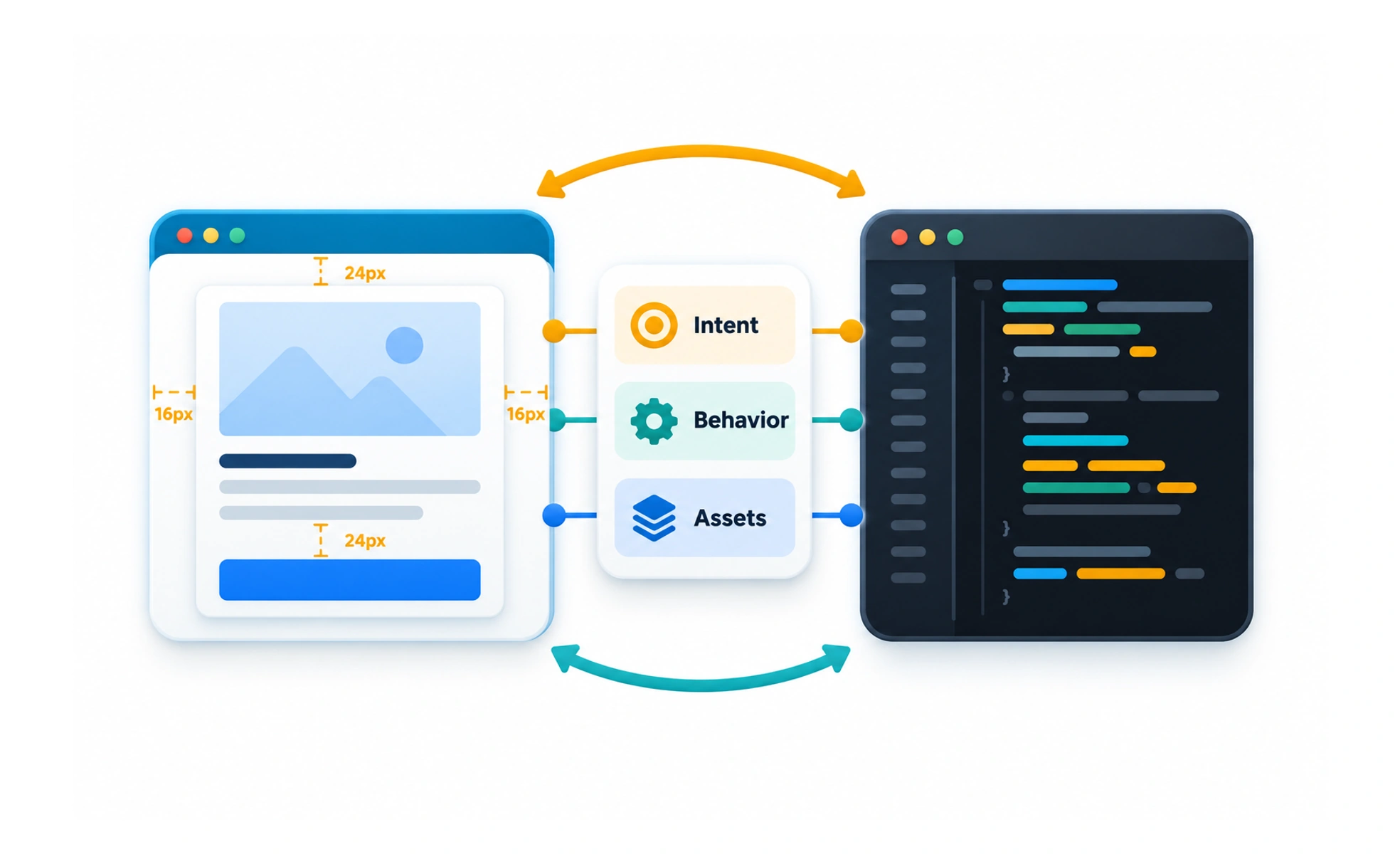
A handoff transfers the understanding needed for another person or team to continue work. In product development, it should communicate intent, behavior, decisions, and unresolved questions alongside visual details.
Passing a relay baton works only when both runners understand the exchange. Product work also needs coordination between the person passing knowledge and the person receiving it.
Describe states and rules
Include responsive behavior, interactions, content rules, accessibility needs, and important loading or error states. Link to shared components and tokens so details are reusable. Mark unfinished decisions clearly rather than leaving someone to interpret missing information as permission to invent it.
Keep collaboration active
A handoff should support a continuing conversation. Review the approach with the people implementing it before every detail is fixed, and make questions easy to raise. Joint review of the built experience can reveal gaps that neither a design file nor a code review catches alone.
Example: a searchable dropdown
The handoff should explain filtering, keyboard navigation, empty results, selected state, and how the menu fits a small viewport. It should also show what happens when saving fails. Those details let the implementer build a coherent interaction rather than only reproduce its closed appearance.
Frequently asked questions
Key takeaways
- Transfer intent and evidence alongside appearance.
- Document states, rules, and open questions.
- Use shared components and tokens.
- Review implementation collaboratively.