

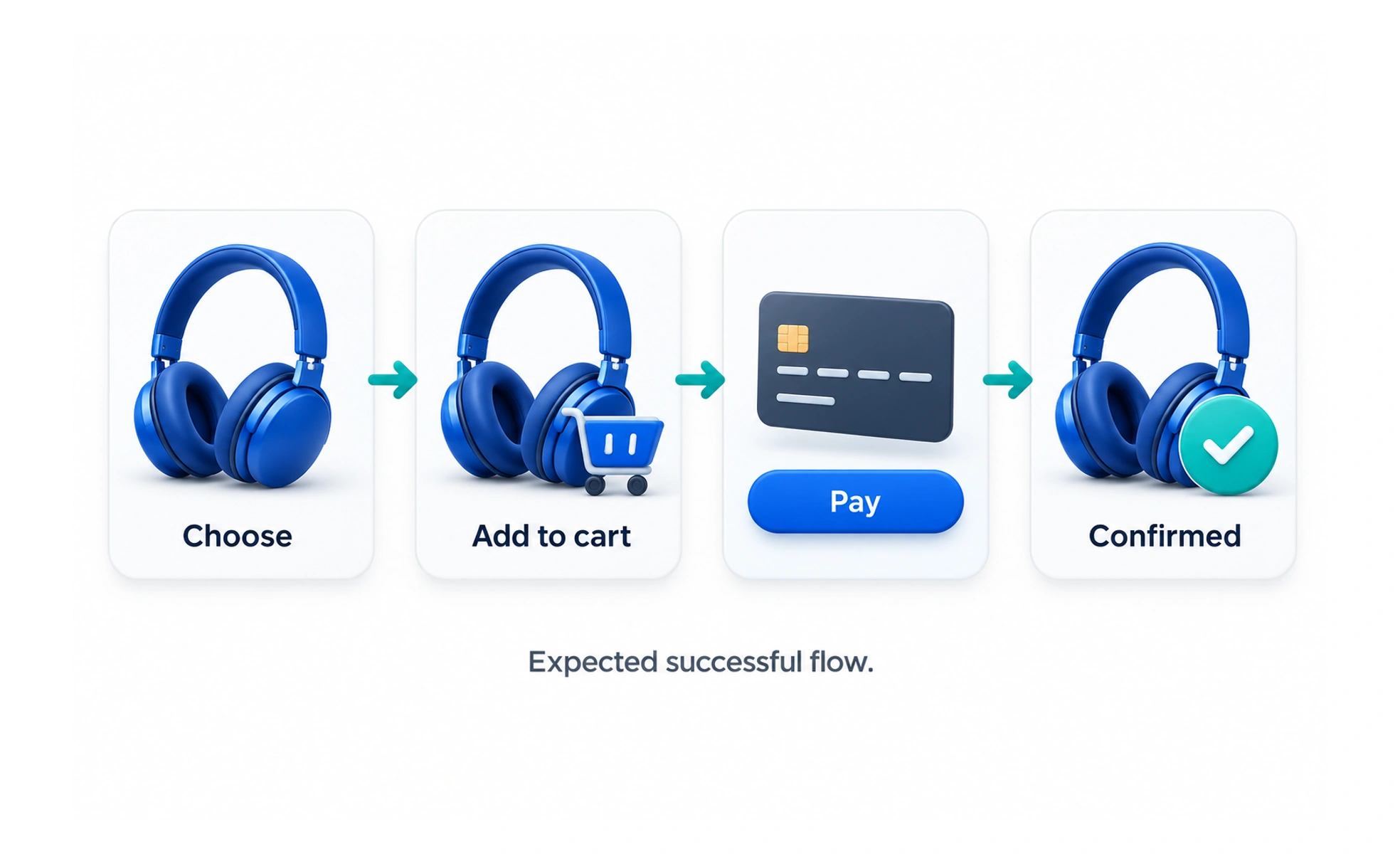
The happy path is the expected sequence through a task when required conditions are met and nothing goes wrong. It helps explain the core experience before considering failures and alternative situations.
A route description can begin with an ordinary journey on an open road. A useful travel plan also considers what happens if a turn is missed or the road closes.
Describe a meaningful successful task
Identify the person, starting situation, and intended result. Show the steps that connect them when the expected information and services are available. A happy path should describe a useful outcome, such as a saved profile change, rather than ending at a button click whose result is unknown.
Make its assumptions visible
The normal flow may assume a valid session, available stock, supported input, or a successful network request. State the conditions that matter. Otherwise the team may mistake a carefully prepared demonstration for evidence that the complete feature works in ordinary use.
Add important alternatives and failures
After clarifying the core flow, examine interruptions, invalid input, empty data, denied access, and recovery. Prioritize by likelihood and consequence. A rare but destructive failure can deserve more attention than a minor variation in the successful flow.
Example: following a topic
A signed-in learner selects Follow, the relationship saves, and the topic appears after reload. That is a useful happy path. Related checks include a failed request, a repeated action, and an account switch so the interface never presents an unsaved or another person’s follow as confirmed.
Frequently asked questions
Key takeaways
- Define success as a completed useful outcome.
- Record the assumptions behind the expected flow.
- Extend coverage to meaningful alternatives and failures.
- Check persistence as well as immediate appearance.