

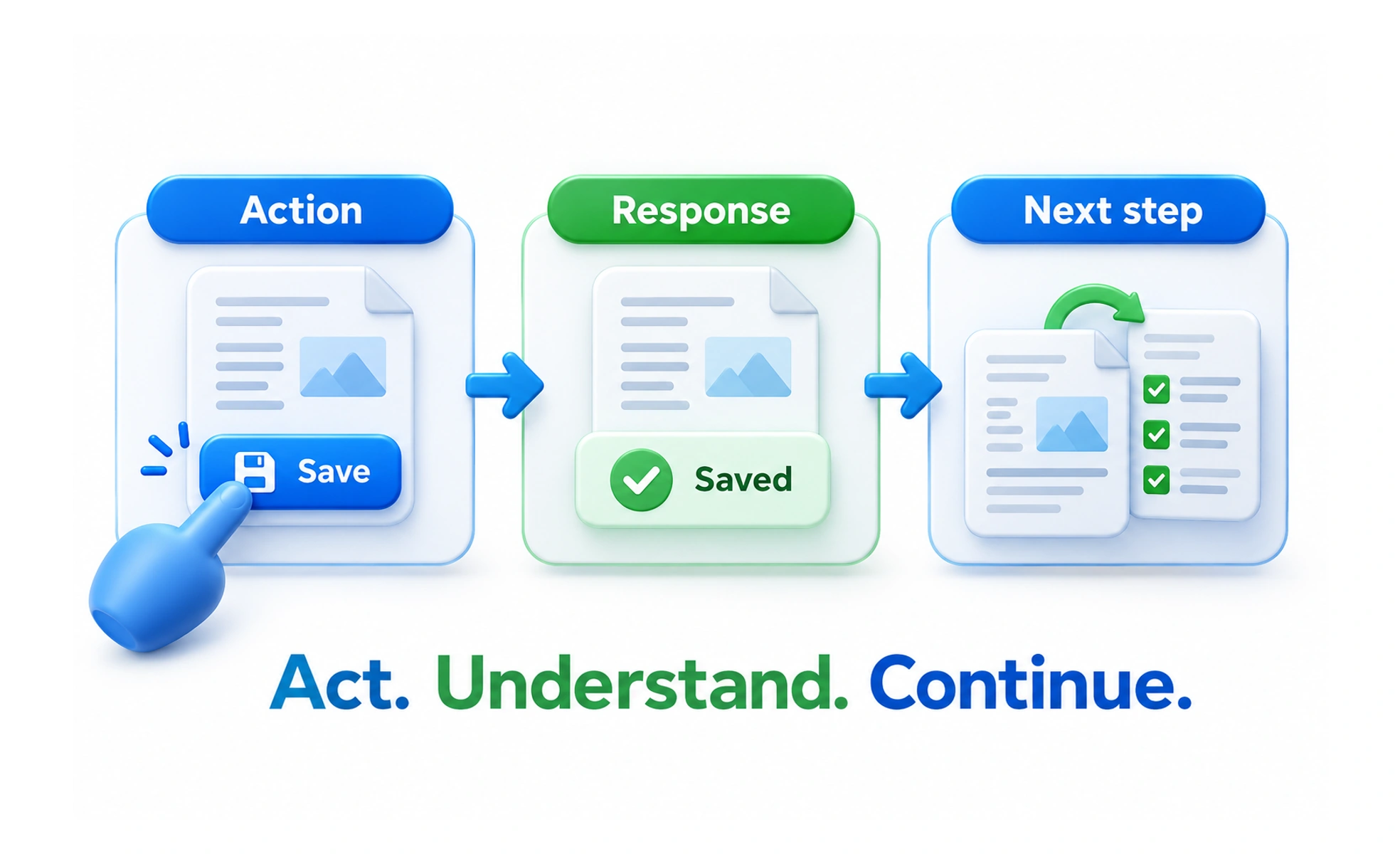
Clicking a button is only part of the interaction. The person first needs to recognize an available action and then understand its result. A useful response closes that loop, whether the action succeeds, needs more time or cannot be completed.
Look at the complete exchange
Consider what the person is trying to achieve, how they express that intent and what feedback they receive. The action could be a tap, keystroke, spoken request or movement.
The system response might change content, move focus, play a sound or show a status. Feedback should use channels appropriate to the task and access needs. A color change alone may leave some people unsure what happened.
Connect actions with visible results
A control’s label sets an expectation. If a button says “Save,” people expect their changes to remain after leaving the page. Showing a success message before the save is confirmed creates a false result.
For a quick, reversible action, the interface can update immediately while the request runs. It still needs a pending state and a way to recover if the request fails. The design must account for both the visible change and the real system outcome.
Example: following a topic
A learner selects Follow. The button changes to Following, and the request saves the preference. If it fails, the interface restores the previous state and explains what happened.
A second tap should have a predictable effect. The learner should not accidentally create several follow records or need to refresh to discover whether anything was saved.
Keep boundaries understandable
Think about interruptions and repeated actions. Can someone cancel? Does moving away dismiss a temporary panel? Where does keyboard focus go when a dialog closes?
These details make an interaction feel coherent. Smooth motion can help show continuity, but it cannot compensate for missing feedback or a state that contradicts the saved data.
Frequently asked questions
Key takeaways
- An interaction includes intent, action and response.
- Feedback should explain the actual result.
- Immediate updates need a clear failure-recovery path.
- Check repeated actions, interruptions and focus behavior.