

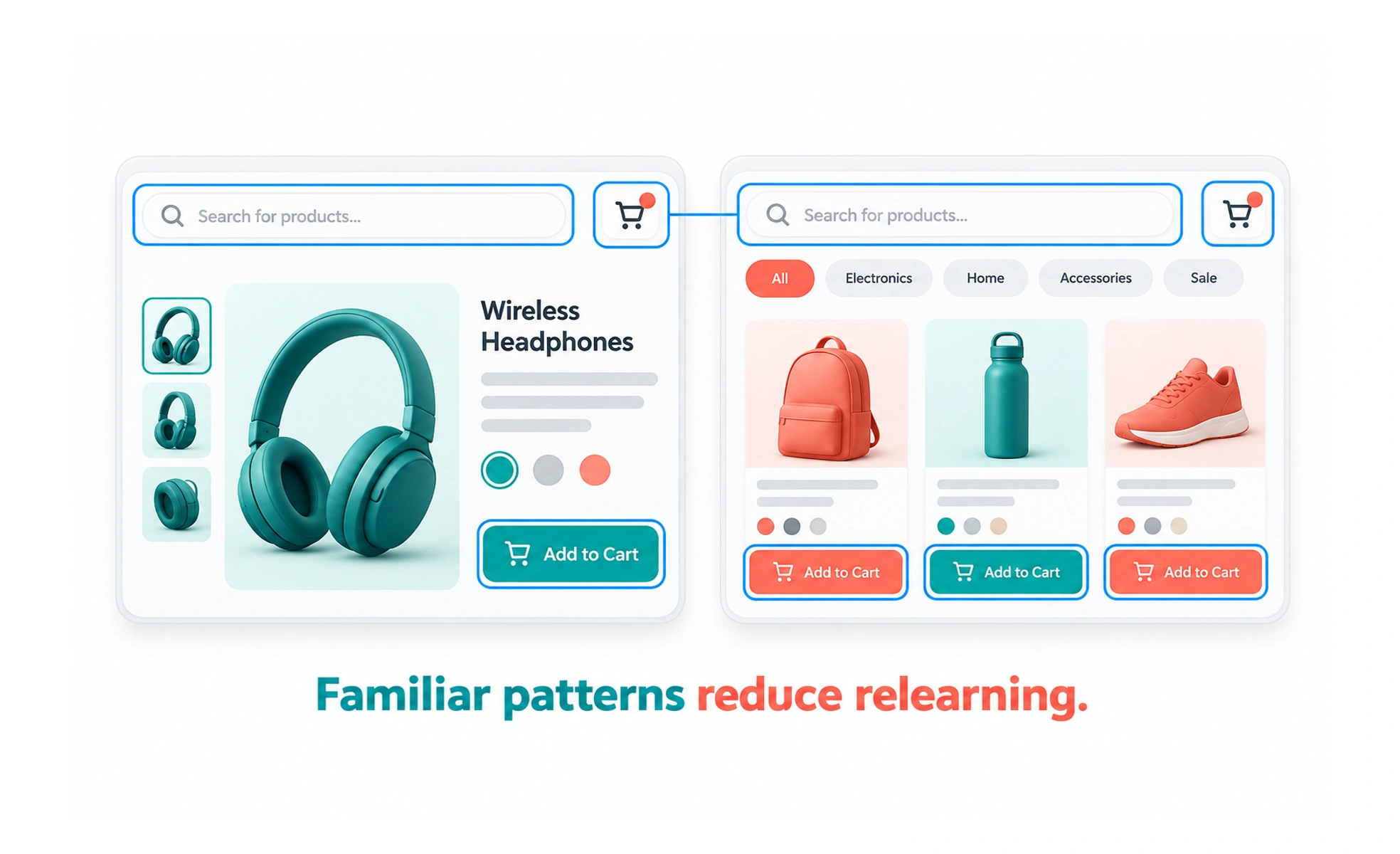
Coined by usability pioneer Jakob Nielsen, it warns designers against reinventing common interaction conventions. When basic patterns match familiar expectations, users can focus on their goals instead of learning a novel interface.
Imagine renting a car in another city. If the gas pedal and brake were swapped to be innovative, you would probably crash before leaving the airport parking lot.
How it works
Users carry established mental models from popular apps into every new digital product they encounter. Conforming to standards for shopping carts, search bars, and profile icons reduces cognitive friction instantly.
When to use it
Follow it for core navigational structures, e-commerce checkout funnels, form interactions, and standard icon meanings where predictability directly drives conversion.
Common mistakes
Redesigning standard components like search inputs or dropdowns into artistic puzzles that force users to guess how to interact.
Frequently asked questions
Key takeaways
- Familiar design patterns let users accomplish tasks with zero training.
- Save visual innovation for unique brand value, not fundamental navigation.
- Violating user expectations causes hesitation and unforced drop-off.