

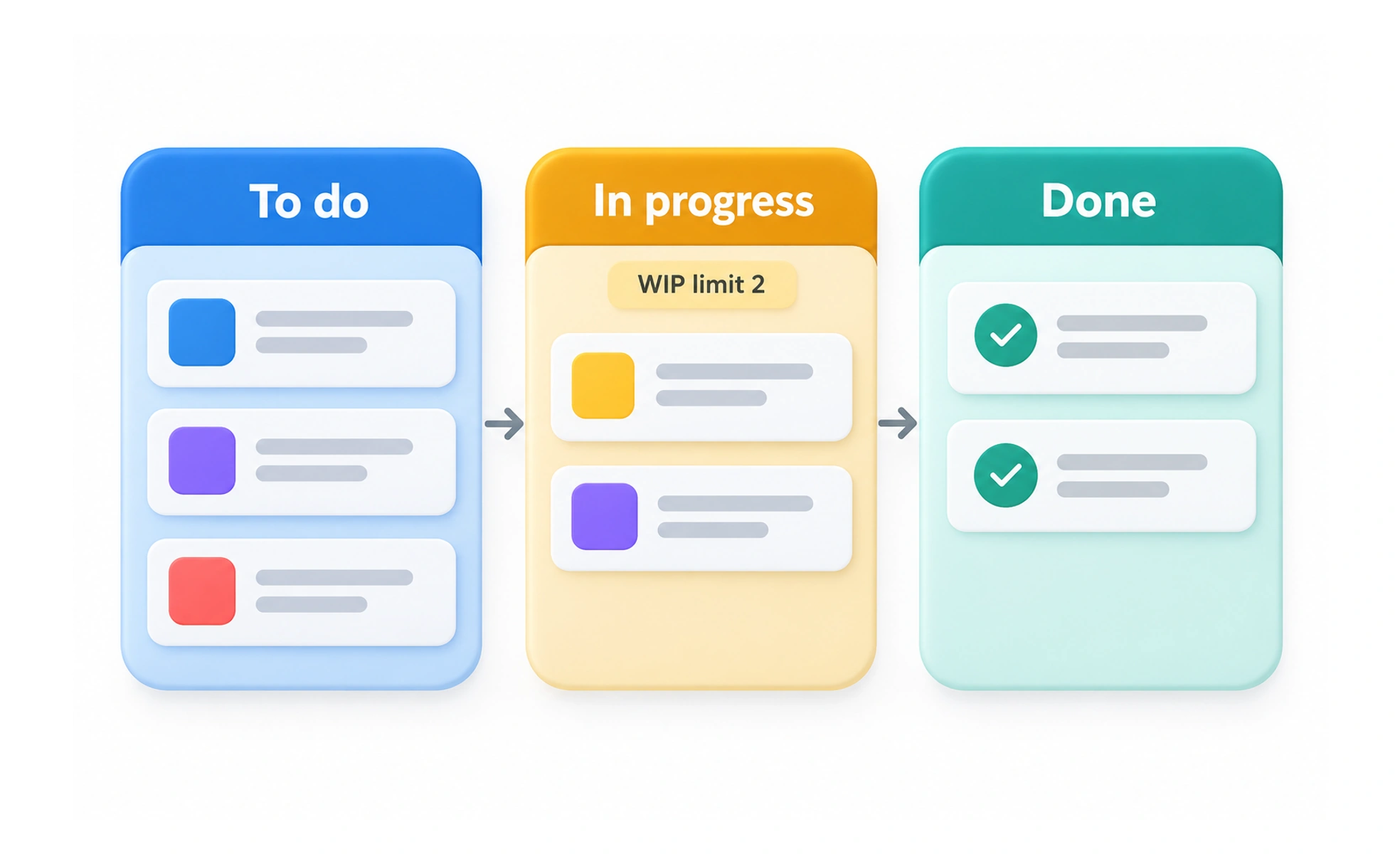
Originating in Toyota automotive manufacturing, it uses columns on a board to track task status from backlog to completion. By constraining simultaneous work, teams eliminate bottlenecks and maintain steady flow.
Think of it like this. A busy highway with metered on-ramps keeps cars moving fast, while opening the gates to everyone creates a gridlocked traffic jam.
How it works
Kanban organizes work through continuous visual flow and strict capacity management.
- Visual boards represent progress stages with columns such as To Do, In Progress, Review and Done.
- Kanban cards represent discrete units of work containing specifications, assignees and criteria.
- Work in progress limits cap the maximum number of active cards allowed in any single column.
- Continuous delivery releases completed items immediately rather than waiting for rigid sprint boundaries.
When to use it
Adopt Kanban when work priorities shift rapidly or teams manage continuous incoming requests.
- Maintenance and bug triage handles urgent production defects and ongoing customer feedback tickets.
- Design system support teams handle incoming component requests, reviews and accessibility updates steadily.
- Mature product squads that have moved beyond artificial sprint boundaries to continuous deployment.
- Operational support squads where rigid two-week sprint planning is constantly disrupted by live events.
Trade-offs
Kanban delivers flexible adaptability, but requires strong team discipline to prevent drifting.
- Less structured milestone planning makes it harder to promise fixed delivery dates to external stakeholders.
- Requires strict adherence to limits, because ignoring work in progress limits destroys the flow benefits.
- Can lead to endless backlogs if teams continuously pull small tasks without shipping cohesive releases.
Frequently asked questions
Key takeaways
- Kanban visualizes workflow stages on a board to create transparent team accountability.
- Limiting work in progress prevents multitasking, reduces cycle times and exposes bottlenecks.
- Continuous delivery pulls tasks as capacity opens rather than adhering to rigid sprint batches.
- It excels at managing continuous streams of design maintenance and incoming issue requests.