

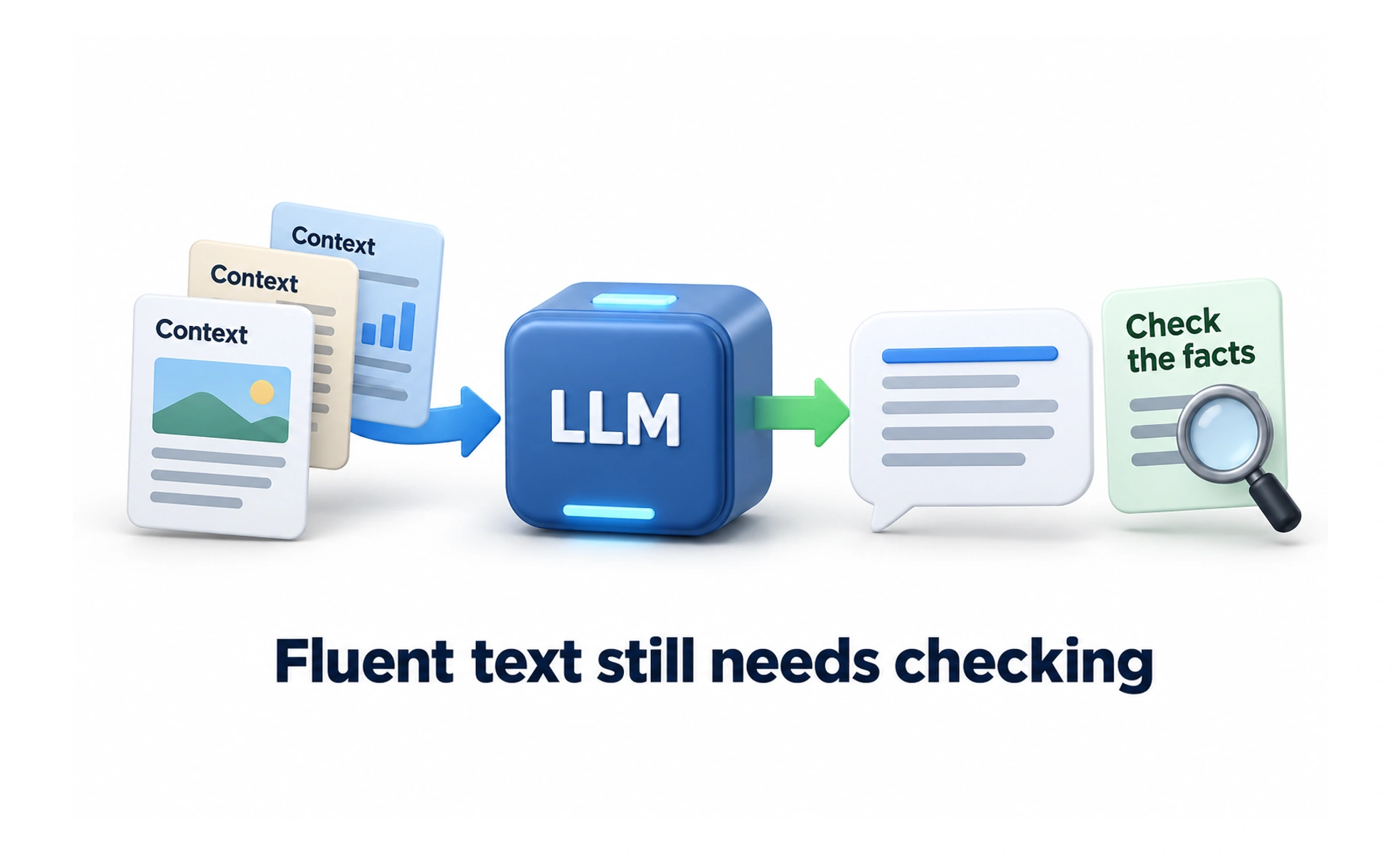
A large language model is a machine-learning model trained on substantial data to process and generate language. It can produce useful text and structured outputs, but its fluency does not guarantee factual accuracy.
A highly practiced writing system can continue many kinds of text convincingly. The convincing style still needs to be checked against evidence and the intended task.
Understand the model’s role
A model processes supplied information and generates output using patterns learned during training and its current context. A product can connect it to search, files, or other tools. Those connections add capabilities, but the model and the surrounding application have different responsibilities.
Choose suitable uses
Drafting, classification, explanation, and extracting information can benefit from language-model capabilities. Define the desired output and how it will be checked. The acceptable error rate depends on consequences; a brainstorming suggestion and an account-changing instruction require different controls.
Expect uncertainty and errors
Models can generate plausible statements that are false, omit relevant conditions, or follow misleading context. Supplying reliable references can help but does not remove the need for evaluation. Keep data permissions and action authorization enforced by the application rather than trusting generated text.
Example: a learning assistant
An assistant can help explain a concept using approved course material. The service should indicate relevant sources and handle unsupported questions clearly. It should not invent a learner’s score or award progress because the generated response sounds confident; those facts belong to trusted product records.
Frequently asked questions
Key takeaways
- Distinguish a model from the product and tools around it.
- Define outputs and task-specific quality checks.
- Verify claims and handle uncertainty clearly.
- Keep trusted data and authorization outside generated assertions.