

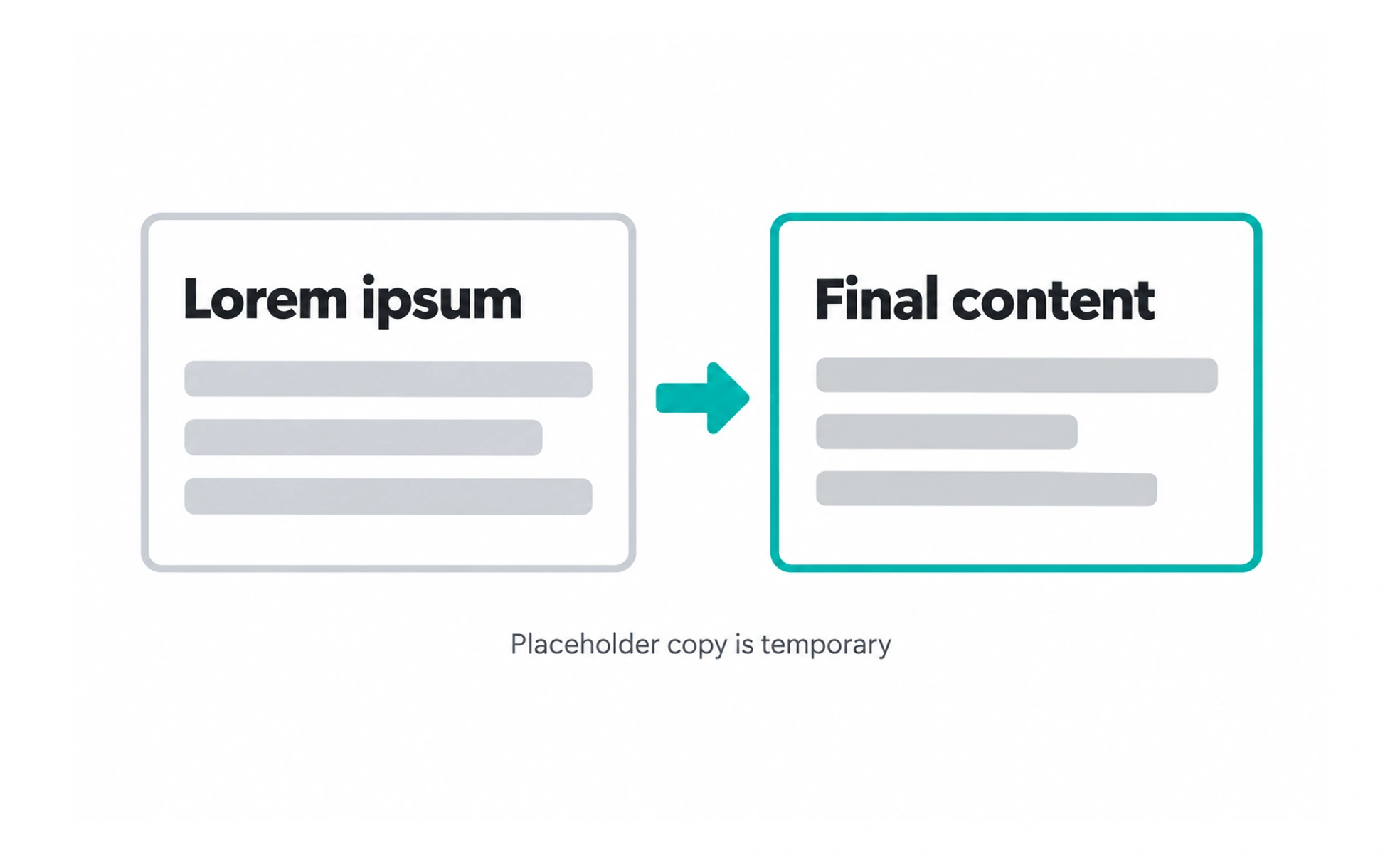
Designers may use placeholder copy while exploring layout, but it cannot stand in for content decisions. Real words affect line length, meaning, hierarchy, accessibility, and user confidence. Replace the placeholder before usability review or release, and make its temporary status obvious to the team.
It is like putting blank cards into a shelf to test spacing: useful for the structure, but it cannot tell you whether the books are easy to find.
Use placeholder copy for layout exploration
Lorem ipsum can help a team see whether a page accommodates paragraphs, headings, or labels when the final wording is still being drafted. It is especially useful for rough visual exploration. Keep it limited and clearly marked so it is not mistaken for approved content.
Understand what it hides
Placeholder text does not reveal whether instructions are understandable, whether a heading sets the right expectation, or whether a button label is clear. It also has different word lengths and patterns from many real languages, so it can make a layout appear more balanced than it will be.
Bring real content into design early
Use draft or representative copy as soon as the information structure is known. Test long and short labels, translations, validation messages, and empty states. Content helps expose layout constraints and user questions that a block of Latin filler cannot surface.
Remove it before review and release
Search for placeholder text before sharing a prototype with users or publishing a page. If realistic content is not ready, label the screen as a content placeholder and avoid drawing conclusions about comprehension. Assign an owner and deadline for replacing temporary copy.
Frequently asked questions
Key takeaways
- Lorem ipsum can help explore text density while layout is in progress.
- Placeholder copy cannot validate meaning, comprehension, or content hierarchy.
- Use realistic draft text early to test layout and interaction states.
- Mark temporary copy clearly and remove it before review or release.