

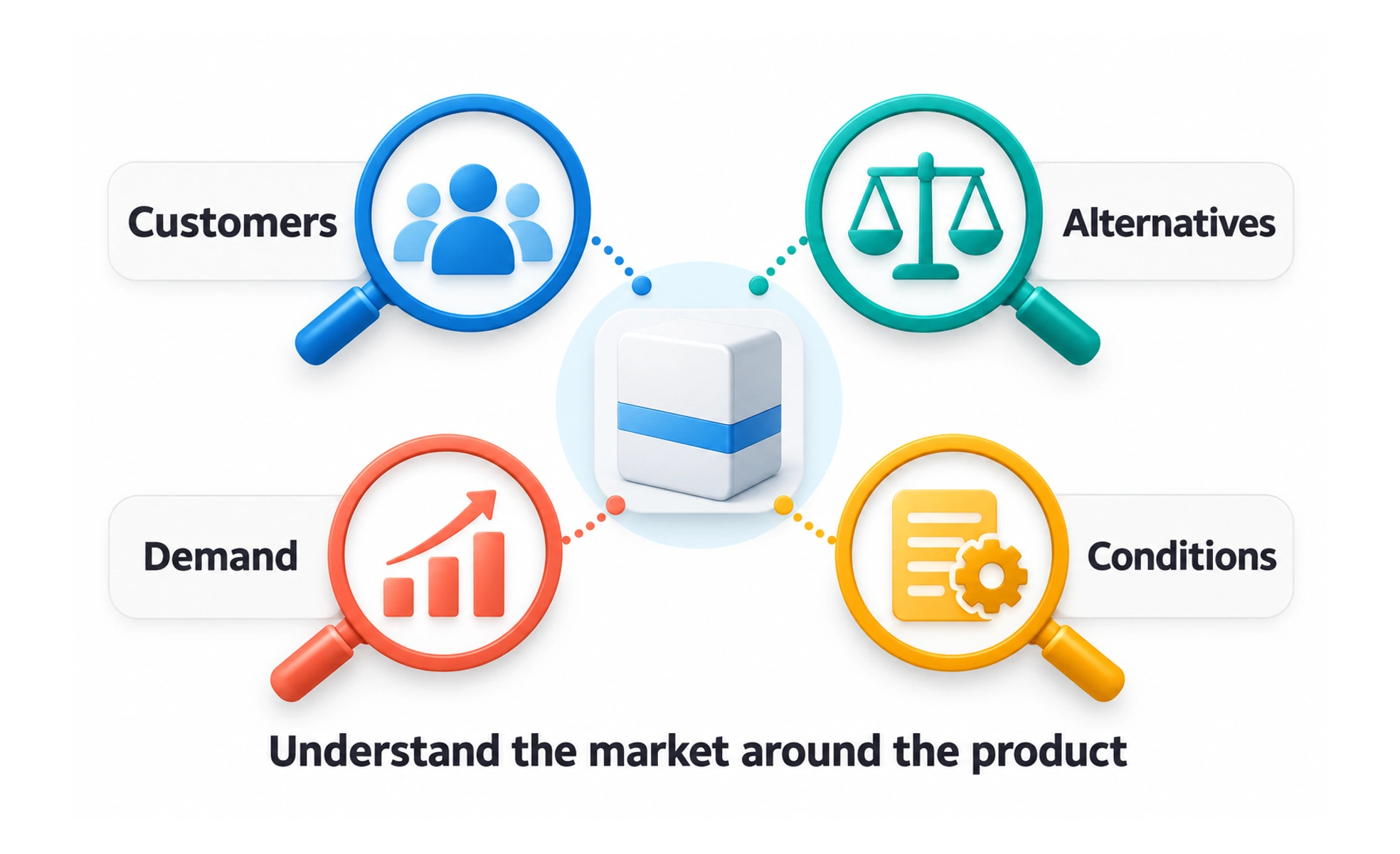
Market analysis examines customers, alternatives, demand, and conditions that may affect a product. It helps a team evaluate opportunities and identify assumptions that need closer investigation.
Before opening a shop, an owner studies the neighborhood, potential customers, existing stores, and changing habits. Product teams need a similarly grounded view of their market.
Define the scope
Name the audience, problem, geography, and product category being considered. A broad market label can include people with very different needs and purchasing behavior. A useful scope makes it possible to compare evidence and explain which customers the analysis does and does not describe.
Combine different evidence
Use customer research, observed behavior, credible reports, and information about alternatives. Record the date, method, and limits of each source. A large market estimate does not establish demand for a particular offer, and a few enthusiastic interviews do not represent an entire population.
Look beyond direct competitors
Include manual work, services, and doing nothing among the alternatives. Consider switching costs, distribution, relevant constraints, and changes in technology or behavior. The strongest obstacle to adoption may be an established routine rather than another software product.
Example: a learning product
A team studying professional learning can compare how designers use videos, books, mentoring, and structured courses. It can then investigate a narrower unmet need, such as applying concepts during a first job. That evidence is more useful for product choices than simply reporting the size of online education.
Frequently asked questions
Key takeaways
- Define the market narrowly enough to guide decisions.
- Combine evidence and record its limitations.
- Include indirect alternatives and switching costs.
- Use findings to identify questions and opportunities.