

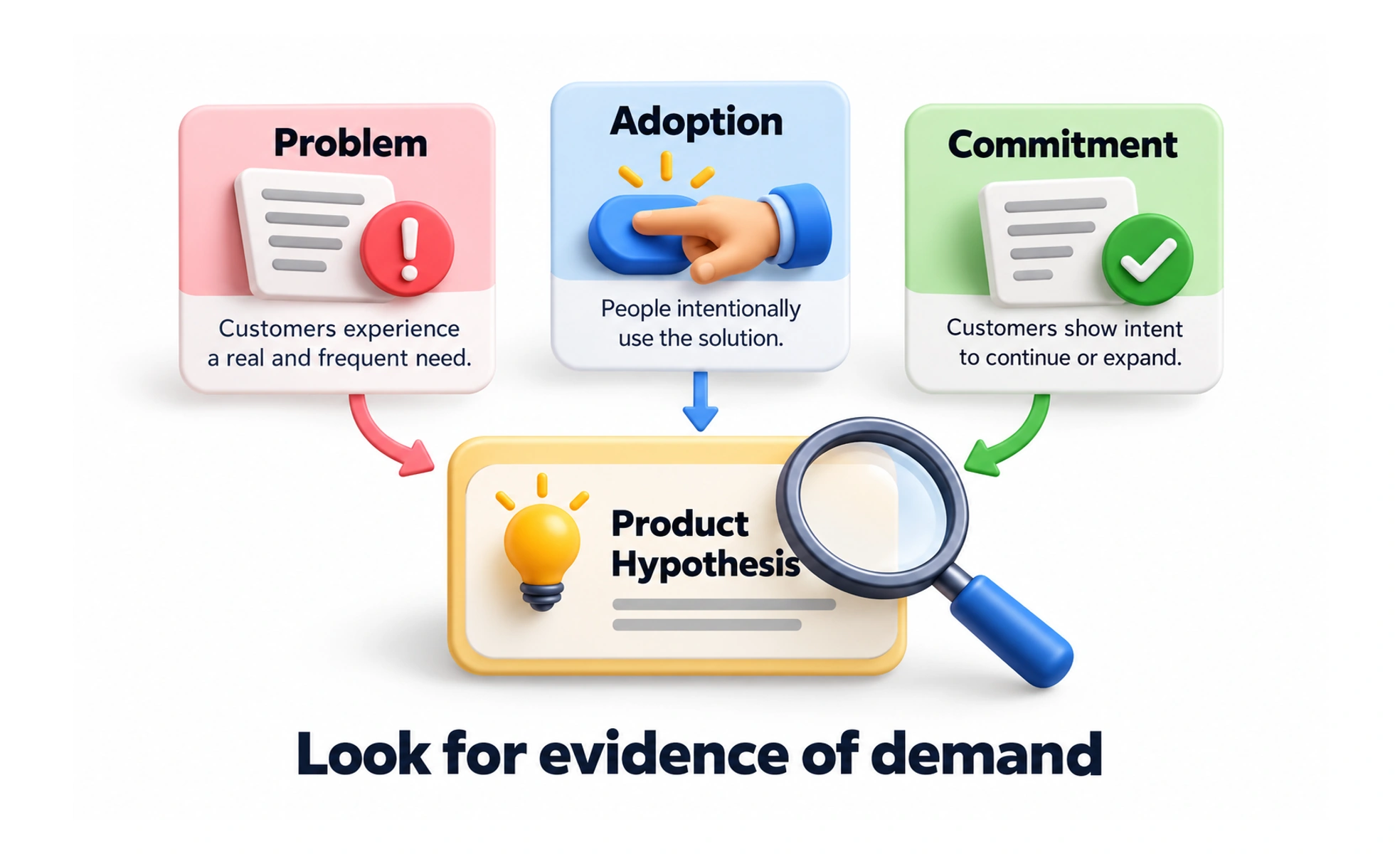
A positive reaction to an idea is encouraging, but it is not the same as using a service or paying for it. Market validation reduces uncertainty through progressively stronger evidence. It does not guarantee that a product will succeed.
Name the risky assumption
Write down who the product is for, the problem they face and what would need to be true for the idea to work. Perhaps small studios need a simpler way to organize client feedback, but already have an adequate workaround.
Separate demand from usability. People might understand a prototype perfectly yet have no reason to switch. Equally, a real need does not prove that your proposed solution is usable.
Choose evidence that fits the stage
Early conversations can explore existing behavior and alternatives. Later, a realistic trial can show whether people take meaningful action.
- Ask how the problem is handled today.
- Test a clear offer with the intended audience.
- Observe actual use when feasible.
- Compare expressed interest with commitment and continued use.
Be honest about what exists. A sign-up page for a planned service should not pretend a finished product is available.
Example: a client-feedback organizer
A team interviews freelance designers about recent projects. Several already manage feedback comfortably, while a smaller group spends hours reconciling comments from different channels.
The team offers that group a limited, clearly described pilot. It watches whether participants bring real projects, invite clients and return after the first session. Those actions provide more useful evidence than compliments about a polished mockup.
Decide what would change your mind
Agree on how the evidence will inform the next step before interpreting it. Consider recruitment bias, incentives and the effort people must invest.
If a trial attracts interest but little continued use, investigate rather than declaring success. Narrowing the audience, changing the offer or stopping an idea can all be valuable outcomes of validation.
Frequently asked questions
Key takeaways
- Identify the assumption that could make the idea fail.
- Separate genuine demand from usability and enthusiasm.
- Look for meaningful behavior and commitment.
- Use the evidence to decide whether to continue, change or stop.