

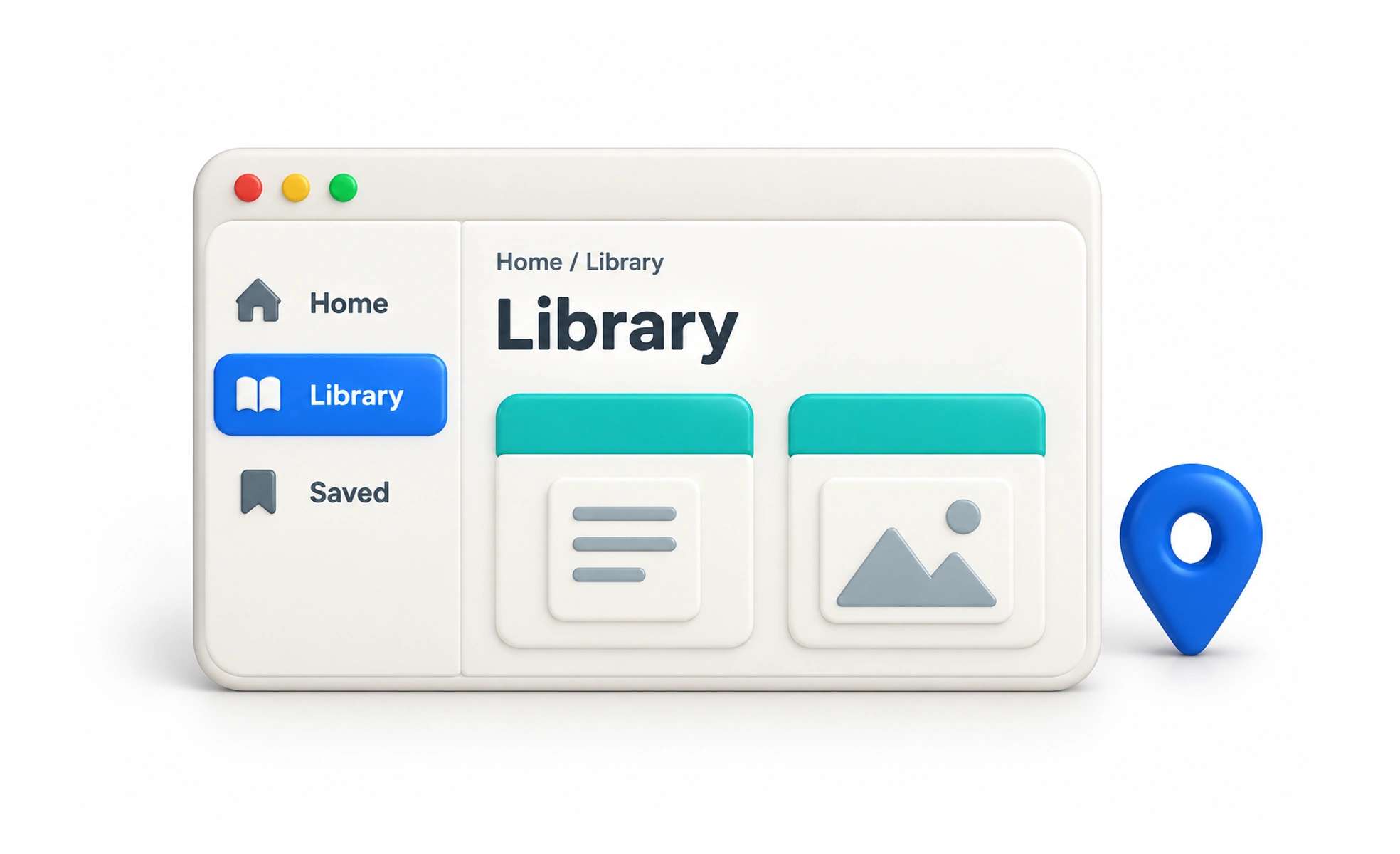
Navigation is the set of routes and cues that helps people understand where they are and move to another part of a product. Good navigation reflects the way people think about their task, not only the organization chart of the team that built the product.
It is like signs in a public building: they should help people find the service they need and recognize when they have arrived.
Start with people’s tasks
List the destinations people need and the decisions they make along the way. Group related destinations under labels they recognize. Internal team names rarely make useful navigation labels unless customers use those same words. A service organized around “Accounts” may need clearer choices such as billing, sign-in and personal details.
Show location and available routes
Keep the current location visible and make important destinations easy to reach. A primary navigation can provide a stable map, while local navigation exposes choices within one area. Avoid showing every route at once: too many competing links make it harder to identify the next useful action.
Support different ways of moving
People may arrive from a search result, a saved link or a notification rather than the home page. Design pages to make sense on direct entry and provide a clear route back or onward. Keyboard operation, readable labels and a consistent order help people move without relying on visual position alone.
Example: finding an invoice
A small business owner wants an invoice. If the product puts invoices under “Workspace administration,” the category may reflect its internal model but hide the task. Testing the label with customers may reveal that they expect invoices under billing. Keep the route consistent across the account menu, billing page and support instructions so the person does not have to learn several maps.
Frequently asked questions
Key takeaways
- Organize routes around user tasks and familiar language.
- Make current location and next steps clear.
- Design for direct entry as well as home-page browsing.
- Keep labels and routes consistent across the product.