

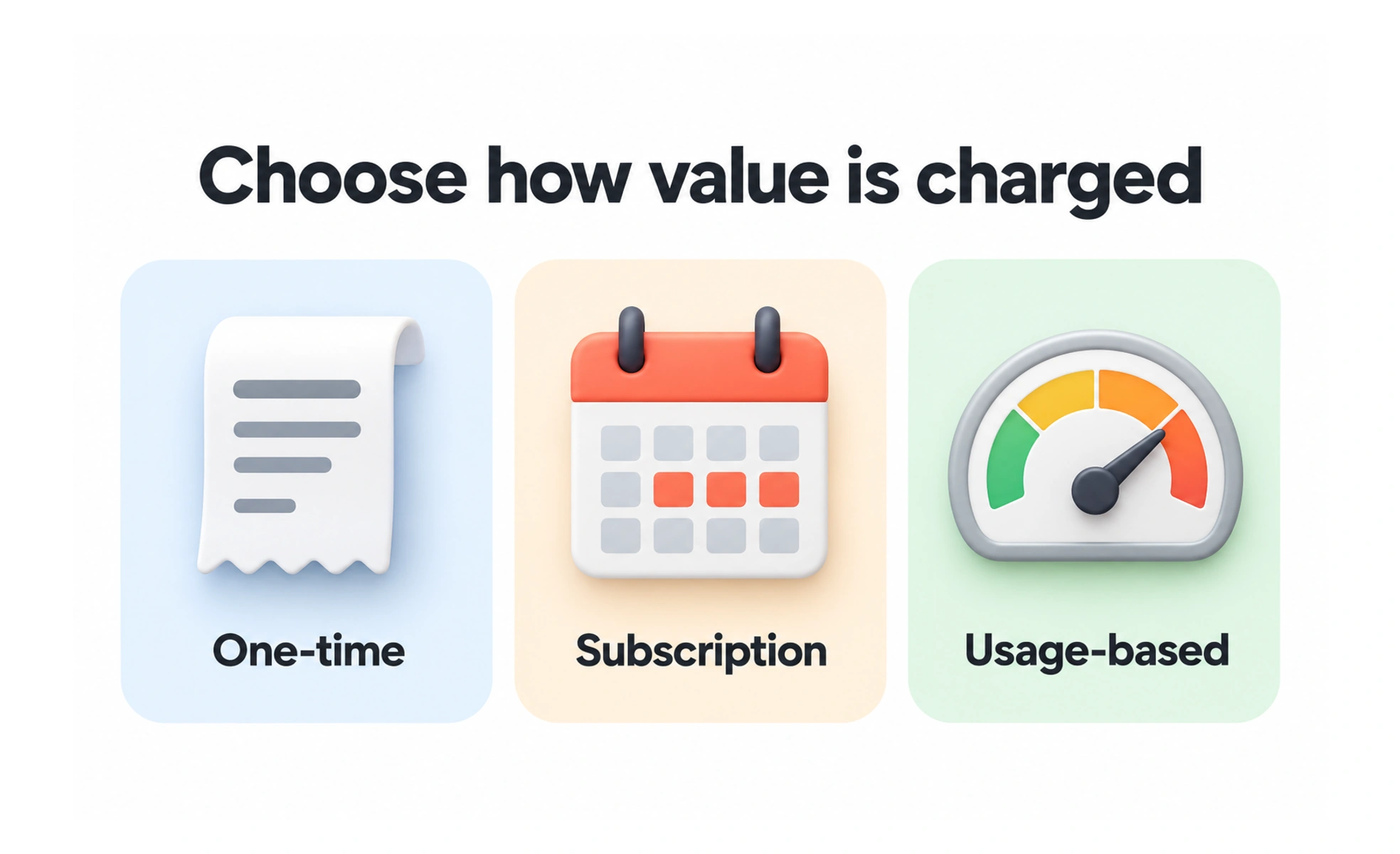
A pricing strategy defines how a product charges for the value it provides. It includes the pricing model, packages, and principles used to balance customer value with a sustainable business.
A gym can charge per visit or through a membership. Each model shapes who joins, how they use the service, and whether the business can serve them sustainably.
Understand value and costs
Investigate what customers gain, the alternatives available, and the costs of delivering and supporting the product. These perspectives inform pricing but do not produce a perfect number automatically. Different customer segments may receive different amounts of value or face different purchasing constraints.
Choose a suitable charging model
A product may charge through subscriptions, usage, one-time purchases, or a combination. The unit of payment should be understandable and reasonably connected to value. Consider whether customers can predict their bill and whether the model encourages behavior that benefits both them and the service.
Design packages and communication
Packages should make meaningful differences clear without forcing people to decode a large comparison table. Show billing periods, limits, renewal terms, and material conditions before purchase. A lower displayed monthly equivalent should not hide the amount charged today or the commitment required.
Example: a learning subscription
A learning service could offer monthly and annual access with clearly stated billing amounts. Research whether customers value flexibility or a lower annual cost, and assess retention and support costs. Test changes carefully and communicate how existing customers are affected rather than quietly changing expectations.
Frequently asked questions
Key takeaways
- Connect price to value, alternatives, and service costs.
- Choose a charging unit customers can understand.
- Make billing and package conditions visible.
- Evaluate effects on customers and business sustainability.