

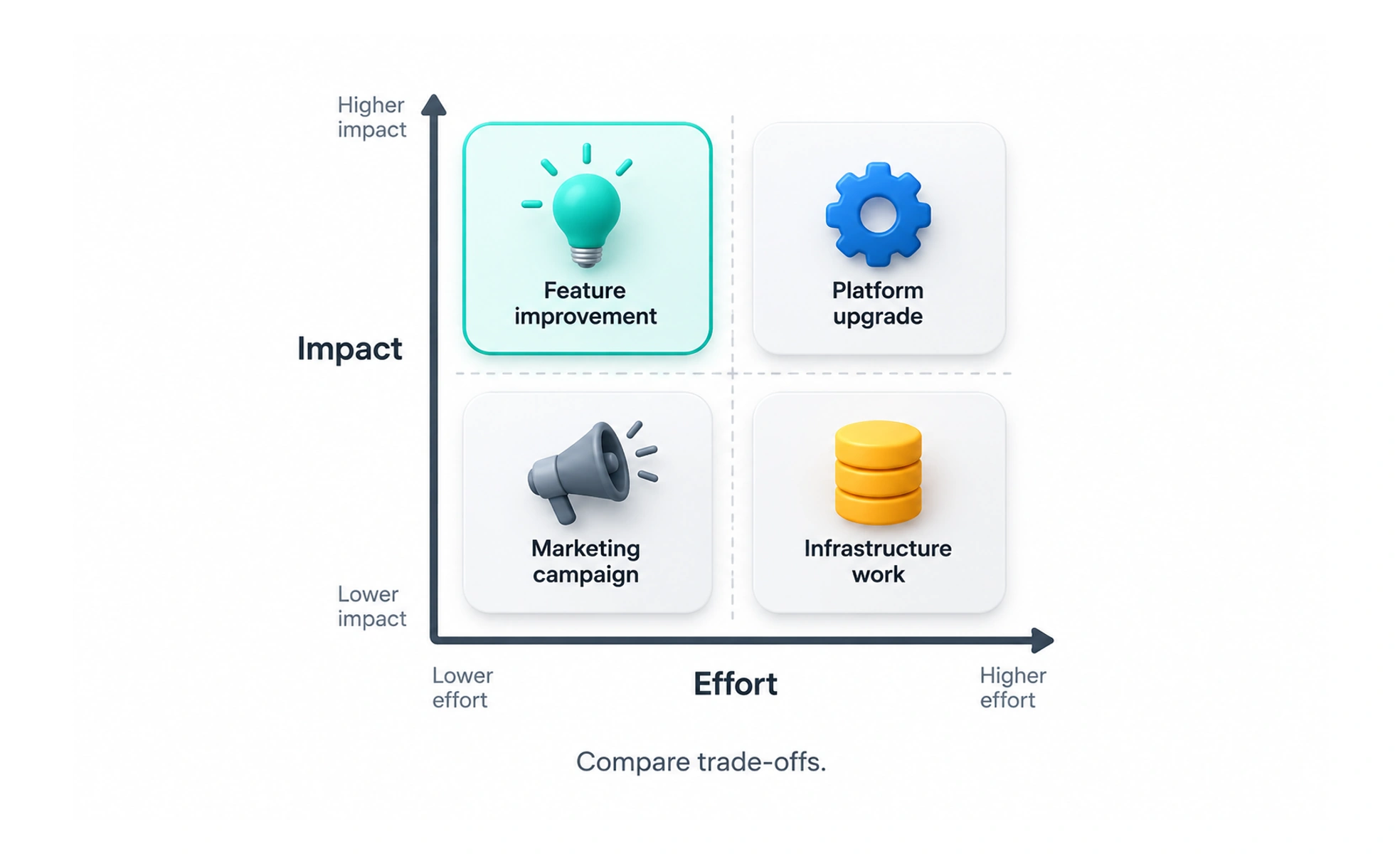
Prioritization is deciding which work deserves attention first when time and resources are limited. It makes tradeoffs explicit so a team can focus on the most important needs and outcomes.
When preparing a meal, some tasks matter more and some must happen before others. A useful order considers both the desired result and the constraints of the kitchen.
Agree on the decision criteria
Clarify the outcome, audience, and time horizon before comparing ideas. Useful criteria can include user value, risk, effort, strategic fit, and dependencies. Without a shared goal, people may rank the same idea differently because they are trying to achieve different results.
Compare evidence and uncertainty
Separate observed needs from assumptions and estimates. A scoring framework can organize a discussion, but weak evidence does not become reliable because it receives a number. Consider what learning could change the decision and whether a small test is more valuable than immediate full delivery.
Include essential work
Security, accessibility, reliability, and maintenance may prevent harm or preserve existing value. Their benefits are not always visible as new feature demand. Give these obligations explicit attention so a feature-focused score does not repeatedly push necessary work aside.
Example: planning a release
A team may compare a popular cosmetic request, an onboarding barrier, and a data-loss bug. The bug can need immediate attention despite limited reach, while the onboarding issue may offer stronger continuing value. Explain the reasoning and review it as evidence or constraints change.
Frequently asked questions
Key takeaways
- Agree on goals and criteria before ranking work.
- Make evidence and assumptions visible.
- Account for dependencies and essential quality work.
- Explain tradeoffs and revisit them when conditions change.