

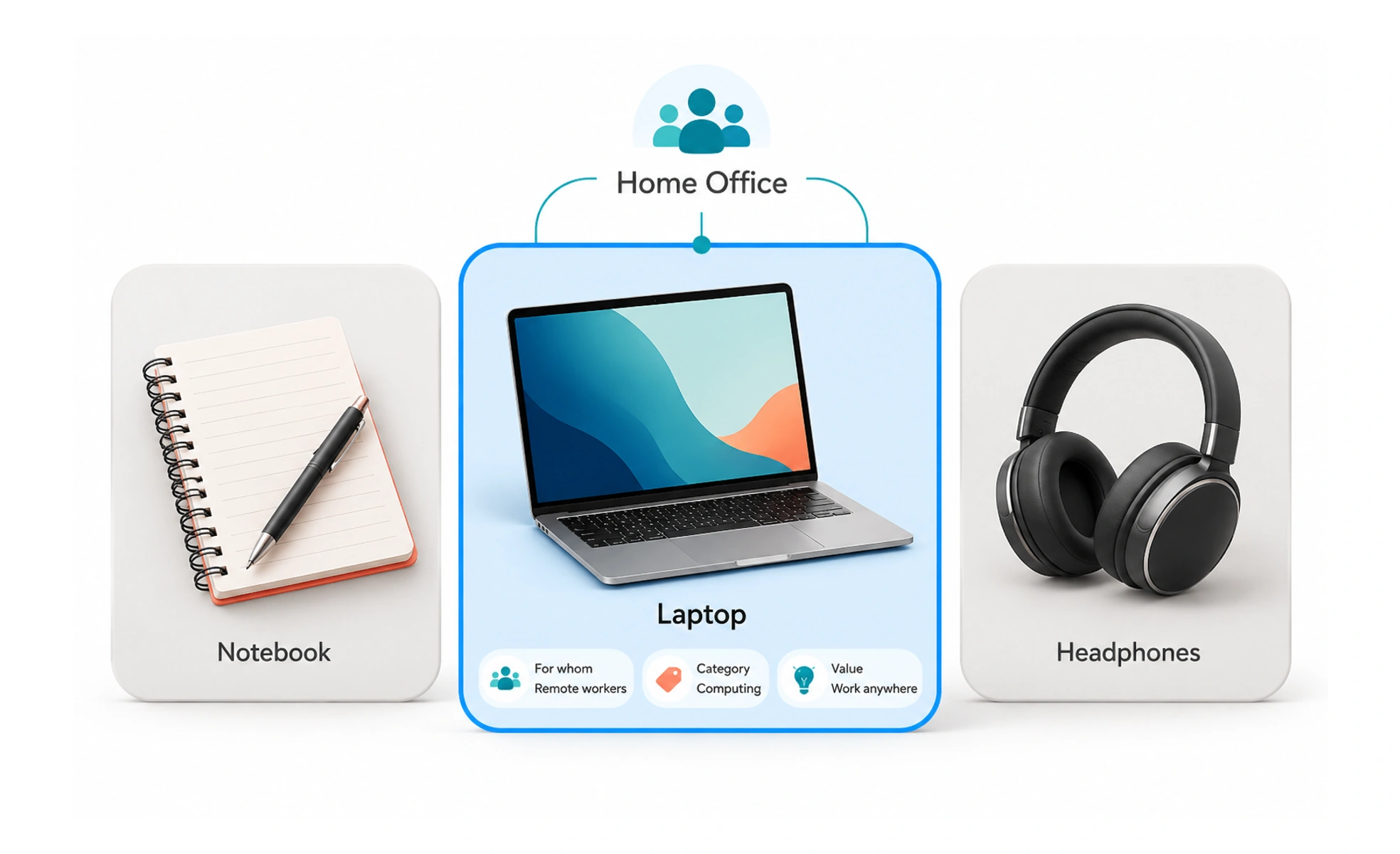
Product positioning defines how a product should be understood by a particular audience in relation to alternatives. It makes the product’s category, relevant strengths, and intended value clear.
Placing a book on the right shelf helps readers understand what to expect. Positioning gives a product a useful frame of reference.
Understand the alternatives
Find out what people would use without the product, including spreadsheets, services, or familiar habits. Those alternatives shape what they expect and what an improvement means. Research actual choices rather than listing only companies that sell superficially similar features.
Choose a meaningful frame
The category or comparison used to introduce a product affects how people evaluate it. Choose language the intended audience understands and that accurately describes the experience. A novel label can create interest, but it may also require more explanation and make comparison harder.
Connect strengths to customer value
Identify capabilities that are different and useful for the chosen audience. Explain the benefit of those strengths with concrete examples and credible evidence. A long list of features rarely makes positioning clear if the audience cannot see why the differences matter.
Example: a feedback tool
A product that collects comments on prototypes might be positioned for small design teams reviewing client work. Its organized decision history could matter more to that audience than a broad list of collaboration features. The homepage, onboarding, and product experience should reinforce the same useful expectation.
Frequently asked questions
Key takeaways
- Position for a specific audience and situation.
- Include habits and manual tools among alternatives.
- Use a clear, accurate frame of reference.
- Connect distinctive strengths to benefits people value.