

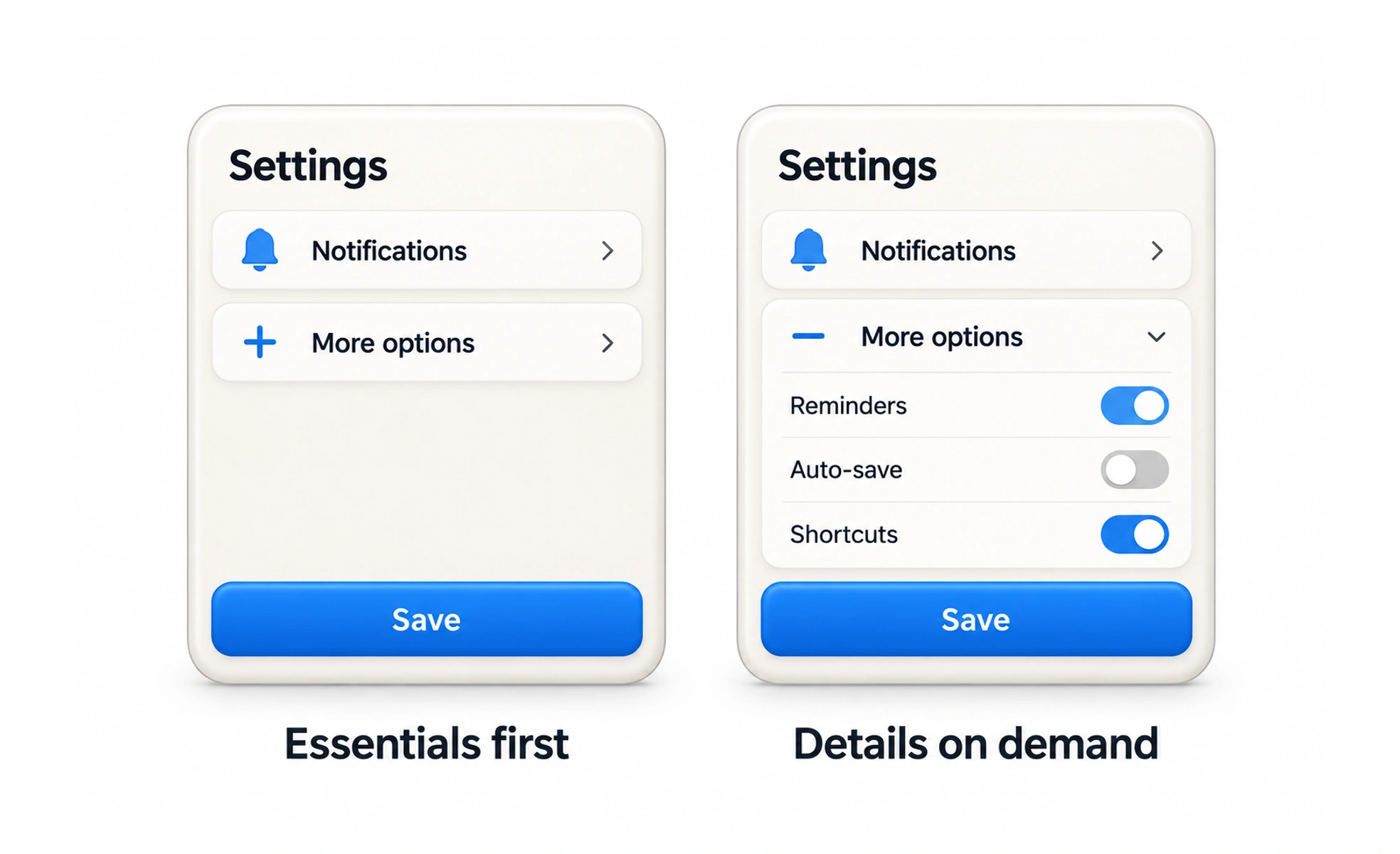
Progressive disclosure reveals information or controls as they become relevant. It can reduce initial complexity while keeping additional detail discoverable when people need it.
A map first shows the main routes, then offers street-level detail when someone zooms in. Interfaces can similarly layer information around the task.
Decide what people need first
Understand the task, experience level, and consequences of a choice. Keep essential instructions and material conditions visible before a decision. Secondary detail can wait, but hiding information that changes the meaning of an action creates confusion rather than useful simplicity.
Make the next layer discoverable
Use descriptive triggers that explain what will open, such as “View lesson details.” Show current state and support keyboard and assistive technology. People should be able to find the detail without guessing that an unrelated icon or area is interactive.
Preserve context during expansion
Open content near its trigger when appropriate and keep focus behavior predictable. Avoid repeated jumps or excessive movement. A smooth transition can explain the relationship, but the information and controls must remain usable when motion is reduced or disabled.
Example: course levels
A course overview can show level names and summaries, with an accordion for individual lessons. Learners can scan the broad path before exploring a level. Access restrictions and completion requirements should remain clear enough that collapsing the detail does not hide a condition they need to understand.
Frequently asked questions
Key takeaways
- Keep essential decision information visible.
- Reveal secondary detail with descriptive triggers.
- Maintain accessible state and focus behavior.
- Preserve context across expansion and responsive layouts.