

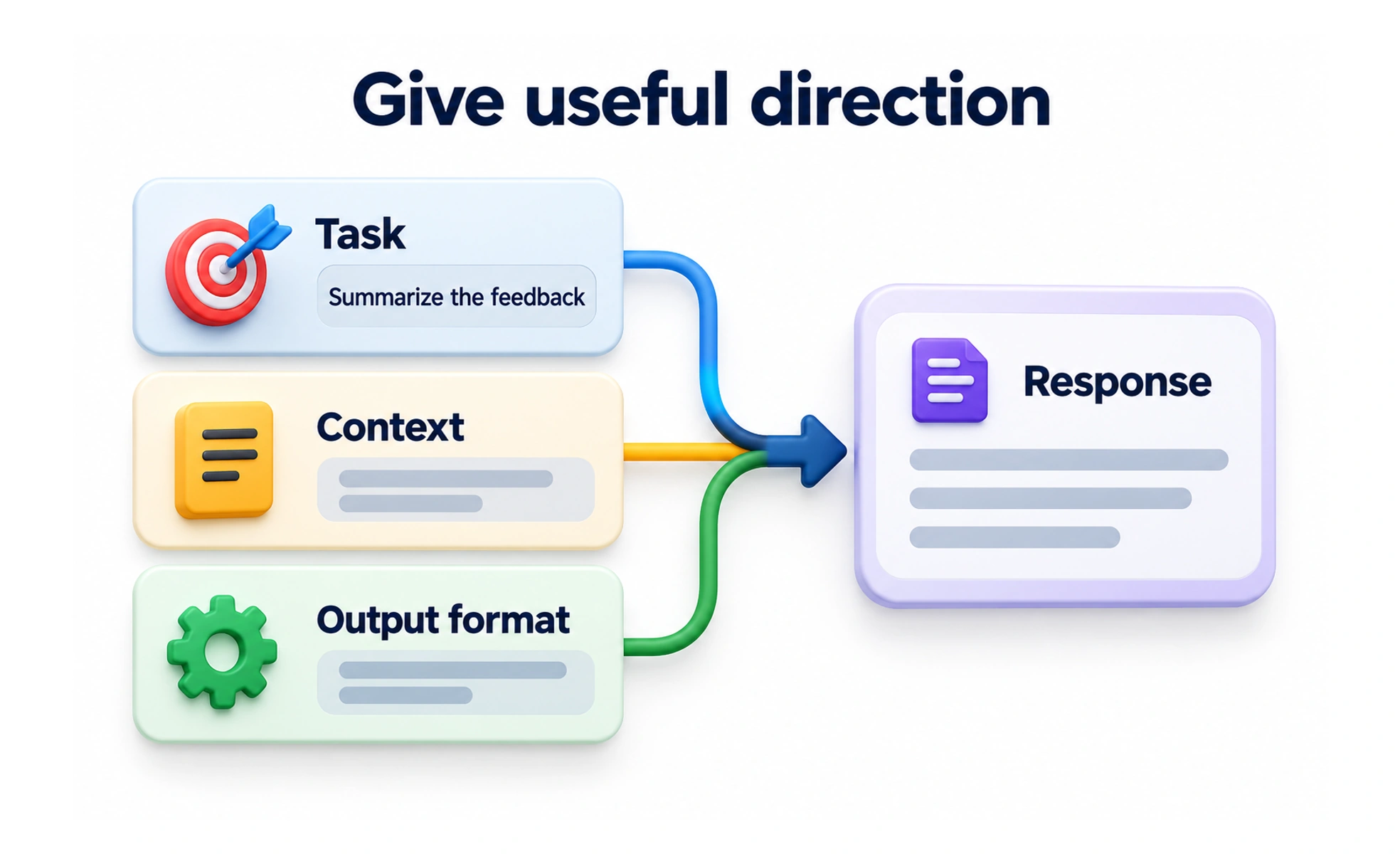
A prompt is input that guides an AI model’s response. It can describe the task, provide context and examples, and specify the desired form of the result.
A useful brief tells a collaborator what to produce, for whom, and under which constraints. A prompt provides similar direction to a model.
State the task and outcome
Explain what should be produced and the purpose it serves. Include the audience, relevant constraints, and a useful output format. Clear instructions are easier to evaluate than a vague request for something good, professional, or creative without context.
Supply relevant material
Provide the facts or source passages needed for the task, and distinguish them from instructions. Use examples when they clarify the required style or structure. Avoid adding large amounts of unrelated material that obscure important conditions or introduce contradictory directions.
Iterate using evidence
Review the output against the task, identify specific failures, and adjust the request or supporting context. Test important prompts on representative cases rather than one favorable example. A prompt is not a substitute for reliable application logic, data validation, or action permissions.
Example: drafting a glossary entry
A brief can ask for a plain-language definition, practical sections, an example, and useful FAQs for beginning designers. It should also name the sources and claims that need verification. The resulting article still requires review for accuracy, relevance, and whether it explains the concept without invented evidence.
Frequently asked questions
Key takeaways
- Describe a concrete result and its audience.
- Provide relevant context with clear boundaries.
- Use examples to clarify expectations.
- Evaluate outputs and refine the request deliberately.