

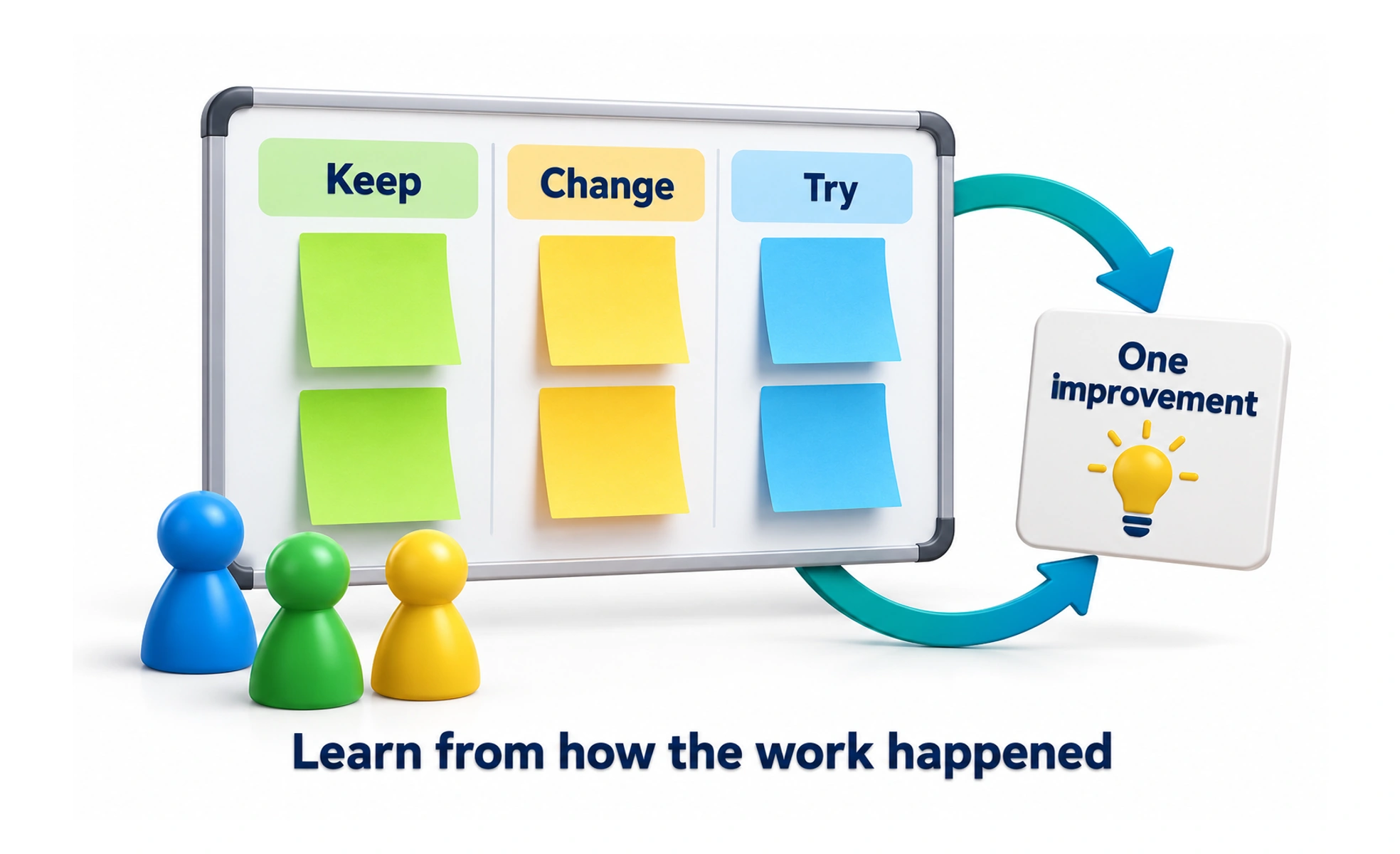
Retrospectives give a team time to learn from a project, release, or work cycle. They are useful when discussion leads to a small number of owned actions, not when they become a place to assign blame or repeat complaints.
After a hike, a group reviews the route, supplies, and decisions before planning another trip. A retrospective similarly turns shared experience into adjustments for future work.
Create conditions for honest reflection
Set a clear purpose, invite different perspectives, and agree on respectful discussion. Psychological safety matters: people should be able to raise process problems without being punished for describing them. A facilitator can help balance participation.
Look at evidence and patterns
Discuss what happened, when it happened, and how it affected the team or users. Use examples such as blocked work, escaped defects, or repeated rework. Avoid treating one person’s experience as the complete account.
Choose a small number of actions
Convert discussion into specific changes with an owner and a time to review. Too many actions dilute focus. Choose changes within the team’s influence, and identify when help from another team or leader is needed.
Check whether the change helped
Review previous actions at the next reflection point. If a change did not help, learn why and adjust it. A retrospective is an ongoing learning practice, not a ceremony that guarantees improvement just because it happened.
Frequently asked questions
Key takeaways
- Make reflection safe, specific, and focused on learning.
- Use examples and patterns rather than blame.
- Assign a few actionable changes to clear owners.
- Review whether prior actions improved the work.