

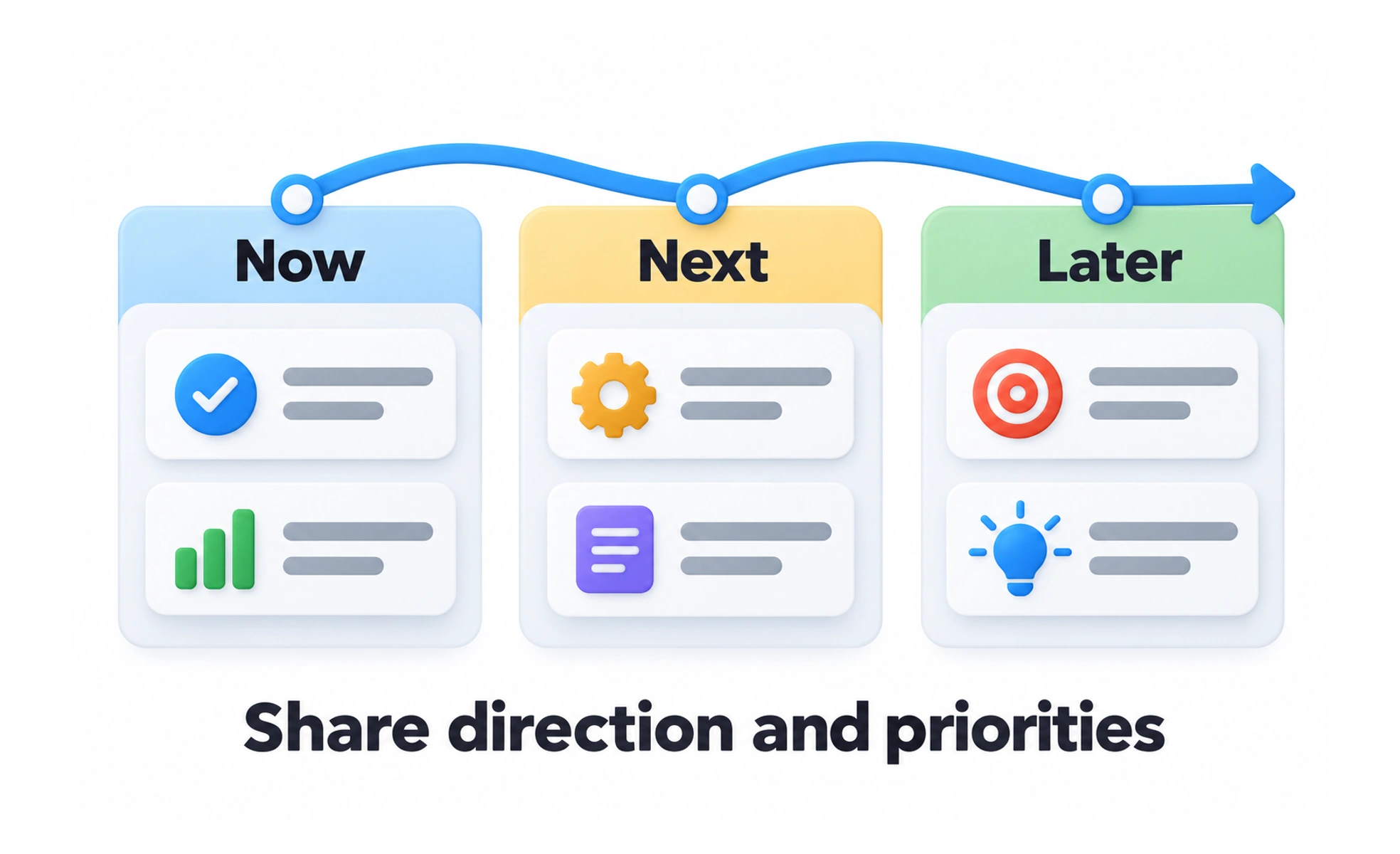
It aligns cross-functional stakeholders on what problems will be solved next and why. Modern roadmaps prioritize outcome-based themes like Now, Next and Later rather than rigid feature release dates.
Think of it as a transit expansion map for a city subway network. It shows citizens which rail lines are opening soon and which corridors are planned for future construction.
How it works
An outcome-driven roadmap visualizes strategic themes across flexible chronological horizons.
- Now horizon items represent current sprint commitments undergoing active engineering and usability testing.
- Next horizon themes represent validated customer opportunities currently undergoing solution discovery and design prototyping.
- Later horizon concepts outline prospective strategic bets requiring substantial future research and market validation.
- Success metrics and milestones attach specific business outcomes and target key results to each thematic initiative.
When to use it
Use product roadmaps to build organizational consensus and guide team investment decisions.
- Executive stakeholder alignment communicates high-level product trajectory without committing to brittle delivery dates.
- Customer success and sales enablement helps account teams discuss future capabilities with prospective clients honestly.
- Cross-functional squad planning ensures design discovery, marketing campaigns and infrastructure work align smoothly.
- Hiring and resource forecasting identifies upcoming skill gaps in data science, mobile engineering or user research.
Common mistakes
Teams frequently undermine roadmaps by transforming them into rigid Gantt chart promises.
- Committing to exact delivery dates months in advance, creating immense stress and forcing code quality compromises.
- Listing individual UI features instead of customer problems, locking teams into premature solutions.
- Never updating the roadmap, letting published roadmaps drift away from the reality of squad backlogs.
Frequently asked questions
Key takeaways
- A roadmap is a strategic communication tool that articulates product direction and business intent.
- Modern teams use Now-Next-Later horizons rather than rigid timeline-based Gantt charts.
- Organize roadmaps around customer problems and desired business outcomes rather than feature lists.
- Treat roadmaps as living documents that evolve as new user research and market data emerge.