

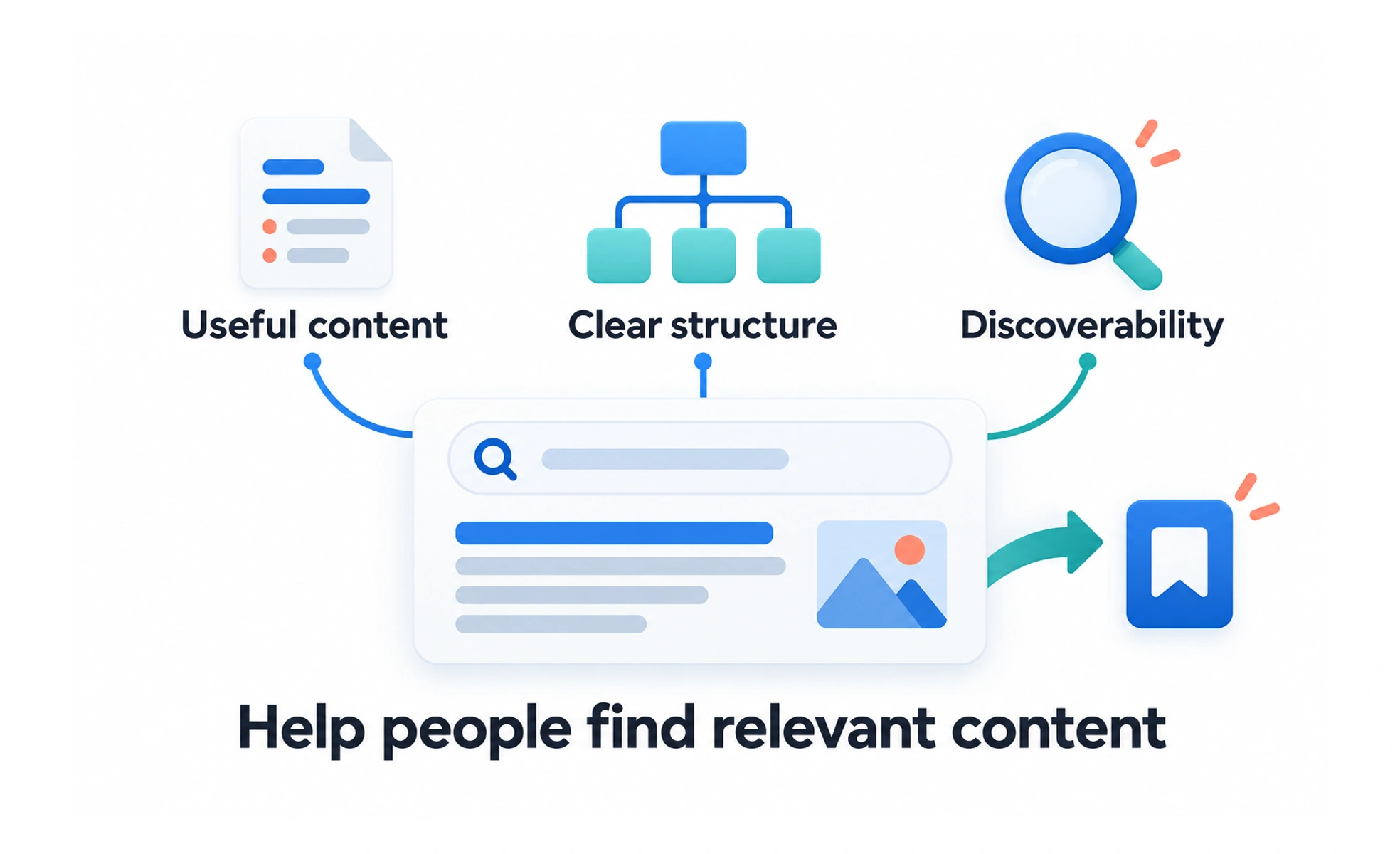
Search engine optimization improves how useful public content can be discovered and understood through search. It combines accessible site structure, relevant content, and sound technical delivery.
A well-organized library needs useful books, clear titles, and a catalog that connects readers to them. A public website needs similar clarity for people and search systems.
Answer a real information need
Create content that helps the intended audience understand or accomplish something. Use accurate titles, clear headings, and natural language. Repeating keywords or publishing large quantities of thin pages does not replace a useful answer with appropriate context and original value.
Make public content discoverable
Use descriptive links and a coherent site structure so important pages can be found. Provide stable URLs and appropriate indexing controls. Check that the content intended for search is available to search systems, while private account data and restricted material remain protected.
Maintain technical quality
Resolve broken pages, confusing redirects, duplicate URL handling, and rendering problems that prevent access to useful content. Make pages readable and usable across devices. Metadata and structured data should accurately describe the visible page rather than promise content that is absent.
Example: a glossary article
A helpful glossary page can define a concept, explain when it matters, and link to related ideas with descriptive text. Its title should match the topic and its public URL should remain stable. Monitor relevant discovery and useful visits without treating ranking for every possible phrase as the purpose of the article.
Frequently asked questions
Key takeaways
- Start with useful content for a real audience.
- Use clear titles, headings, and links.
- Keep public pages technically accessible and private data protected.
- Describe visible content accurately and maintain stable URLs.