

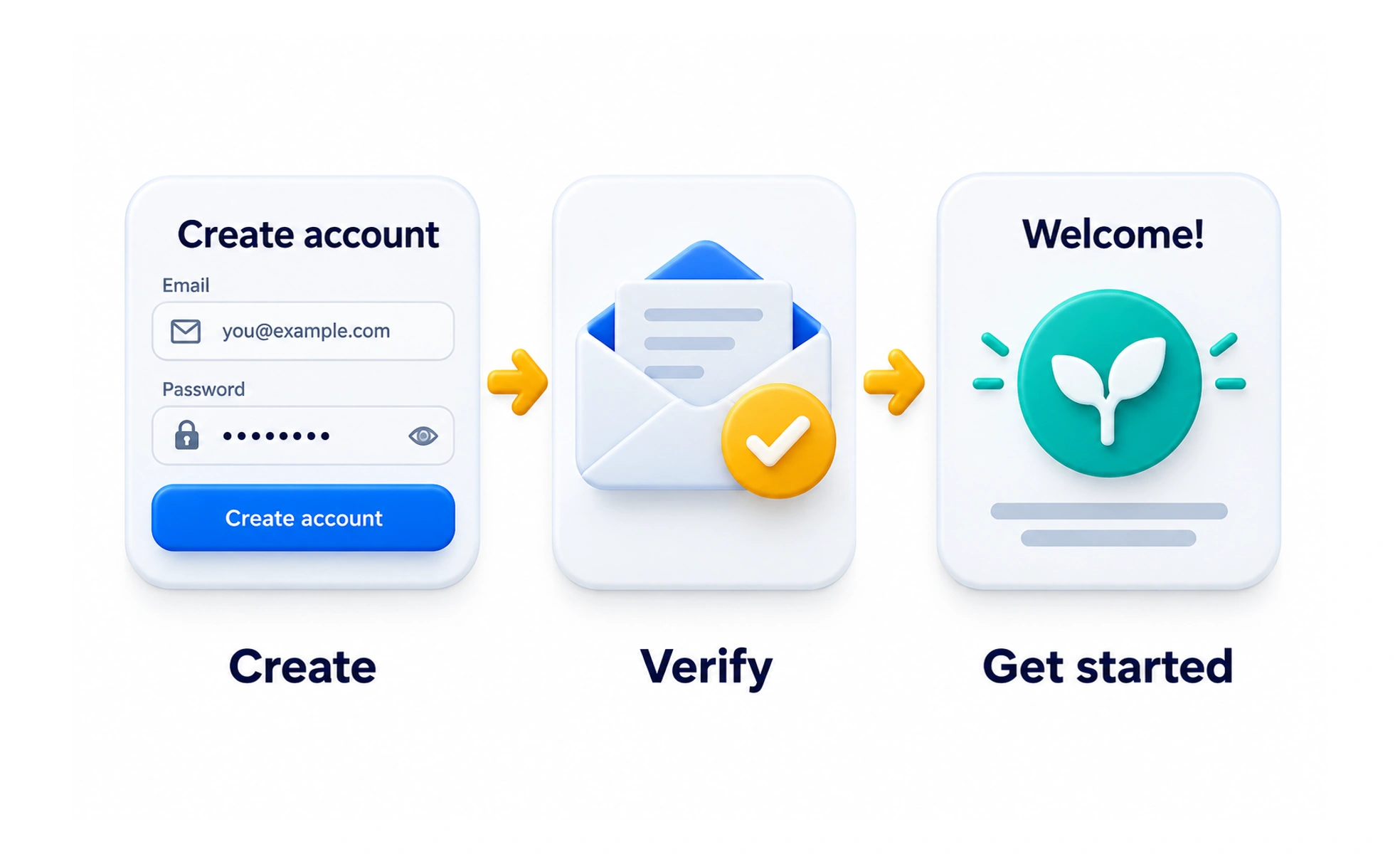
Signup creates an account and establishes the information and access needed to use a service. A clear flow asks for appropriate data, explains required checks, and guides people toward first value.
Joining a library involves creating a record and understanding how to borrow. The registration process should support that purpose without asking for unrelated information.
Ask for what is needed now
Separate information required to establish the account from optional details that can be collected later. Explain unfamiliar requests and avoid collecting data simply because it might be useful someday. The amount of setup should be appropriate to the service and the person’s immediate task.
Make account states explicit
Creating a record, verifying an address, and establishing a session are different steps. If verification is required, explain where the message was sent and how to correct the address or request another message. Show errors honestly when delivery fails instead of suggesting a message definitely arrived.
Handle interruptions and duplicates
People may close a tab, use an existing account, or return through an expired link. Provide a coherent path for those situations without creating duplicate profiles or exposing private account details. Keep authentication and consent rules enforced by the service.
Example: a learning account
A learner can create credentials, confirm a required address, and then choose relevant topics. Their topic selections should become real saved preferences. If a background save fails, the product should recover clearly before claiming the entire setup is complete.
Frequently asked questions
Key takeaways
- Collect appropriate data for the current task.
- Distinguish account creation, verification, and session state.
- Support interrupted and existing-account journeys.
- Guide people toward a real useful outcome.