

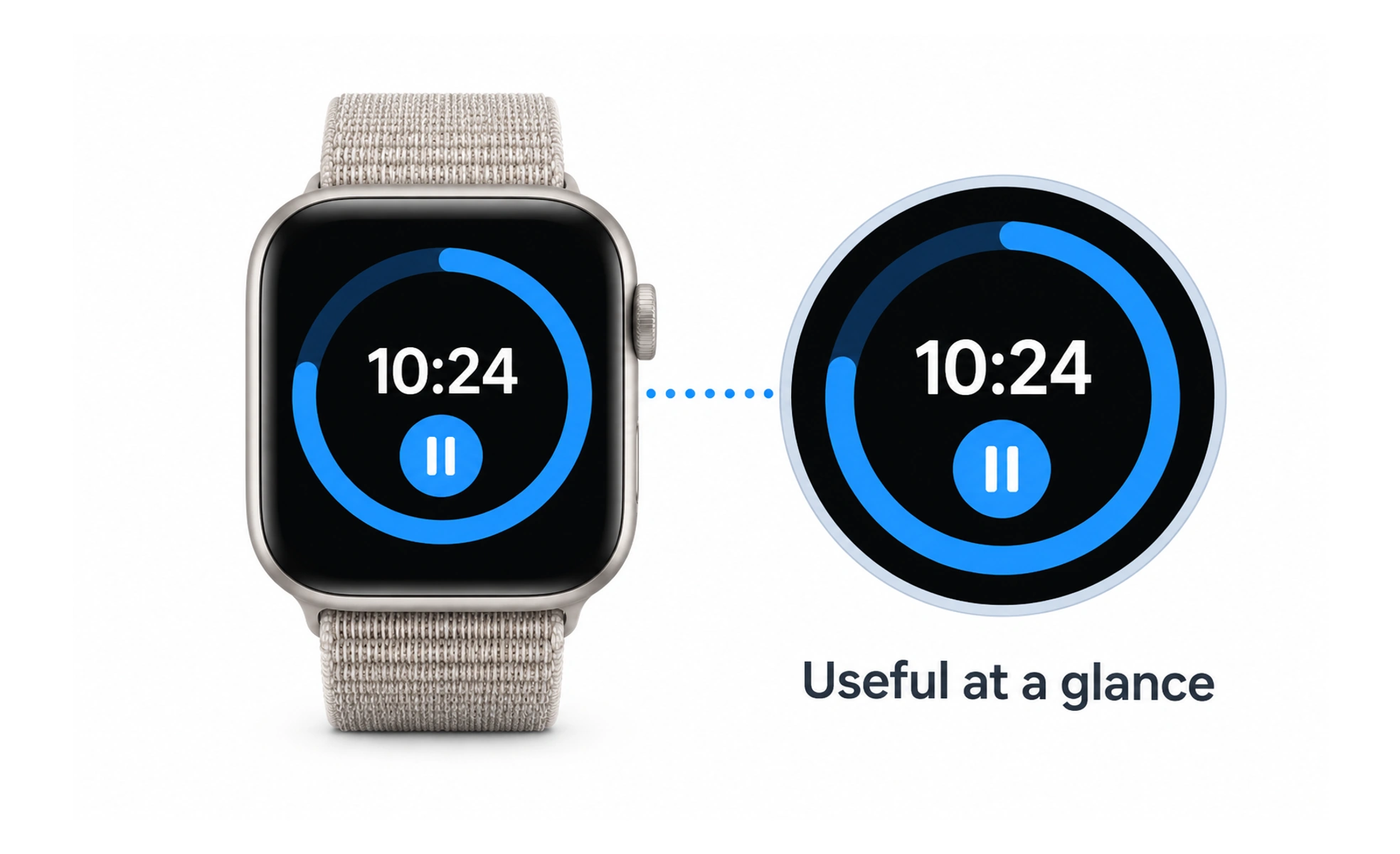
The small screen and glance-based use make a smartwatch suited to brief, timely information and simple actions. It may receive data from a phone or measure activity, but its capabilities, connectivity, and accuracy vary by device and setting.
A smartwatch is like a small status panel on your wrist: useful for a quick signal, while longer conversations belong on a larger screen.
Design for a glance
Prioritize one clear fact or action that can be understood quickly. Use concise text, strong contrast, and a predictable visual order. Avoid shrinking a phone interface to fit the watch; remove secondary detail and provide a sensible route to continue on a larger device when needed.
Keep interaction brief
Small targets and limited typing make long forms difficult. Prefer simple choices, confirmations, or dismissals and allow voice or another input only when it works reliably in context. Provide feedback after an action so people can tell whether the watch or connected phone changed state.
Treat notifications carefully
A wrist alert is immediate and physically noticeable, so reserve it for messages worth interrupting the user. Give people control over categories and previews, and consider whether sensitive content may be seen by others. Avoid duplicate alerts when the phone and watch are both nearby.
Respect health and device limits
Sensors can provide estimates, not guaranteed measurements for every person or situation. Explain uncertainty when it affects a decision, and do not present a consumer reading as medical advice. Design for battery limits, offline periods, accessibility settings, and differences across watch sizes.
Frequently asked questions
Key takeaways
- Make smartwatch information brief, timely, and easy to scan.
- Keep interactions simple and provide clear action feedback.
- Treat wrist notifications as interruptions and give people control.
- Communicate sensor limits and account for device variation.