

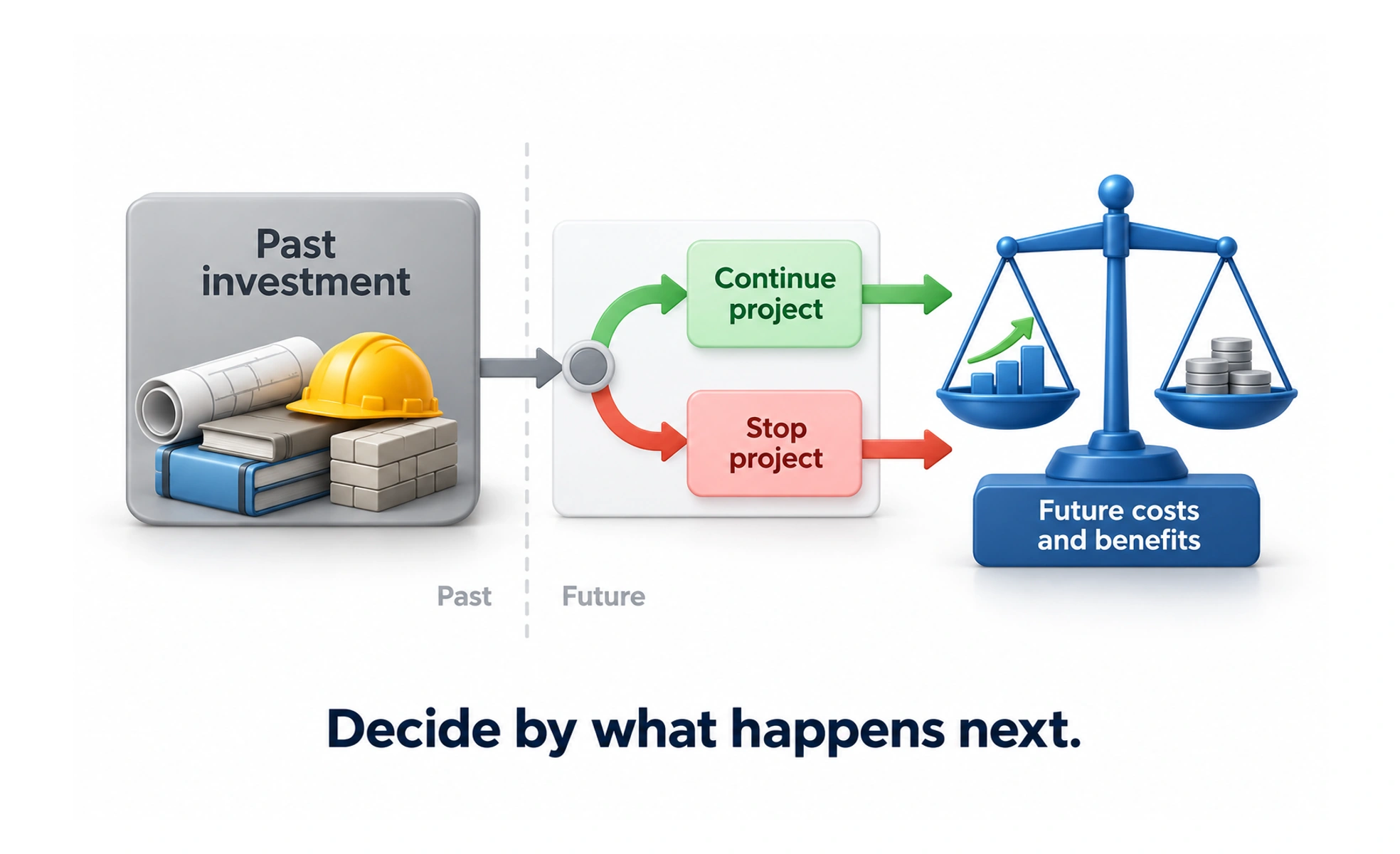
A sunk cost is a past investment that cannot be recovered through the current decision. The sunk cost effect occurs when that past spending unduly influences whether people continue, despite the expected future costs and benefits.
Finishing an unpleasant film because the ticket is already paid does not recover the ticket price. The remaining choice concerns how to spend the time still available.
Separate past spending from future value
Time, money, and effort already spent can feel like reasons to continue. Ask what each available option would cost and provide from this point onward. The purpose is to make a better current decision, not to deny that the earlier investment happened.
Consider assets that remain useful
Past work can leave reusable content, knowledge, code, or relationships. Their future usefulness belongs in the evaluation even though the original spending is sunk. Distinguish that continuing value from a desire to avoid admitting that part of the work did not succeed.
Create explicit review points
Agree on what evidence would justify continuing, changing direction, or stopping. Invite perspectives from people who were not responsible for the original decision. Clear criteria can reduce the pressure to defend a project merely because substantial effort or personal reputation is attached to it.
Example: an unused dashboard
A team may have spent months building a dashboard that customers rarely need. It can compare a focused repair, a different use, and retirement based on expected value and maintenance. Keeping it solely because it took months to build can consume resources that would help customers elsewhere.
Frequently asked questions
Key takeaways
- Evaluate choices using future costs and benefits.
- Acknowledge past investment without treating it as recoverable.
- Include genuinely reusable assets in the current decision.
- Use evidence-based review points and outside perspectives.