

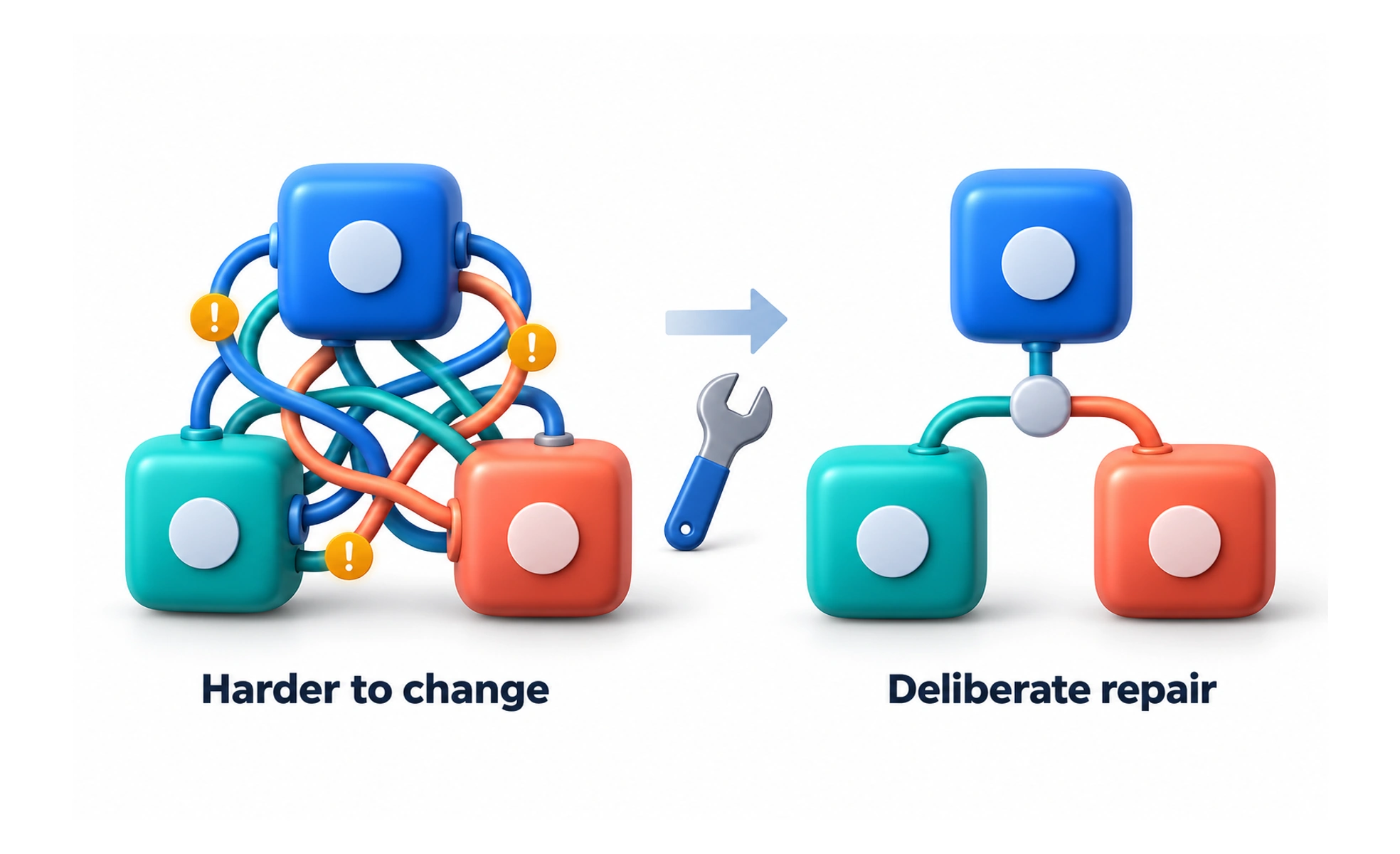
Technical debt can result from deliberate shortcuts, outdated dependencies, duplicated logic, or design choices that no longer fit the product. Like financial debt, it may be reasonable when the trade-off is understood, but it becomes harmful when its cost is invisible or unmanaged.
A temporary extension cord can keep a room working today. If it becomes permanent and tangled, every repair takes longer and someone may trip. Technical debt is the hidden friction that accumulates when a temporary compromise is never revisited.
Recognize the cost, not just the code
Debt matters when it slows delivery, causes repeated defects, makes behavior difficult to understand, or increases security and reliability risk. A messy-looking file is not automatically important debt if it rarely changes and causes no practical harm.
Separate intentional trade-offs from accidents
A team may choose a simpler implementation to validate an idea quickly. That can be sensible when the scope and follow-up are understood. Accidental debt is more likely when decisions are undocumented, constraints are forgotten, or ownership is unclear.
Prioritize by impact and likelihood
Estimate how often a problem affects work and what harm it can cause. Security exposure, data loss, and widespread reliability problems deserve attention before minor cleanup. Connect each proposed repayment to a concrete outcome so the work can be evaluated.
Repay safely and prevent recurrence
Refactor in small steps, preserve observable behavior, and add checks around risky areas. Reduce sources of repeated debt through better tooling, clearer ownership, and sustainable delivery plans. Avoid using the label as a reason to rewrite systems without evidence.
Frequently asked questions
Key takeaways
- Measure technical debt by its effect on delivery and risk.
- Document intentional shortcuts and revisit conditions.
- Prioritize high-impact reliability, security, and data risks.
- Repay incrementally and connect work to a measurable outcome.