

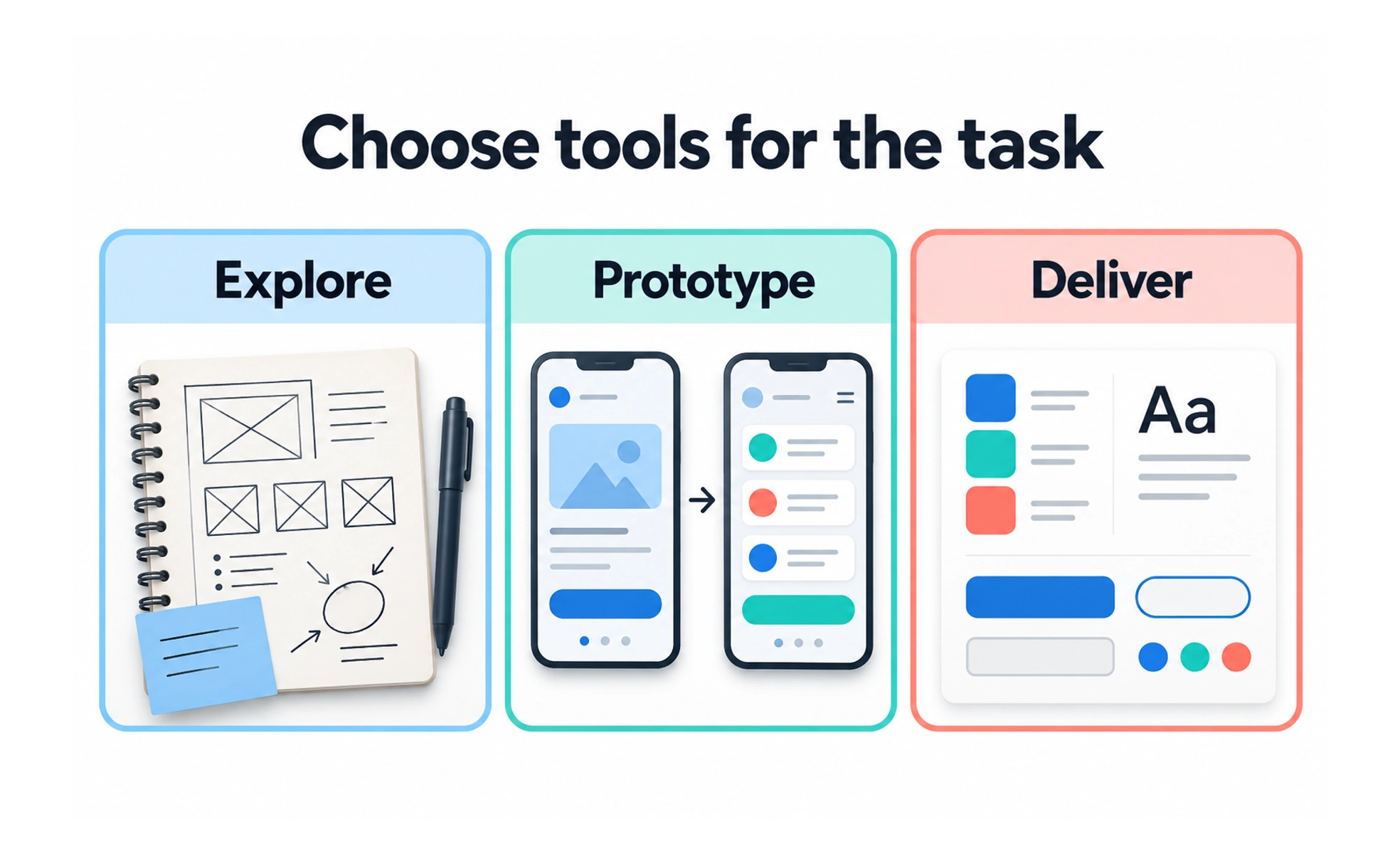
From vector UI design apps like Figma to user testing platforms, tools shape how design teams collaborate. The modern design toolchain enables seamless cloud collaboration and rapid developer handoff.
Think of it as a carpenter's modern workshop. While traditional saws and hammers built foundations, modern computer-controlled saws let craftspeople cut complex joints with micrometer precision.
Types
The modern digital product design toolchain spans several specialized software categories.
- Interface and vector tools like Figma and Sketch allow teams to build vector components, responsive layouts and design tokens.
- Prototyping tools create interactive animations, state logic and micro-interactions for usability testing.
- User research platforms recruit participants, record screen interactions, run tree tests and synthesize survey feedback.
- Handoff and design token tools extract CSS properties, export vector SVG assets and sync design tokens directly to Git repositories.
When to use it
Select and standardize design tools to maximize cross-functional speed and maintain system integrity.
- Design system maintenance leverages centralized component libraries that update instantly across all squad files.
- Asynchronous design critique uses in-canvas commenting and audio huddles to gather stakeholder feedback across time zones.
- Developer handoff sessions provides engineers with inspected typography tokens, spacing values and auto-generated CSS code.
- Remote collaborative workshops uses infinite whiteboards to run FigJam brainstorming sessions and affinity diagram mapping.
Common mistakes
Designers frequently confuse software mastery with genuine problem-solving ability.
- Becoming dogmatically attached to one tool, forgetting that design tools evolve and change rapidly over time.
- Over-prototyping in software before validating the underlying conceptual workflow with cheap paper sketches.
- Cluttering shared library files with messy, unorganized components that confuse engineering and design peers.
Frequently asked questions
Key takeaways
- Design tools facilitate vector UI construction, interactive prototyping, research and developer handoff.
- Cloud-based collaboration tools enable real-time teamwork between designers, engineers and product managers.
- Tool proficiency does not equal design ability; great tools cannot rescue bad product thinking.
- Standardize tools and component libraries across squads to maintain visual consistency and handoff speed.