

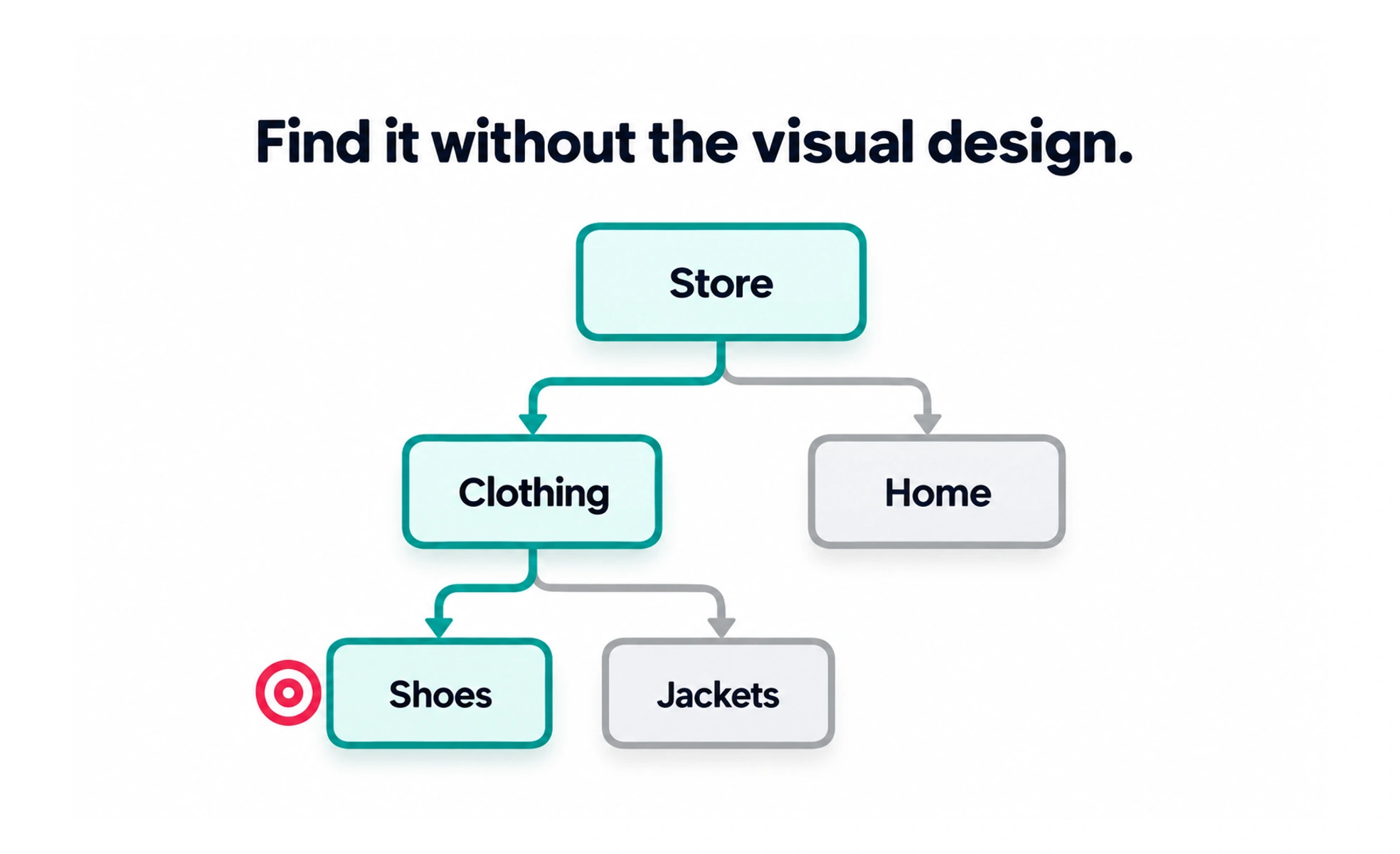
Also called reverse card sorting, participants navigate a simplified, text-only tree structure to find specific items. Because visual cues, search boxes, and branding are stripped away, it isolates navigation performance cleanly.
Think of it like this. You test a building emergency stairwell system using only architectural blueprints before any interior decoration or signs are installed.
How it works
Users are given realistic scenarios like 'Where would you change your billing notification email?' and click down through text category branches. The test records task success, directness, and backtracking paths.
When to use it
Run tree tests after drafting an information architecture or sitemap, but before designing page layouts or menu components.
Trade-offs
It produces clear, objective findability data quickly, but lacks context on how visual cues like icons or promotional banners might guide users in the real app.
Frequently asked questions
Key takeaways
- Tests navigation hierarchy findability without visual design interference.
- Reveals whether category labels make sense to users before building menus.
- Tracks both task completion and how much backtracking users did to get there.