

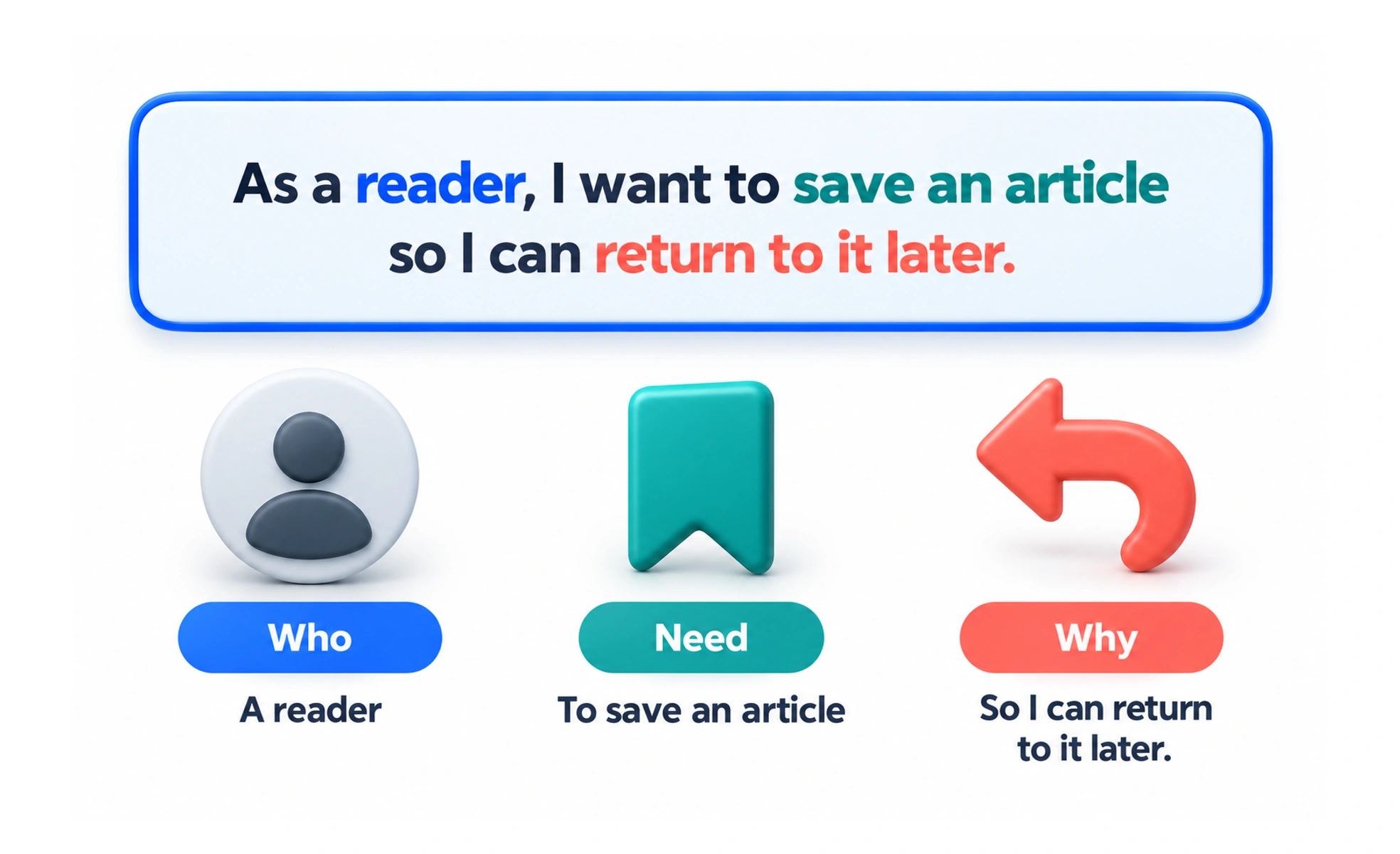
Typically written as 'As a [user], I want [goal], so that [benefit]', it keeps development focused on human outcomes. Accompanied by acceptance criteria, it guides agile sprint execution.
Think of it as a brief job order given to an architect. Instead of demanding a specific brand of bricks, you state that you need a sunny dining nook for family breakfasts.
How it works
A user story captures user intent and value using a standardized three-part template.
- Role definition specifies the exact user persona, such as first-time learner or enterprise administrator.
- Desired action states the capability or task the person needs to perform without prescribing implementation.
- Underlying benefit articulates the practical human value or problem solved by completing the action.
- Acceptance criteria define testable conditions that must pass for the engineering team to consider the story done.
When to use it
Use user stories during agile planning to define deliverable chunks of user value.
- Backlog refinement sessions break massive product epics into small, testable slices deliverable in one sprint.
- Aligning cross-functional squads ensures engineers, designers and testers agree on what user success looks like.
- Writing automated test suites uses acceptance criteria as the foundation for end-to-end integration tests.
- Prioritizing release scopes allows teams to launch minimum viable slices that deliver immediate utility.
Common mistakes
Teams frequently ruin user stories by writing technical specifications in disguise.
- Dictating technical implementation like 'As a developer, I want a SQL table' instead of describing user value.
- Omitting acceptance criteria, leaving engineers and QA guessing which edge cases must be handled.
- Creating massive mega-stories that cannot be built and tested within a single two-week sprint.
Frequently asked questions
Key takeaways
- User stories frame product requirements from the perspective of the person using the software.
- The classic formula connects role, action and benefit: 'As a... I want... So that...'
- Acceptance criteria define concrete, testable conditions for when a story is officially complete.
- Stories should describe user value, never technical implementation details.