

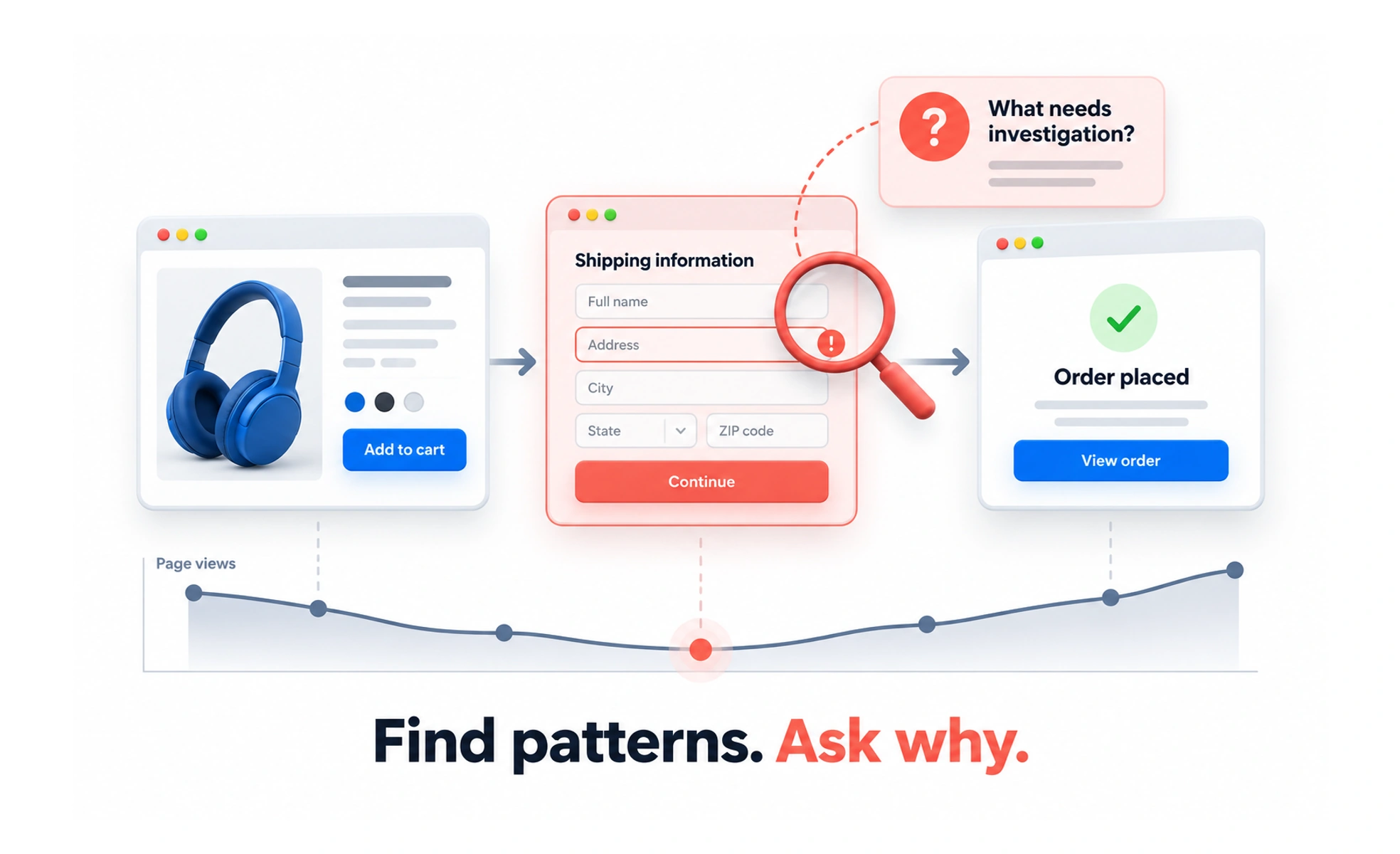
UX analytics uses behavioral data to understand how people move through an experience. It helps teams find patterns and questions to investigate when improving usability and value.
Footprints can show which paths visitors take through a park, but a conversation may be needed to understand why they avoid a particular route.
Measure meaningful interactions
Choose events that answer a clear experience question and define when each event is recorded. A click, completed action, and successful database save are different facts. Good event definitions prevent the team from mistaking an attempted action for a completed outcome.
Inspect journeys and segments
Funnels, paths, and cohorts can reveal where people stop or behave differently. Compare relevant devices, account states, and experience levels. A broad average may hide a mobile problem or a barrier affecting new users while established users continue successfully.
Connect patterns to research
Analytics can show that abandonment occurs without explaining the person’s intention or difficulty. Use interviews, usability sessions, or support evidence to investigate plausible causes. Consider alternative explanations before deciding that the screen with the last recorded event caused the problem.
Example: an assessment flow
A team may see learners leaving before the first question. It can check loading errors, the introductory message, and whether people expected a different commitment. Collect only data needed for the investigation and protect sensitive responses rather than recording every field indiscriminately.
Frequently asked questions
Key takeaways
- Define events around the questions being investigated.
- Distinguish attempts from successful outcomes.
- Use segments to reveal uneven experiences.
- Combine analytics with research and responsible data collection.