

It encompasses research, information architecture, interaction design, usability testing and content strategy. Rather than focusing solely on visual aesthetics, it ensures products solve real problems.
Think of it as designing a modern hospital. It is not just about choosing paint colors. It is about how ambulances arrive, how patients navigate corridors, and how doctors reach emergency rooms.
How it works
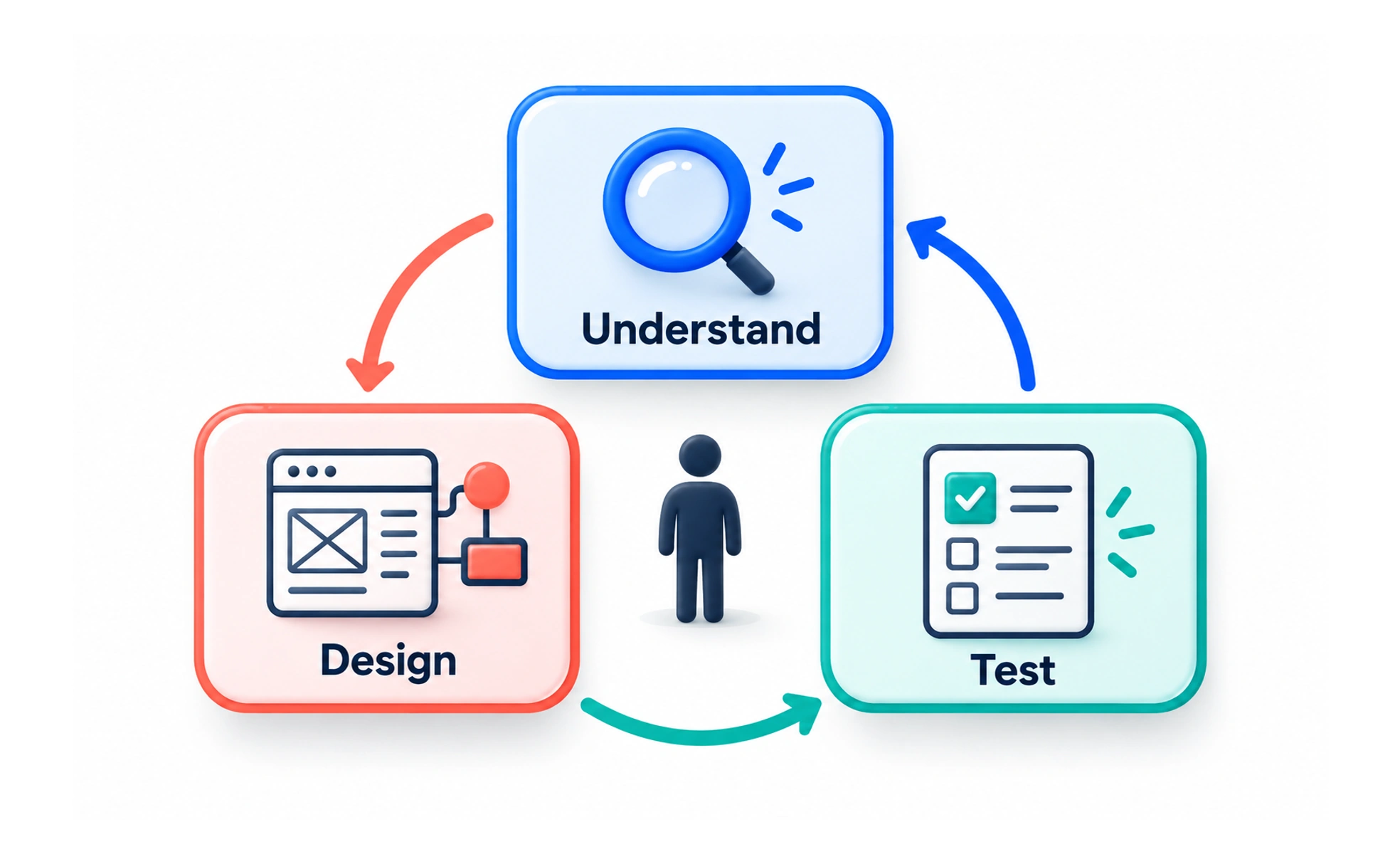
UX design follows an iterative, user-centred lifecycle moving from discovery to delivery.
- User research and discovery studies real human behaviors, pain points and mental models through interviews and observations.
- Information architecture and workflows organizes information hierarchies, navigation pathways and task flows logically.
- Wireframing and prototyping creates structural layout blueprints and interactive simulations to test usability fast.
- Usability testing and iteration observes real users attempting tasks, measuring completion rates and refining solutions.
When to use it
Integrate UX design into every product initiative from inception through ongoing maintenance.
- Launching new digital products validates customer problems and defines seamless onboarding workflows from day one.
- Refactoring legacy enterprise software untangles cluttered menus and complex forms into efficient, modern workflows.
- Optimizing conversion funnels removes cognitive friction and ambiguous labels that cause checkout abandonment.
- Building accessible systems ensures products work flawlessly for people with diverse motor, visual and cognitive abilities.
Common mistakes
Organizations frequently misapply UX design by treating it as a superficial skin applied at the end.
- Treating UX as visual UI styling, bringing designers in only after engineers have built rigid, unworkable architectures.
- Designing without user research, building complex features based entirely on executive assumptions and competitor mimicry.
- Stopping at initial launch, forgetting that real UX optimization begins when real customer telemetry and feedback arrive.
Frequently asked questions
Key takeaways
- UX design solves real human problems by creating usable, efficient and enjoyable digital products.
- It encompasses research, architecture, interaction design, usability testing and content strategy.
- Aesthetics matter, but an attractive interface that fails to solve user problems is a failed design.
- Great UX design is an ongoing, empirical process of researching, prototyping, testing and iterating.