

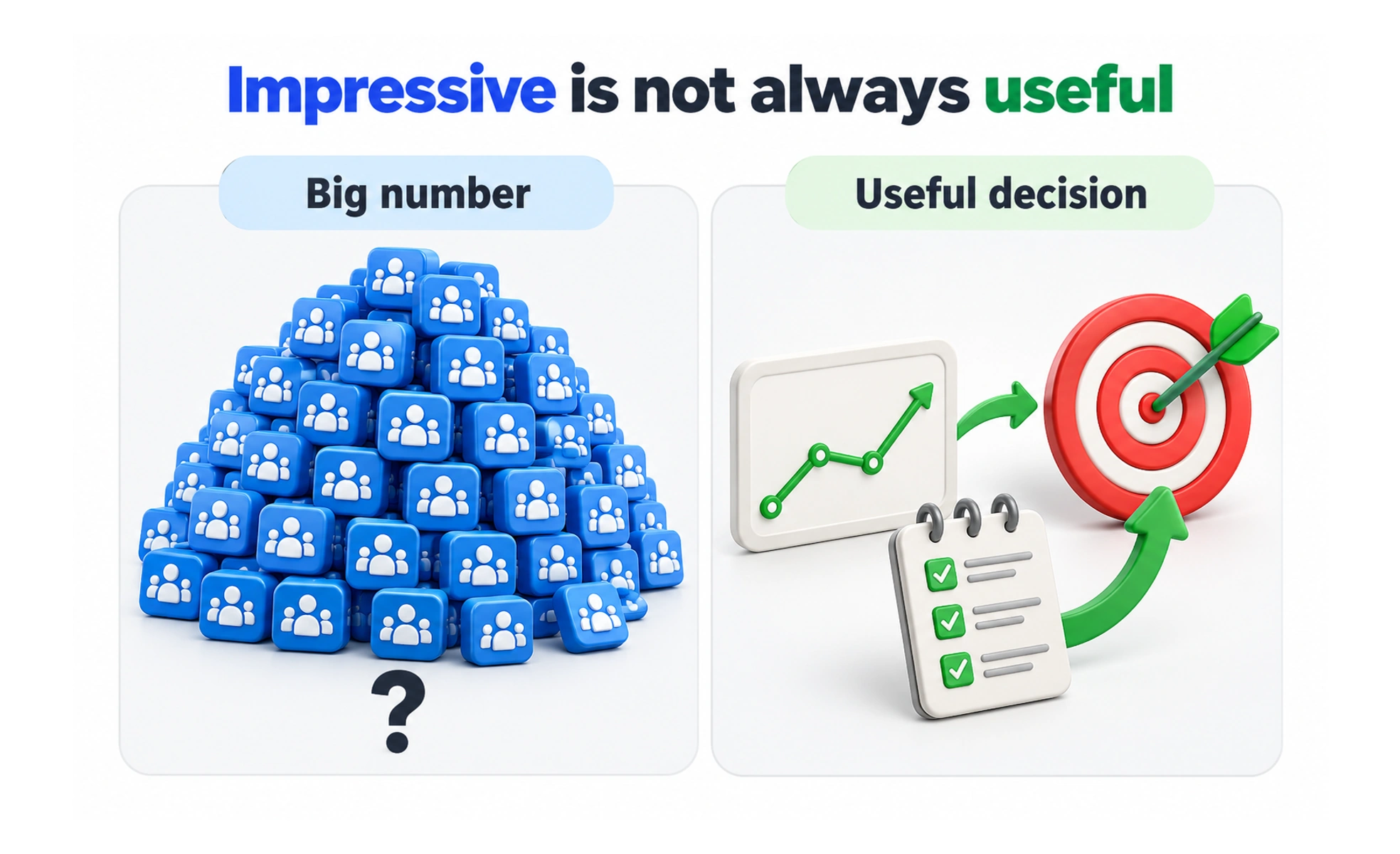
Vanity metrics are numbers presented as success without enough connection to useful outcomes or decisions. They may look impressive while hiding weak value, missing context, or poor underlying performance.
Counting people who glance into a shop window sounds encouraging, but it reveals little about whether customers find what they need or return.
Ask what the number means
A metric becomes unhelpful when people celebrate it without a clear link to the goal. Total registrations or page views can provide context, but they need definitions, time windows, and a reason to matter. Cumulative totals often rise even while the current experience deteriorates.
Add denominators and cohorts
Pair raw totals with relevant rates, starting groups, and observation periods. Distinguish new acquisition from continuing use. A large audience may include duplicates, inactive accounts, or people who never received the product’s intended value.
Connect measurement to a decision
Explain what change in the metric would lead the team to do differently. Investigate its relationship to a meaningful outcome and keep supporting evidence visible. Avoid replacing one impressive headline with another that is equally disconnected from user value.
Example: a growing course catalog
Publishing more lessons can be useful, but lesson count alone says little about quality or learning. Check whether the catalog addresses needs, whether content is complete, and whether learners can apply it. An empty topic labeled as available content would inflate the headline without delivering the promised experience.
Frequently asked questions
Key takeaways
- Question success claims without outcome context.
- Use denominators, periods, and cohorts.
- Distinguish available volume from delivered value.
- Choose numbers that can inform a useful action.