
UX Design Processes & Research Methods
Learn common design processes, such as sprints and the Double Diamond, and the research methods teams use.
Design teams follow processes to move from a vague problem to a tested solution, and use research methods to learn along the way. This lesson introduces three common processes and five research methods, and when each one is useful.
Design sprints
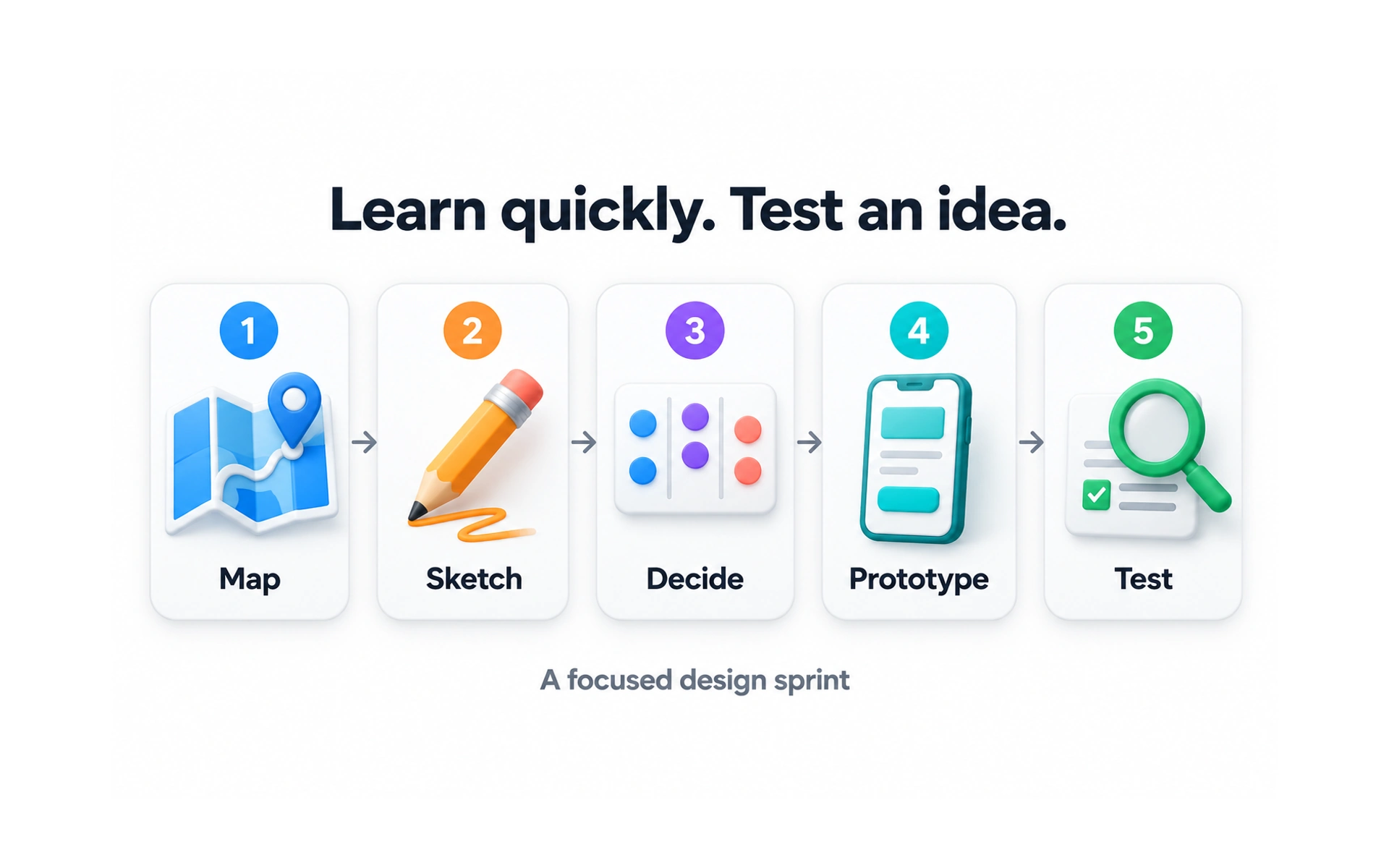
A design sprint is a short, structured process for answering a big question quickly. Jake Knapp developed it at Google Ventures.
The classic sprint takes five days, one for each step shown in the example: map the problem, sketch ideas, decide on the best one, build a prototype and test it with real users.
Because the team tests a realistic prototype by the end of the week, it learns whether an idea works before spending months building it.
The Double Diamond
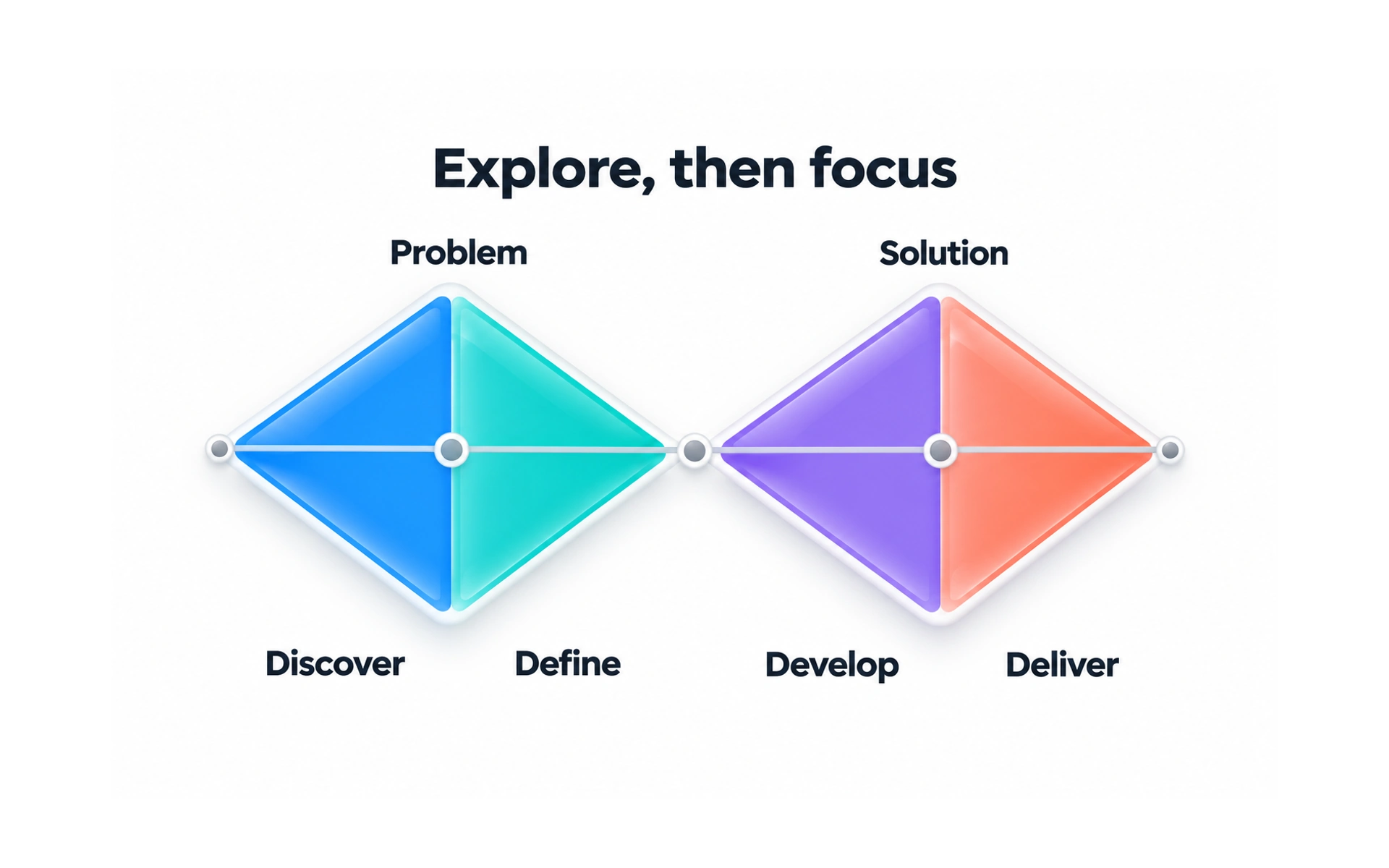
The Double Diamond, introduced by the UK Design Council, shows design as two rounds of exploring and then focusing. The first diamond is about the problem; the second is about the solution.
It has four stages:
- Discover: research widely to understand the problem.
- Define: narrow the findings into a clear problem statement.
- Develop: explore many possible solutions.
- Deliver: test, refine and launch the best one.
Teams often loop back. If testing in Deliver shows the problem was misunderstood, they return to Discover.
Design thinking
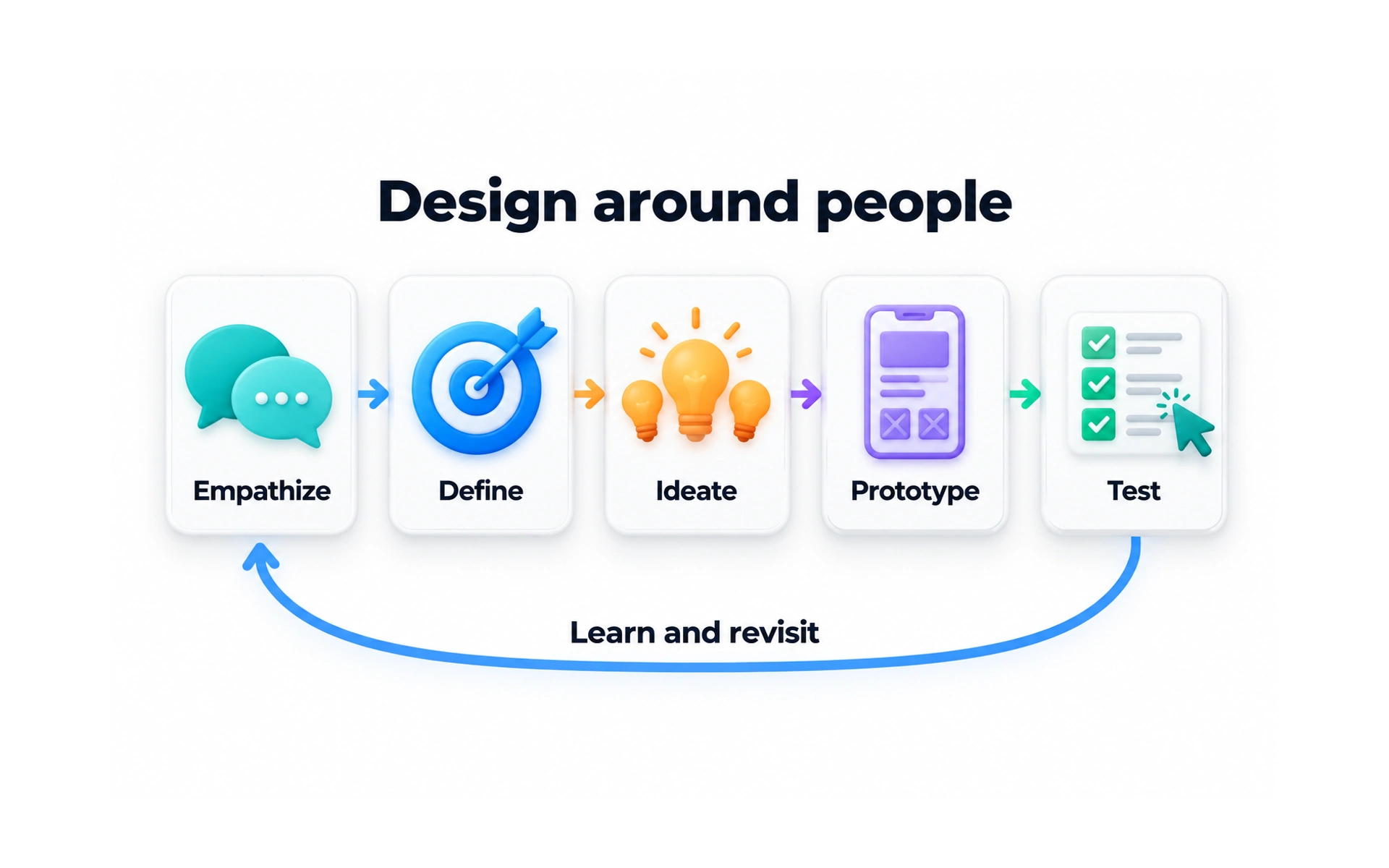
Design thinking is a people-centered way to solve problems. The example shows its five stages: Empathize, Define, Ideate, Prototype and Test.
Teams start by understanding users, define the problem, generate many ideas, build quick prototypes and test them with users.
As the arrow in the example shows, the process is not a straight line. What teams learn in testing often sends them back to an earlier stage.
The research process
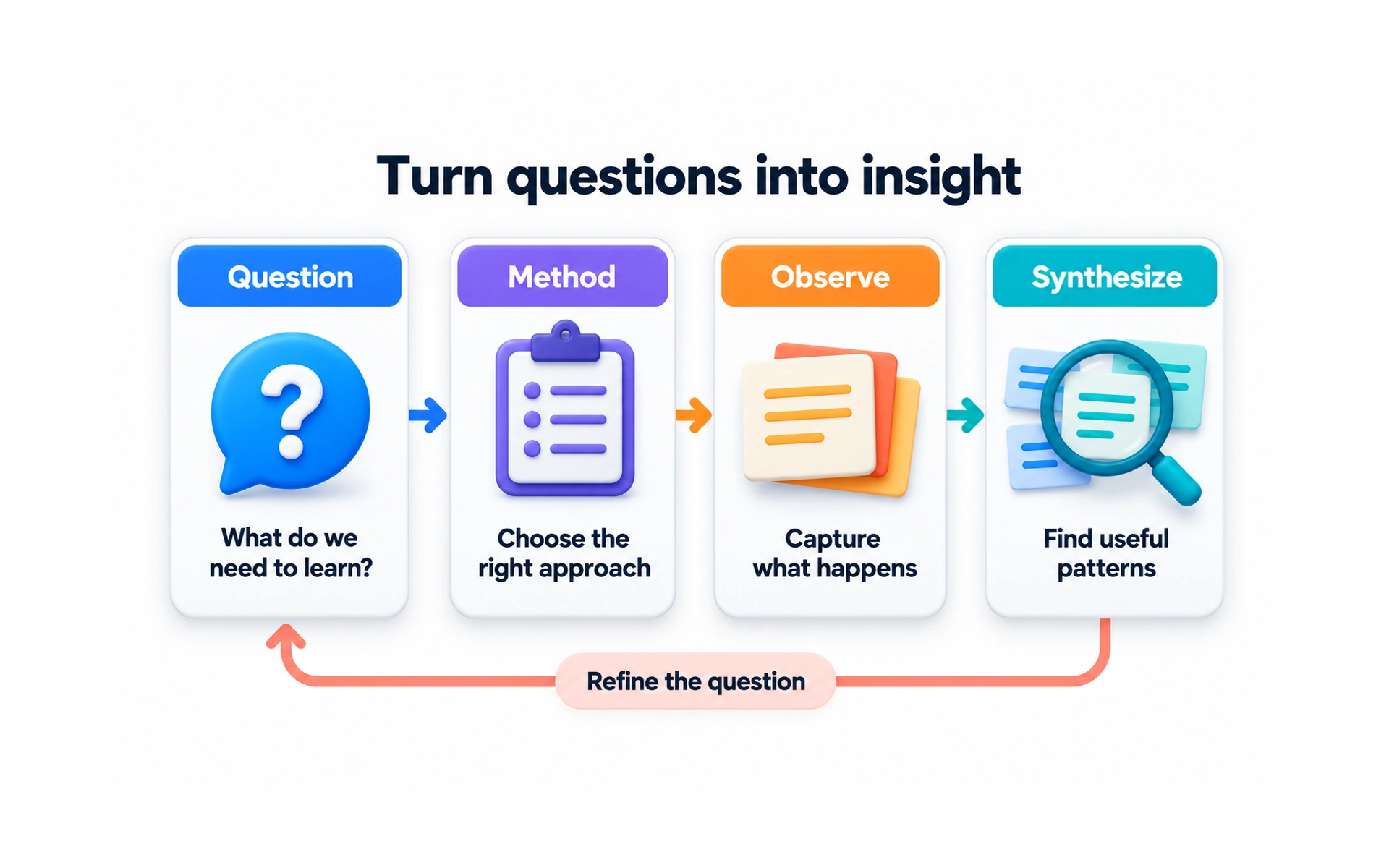
Good research starts with a clear question, not a method. The example shows the steps: decide what you need to learn, choose a method, observe and then synthesize what you found.
In more detail:
- Question: what do we need to learn, and why does it matter?
- Method: which technique best answers that question?
- Observe: run the sessions and record what actually happens.
- Synthesize: group observations into patterns and insights.
If the findings raise new questions, refine the question and go around again.
User interviews
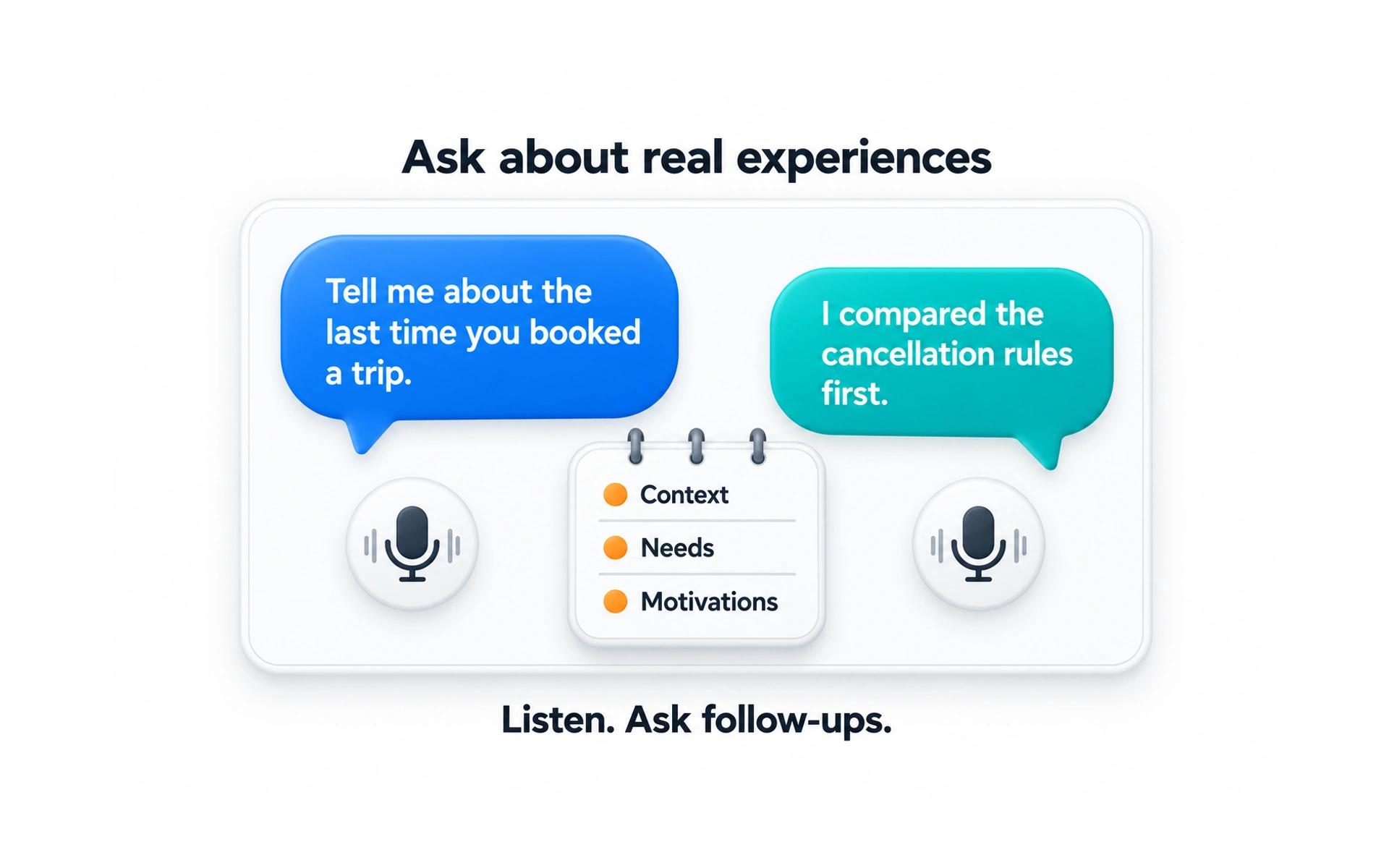
A user interview is a one-on-one conversation about someone’s experiences, needs and motivations. In the example, the interviewer asks "Tell me about the last time you booked a trip."
Ask about real past experiences, not hypothetical futures, and follow up on interesting answers. Listen more than you talk.
Interviews are best for understanding why people do things. They are less reliable for predicting what people will do.
Usability testing
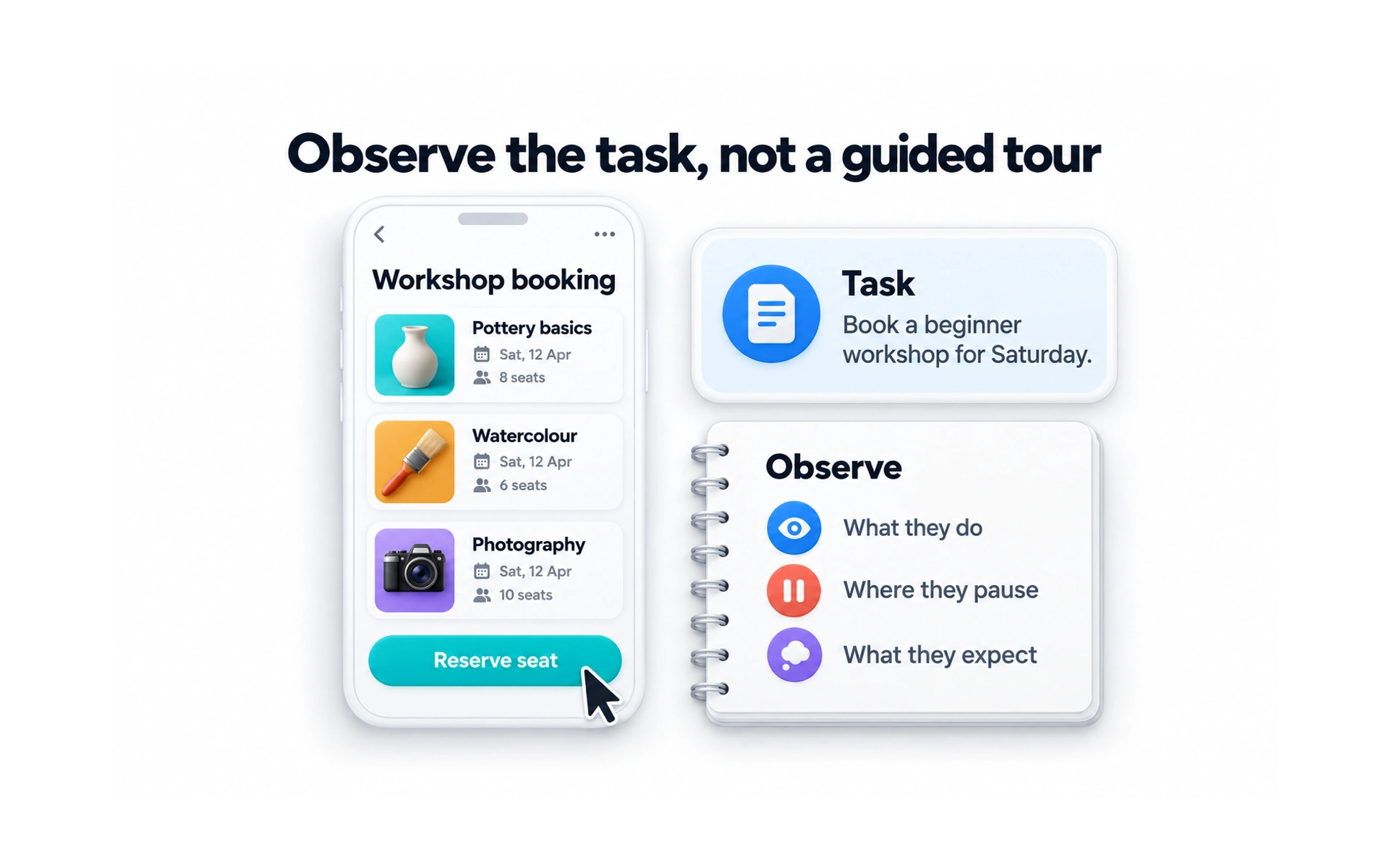
In a usability test, people try to complete real tasks with a design while you watch. In the example, the task is to book a beginner workshop for Saturday.
The observer notes what people do, where they pause and what they expect, without guiding them.
Testing works at every stage, from paper sketches to the live product. Even a handful of participants can reveal the biggest problems.
A/B testing
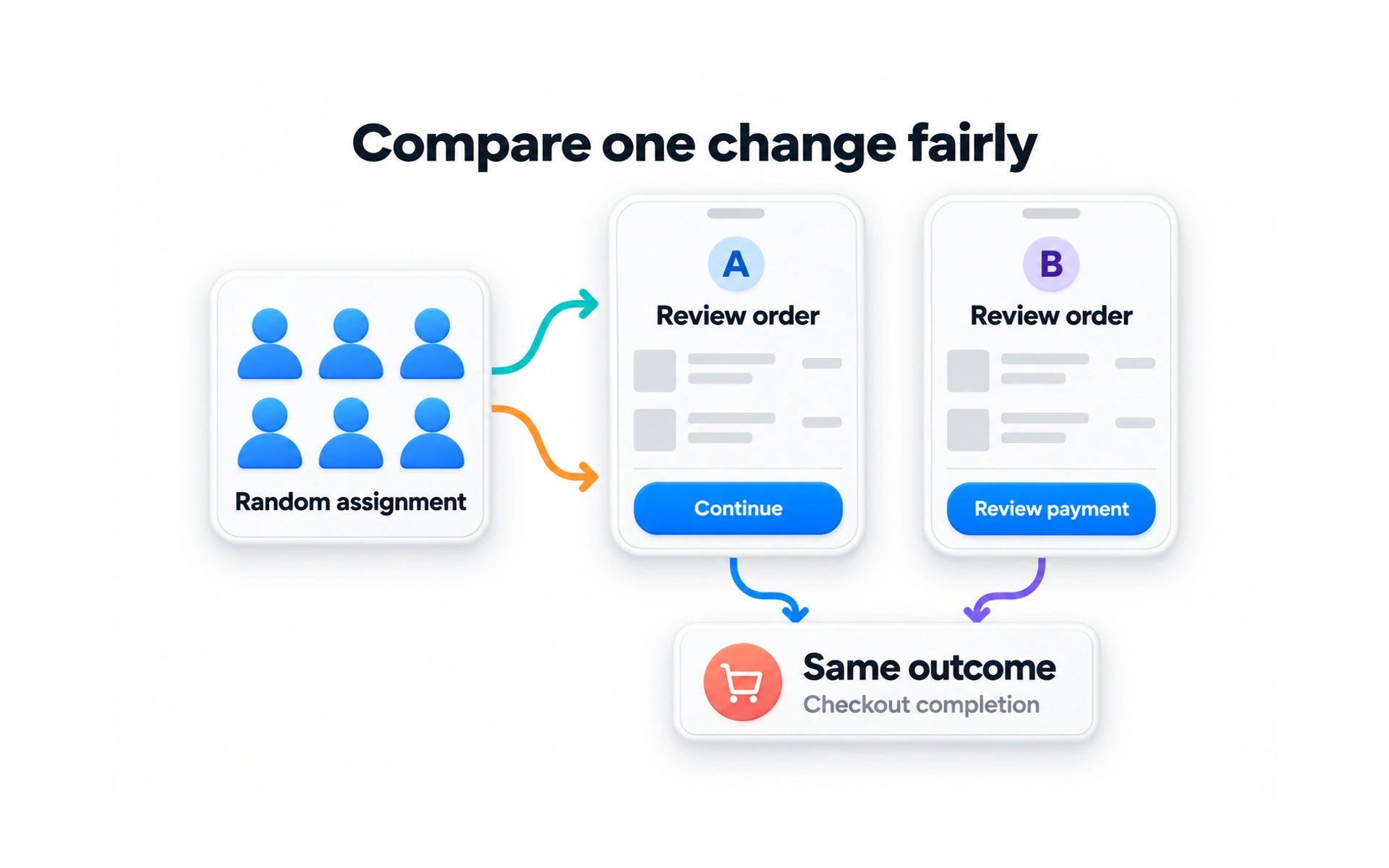
An A/B test compares two versions of a design with real users. In the example, people are randomly split between a "Continue" and a "Review payment" button, and the team measures checkout completion.
Here the versions differ only in the button label, which isolates the effect of that change. A test can also compare a bundle of changes, but then its result applies to the bundle as a whole.
A/B tests show which version performs better, but not why. They also need enough traffic to give reliable results, so they suit live products more than early concepts.
UX audits
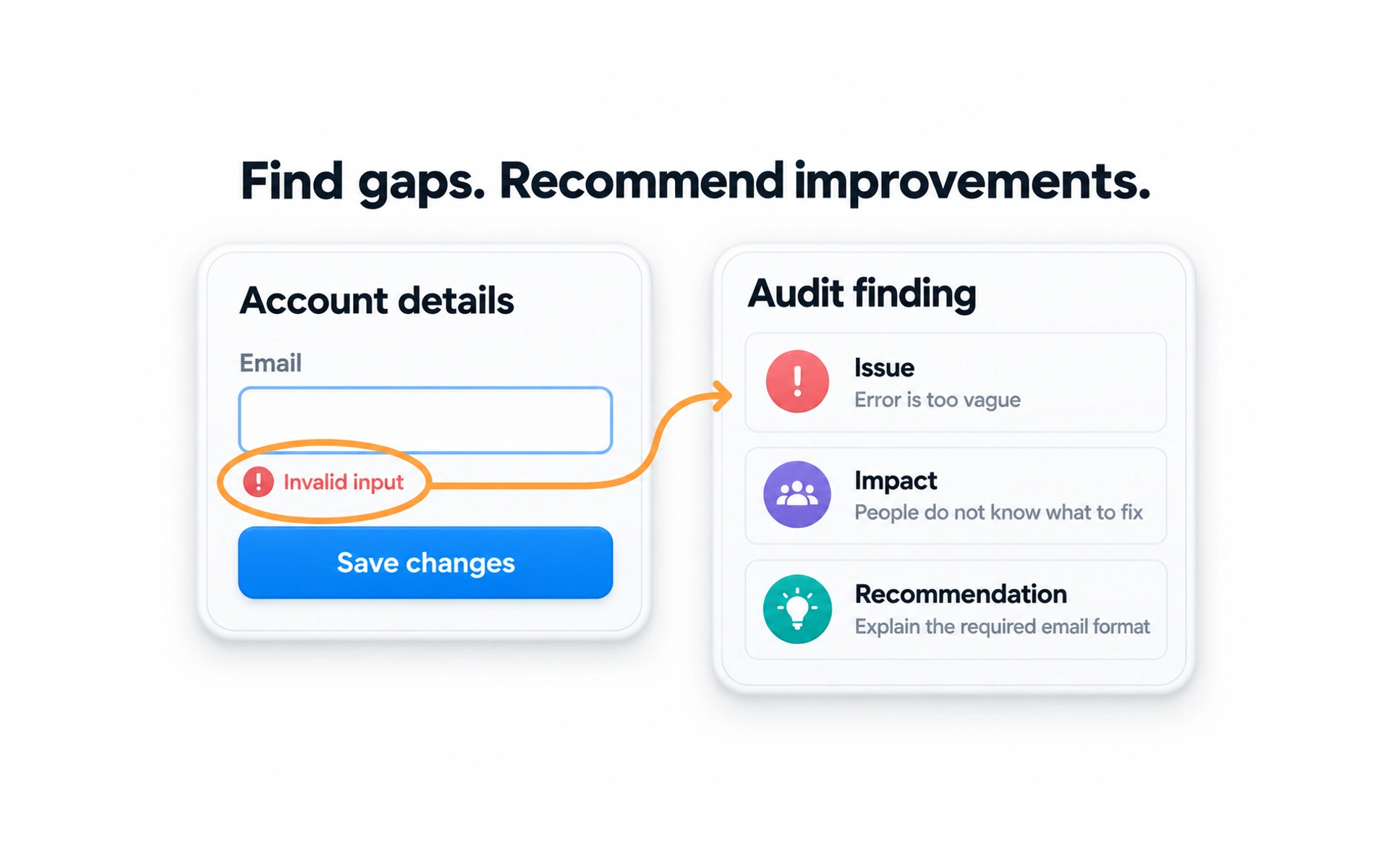
A UX audit is a review of an existing product to find usability problems. In the example, the error "Invalid input" is flagged as too vague, with its impact and a recommendation.
Audits often combine expert review against heuristics with existing data, such as analytics, support tickets and past research.
Each finding should state the issue, why it matters and what to do about it. An outside reviewer can bring a fresh perspective.
REFERENCES
TOPICS
FROM COURSE