

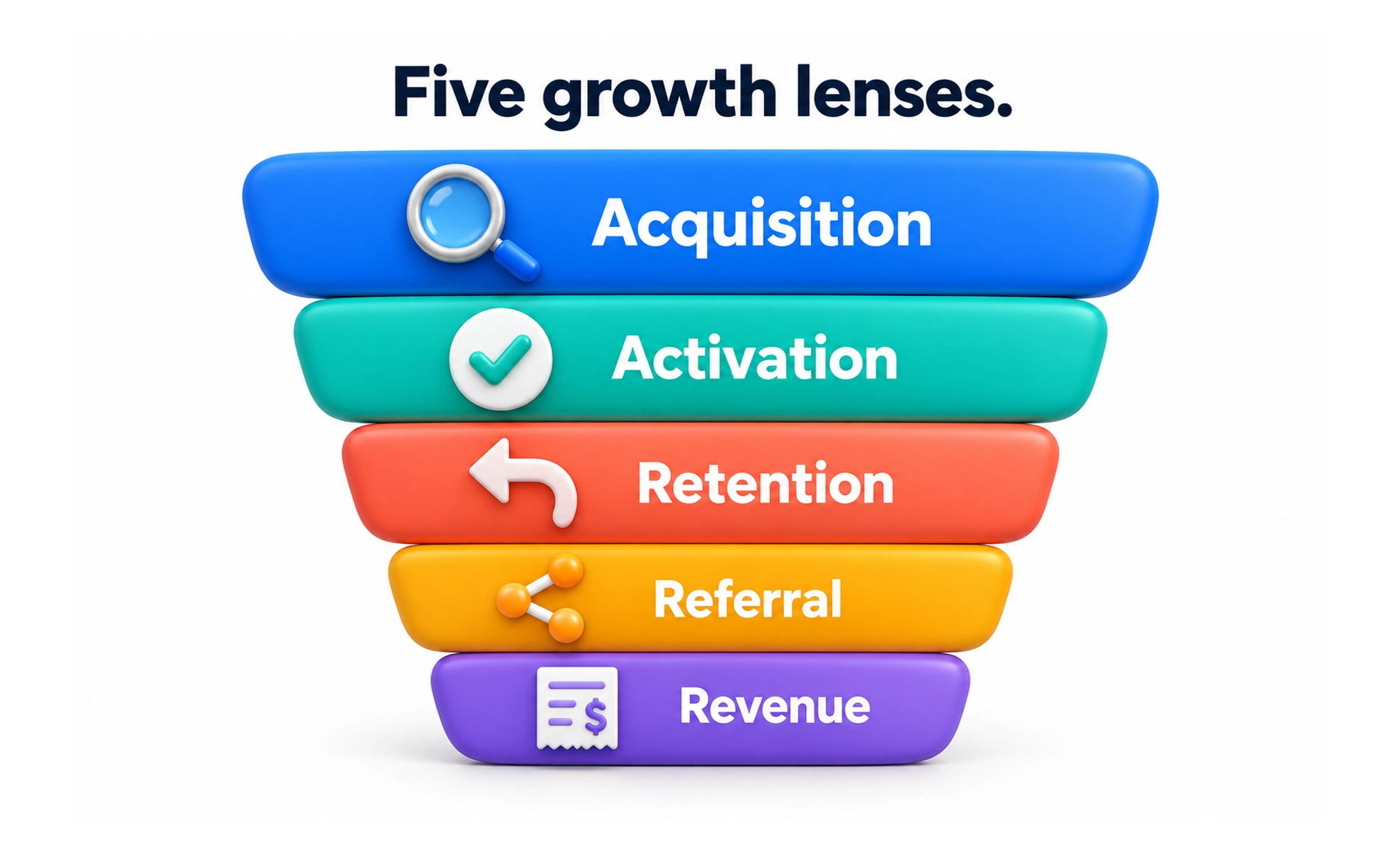
It is a diagnostic tool rather than a scorecard. Measuring all five and reporting them is not the point. Finding the one stage that is holding everything else back is.
Think of it like this. A bucket with a hole in it does not need a bigger tap. Pouring faster looks like progress right up until you check how much water is left.
How it works
- Acquisition. People arrive.
- Activation. They reach a first genuine experience of the value.
- Retention. They come back.
- Referral. They bring other people.
- Revenue. They pay.
The stage defined least carefully is usually activation, and it matters most. It has to be a specific moment for your product, such as a first invoice sent or a first lesson finished, rather than a proxy like signing up.
Teams that define it vaguely celebrate signups and then wonder why retention looks poor.
Common mistakes
- Optimising acquisition when retention is the problem. Pouring users into a product that does not hold them produces a rising number and a business that is not growing.
- Treating signup as activation. Registering and understanding the value are different events, and the gap between them is where most products lose people.
- Reporting all five and acting on none. Five numbers on a dashboard is not a diagnosis.
When to use it
It is most useful when growth has stalled and nobody agrees on why, because it turns a vague argument into a question about which specific stage is leaking.
It is least useful once you already know your constraint. A team that knows activation is the problem does not need the framework to tell them again, and instrumenting all five stages evenly wastes effort that belongs on the one that matters.
It also assumes people move through stages roughly in order, which fits products with a signup and a habit loop better than one off purchases.
Frequently asked questions
Key takeaways
- Find the stage that is binding. Do not just report five numbers.
- Retention compounds. Acquisition does not.
- Define activation as a real moment of value, never as signup.
- Fixing retention first makes every later acquired user worth more.