

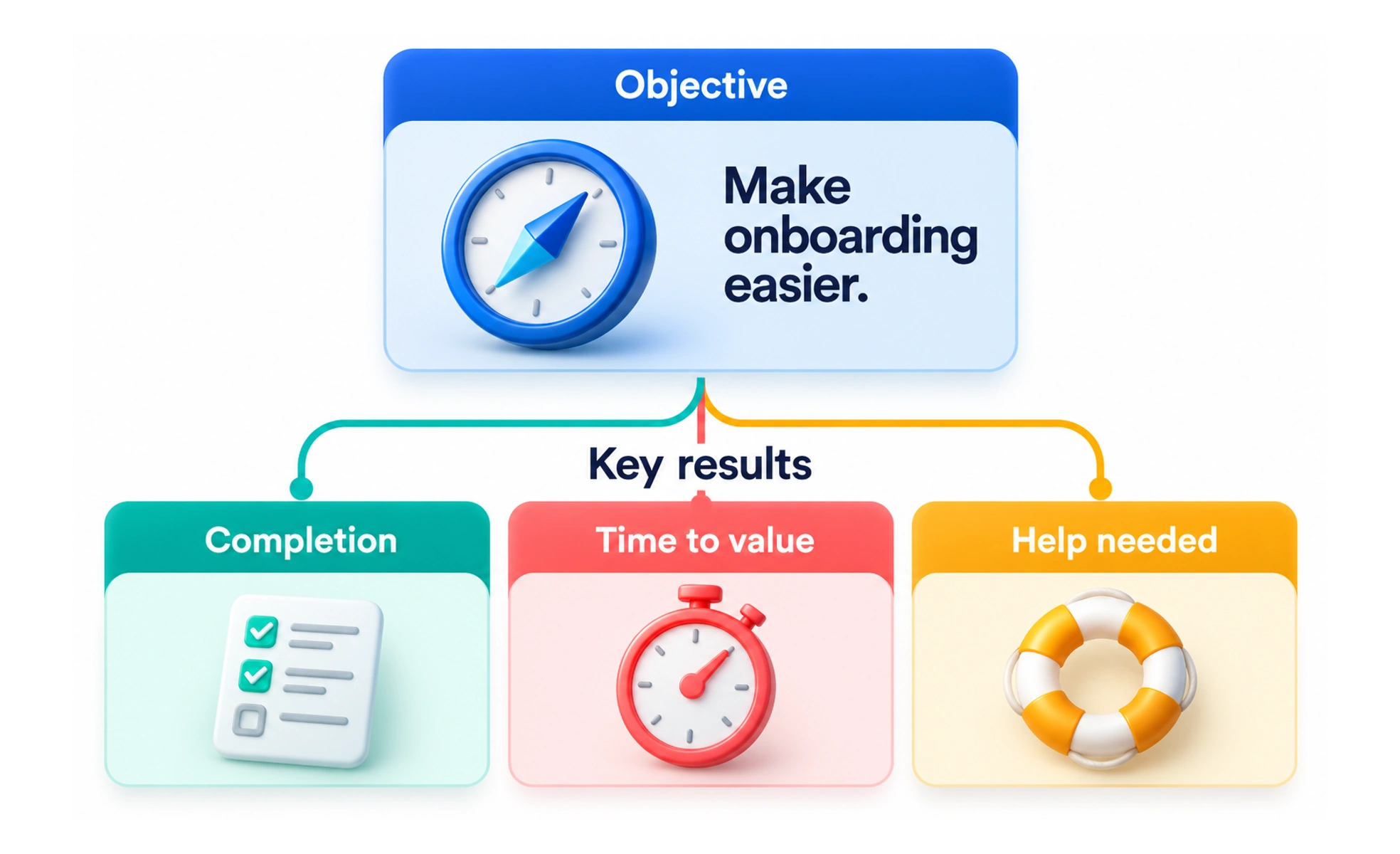
Popularized by Intel and Google, it aligns teams around shared outcomes rather than outputs. Quarterly OKR cycles maintain strategic focus while giving autonomous squads freedom in execution.
Think of it as planning an expedition. The objective is your destination, such as reaching the mountain summit, while key results are the trail markers confirming you are on track.
How it works
The OKR framework pairs directional ambition with verifiable numerical milestones.
- Objectives are memorable, inspirational qualitative statements describing what the team seeks to achieve.
- Key results are two to four quantitative metrics that objectively measure whether the objective was met.
- Scoring and grading evaluates progress on a zero to one scale, where seventy percent indicates healthy ambition.
- Quarterly rhythm establishes regular cadences for setting goals, tracking weekly check-ins and retrospective reviews.
When to use it
Use OKRs to align decentralized squads around unified business outcomes and customer priorities.
- Bridging strategy and execution connects high-level annual board goals to everyday engineering sprints.
- Encouraging ambitious bets creates psychological safety to set moonshot targets without fear of punishment.
- Breaking departmental silos sets shared cross-functional OKRs owned jointly by design, product and marketing.
- Focusing team attention forces leadership to choose three critical priorities and say no to distractions.
Common mistakes
Organizations routinely subvert OKRs by turning them into glorified task checklists.
- Writing task lists as key results, such as 'Launch redesign', instead of outcomes like 'Reduce churn'.
- Treating OKRs as performance reviews, which causes employees to negotiate conservative targets they know they can hit.
- Setting too many objectives, diluting focus until teams are overwhelmed trying to pursue twenty goals at once.
Frequently asked questions
Key takeaways
- OKRs combine inspirational qualitative goals with measurable quantitative milestone metrics.
- Key results must measure business or customer outcomes, never simple task completion lists.
- Achieving around seventy percent of an ambitious OKR is considered optimal performance.
- Never tie OKRs directly to compensation bonuses, or teams will sandbag and set easy targets.