

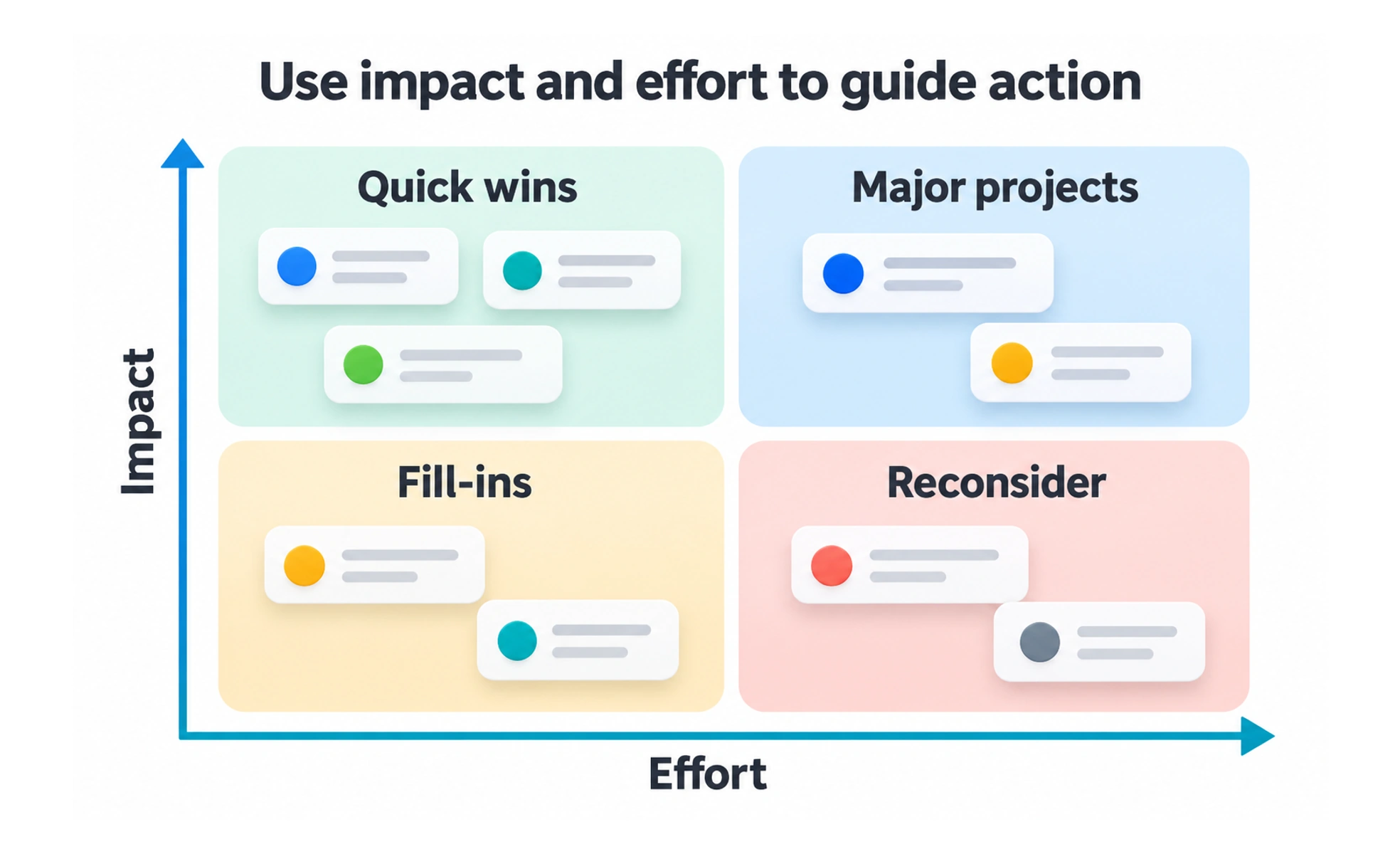
Both axes are estimates, so the matrix does not calculate an answer. Its value is forcing an explicit comparison between things that were previously all just called important.
Think of it like this. Packing for a trip, you weigh how useful something is against how much space it takes. The coat earns its bulk. The third pair of shoes does not.
How it works
Each item is placed on two axes, giving four groups.
- High impact, low effort. Quick wins. Do these now.
- High impact, high effort. Major projects. Worth doing, but they need planning and protection, because these are what urgent trivia perpetually displaces.
- Low impact, low effort. Fill ins. Batch or delegate. Dangerous because they feel productive and consume days invisibly.
- Low impact, high effort. Thankless work. Avoid, or remove the need entirely.
When to use it
Use it to structure a discussion, not to replace one.
Its best moment is when a team agrees everything is important and cannot say what comes first. Placing items on a shared grid surfaces disagreement immediately, because two people who both call something critical will put it in different quadrants.
That argument is the useful output. The positions themselves matter less than the conversation they force.
Trade-offs
- It cannot see dependencies. A high effort item may unlock three quick wins, and a two axis plot has nowhere to put that.
- It ignores time sensitivity. An opportunity closing next month scores the same as one available indefinitely.
- Impact estimates are usually optimistic. Often by a wide margin, and usually in the same direction, which quietly skews the whole grid.
Frequently asked questions
Key takeaways
- Four groups, four different responses, not a ranked list.
- Disagreement about placement is the point, not a problem.
- It cannot see dependencies or deadlines. You still have to.
- Estimate impact relative to something you already shipped.