

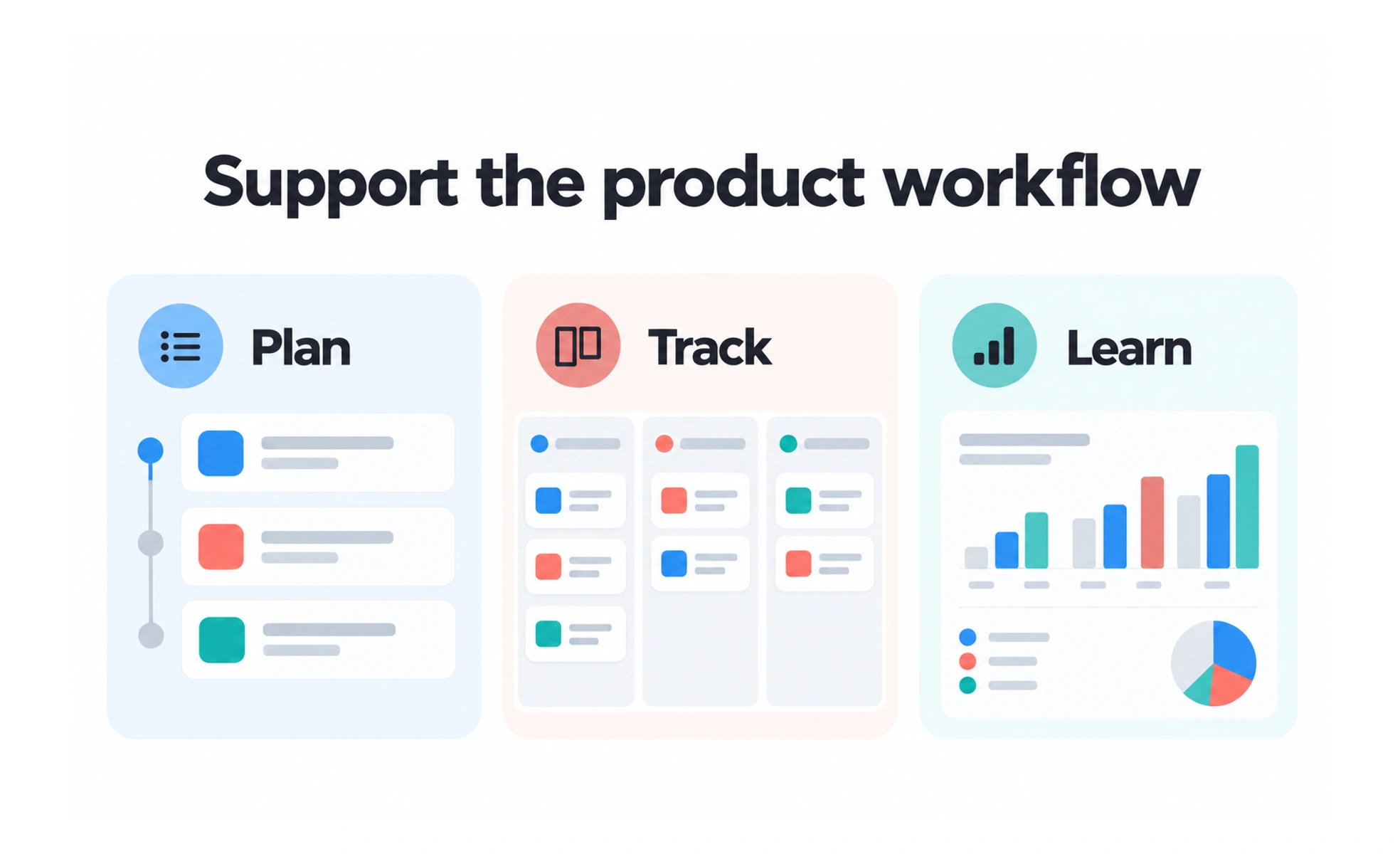
They support roadmap visualization, backlog tracking, user feedback collection and product telemetry. Using the right tool stack streamlines team collaboration and keeps strategy aligned.
Think of it like this. A master chef needs specialized knives, timers and order tickets to coordinate a busy kitchen without orders getting burned or forgotten.
Types
Product management tools organize around distinct functional workflows across the product lifecycle.
- Roadmapping tools visualize strategic initiatives, themes and timelines for executive and customer communication.
- Backlog and issue trackers break epic features into actionable user stories, managing sprint boards and bug queues.
- Product analytics platforms capture funnel metrics, user retention cohorts, session replays and feature adoption rates.
- Customer feedback repositories consolidate survey results, interview recordings and feature requests into searchable databases.
When to use it
Adopt specialized product tools when team scale outgrows basic spreadsheets and document docs.
- Cross-functional sprint coordination gives designers, engineers and QA shared visibility into active deliverables.
- Prioritizing roadmap candidates scores feature proposals using quantitative reach, impact and effort frameworks.
- Analyzing feature performance measures post-launch engagement against original baseline conversion goals.
- Synthesizing discovery research connects qualitative user interview quotes directly to backlog feature tickets.
Common mistakes
Teams often become obsessed with complex tooling at the expense of genuine customer discovery.
- Over-configuring elaborate workflows that create bureaucratic drag and discourage engineers from updating ticket status.
- Tool fragmentation where product managers use one tool and engineers use another, destroying cross-team transparency.
- Substituting tools for strategy, believing that an attractive Gantt chart guarantees customer value delivery.
Frequently asked questions
Key takeaways
- Product management tools coordinate roadmapping, backlog tracking, analytics and feedback.
- Choose tools that foster transparent, friction-free collaboration between design and engineering.
- Tools should serve the team workflow rather than imposing rigid bureaucratic processes.
- An attractive roadmap tool cannot compensate for an unclear product strategy.