

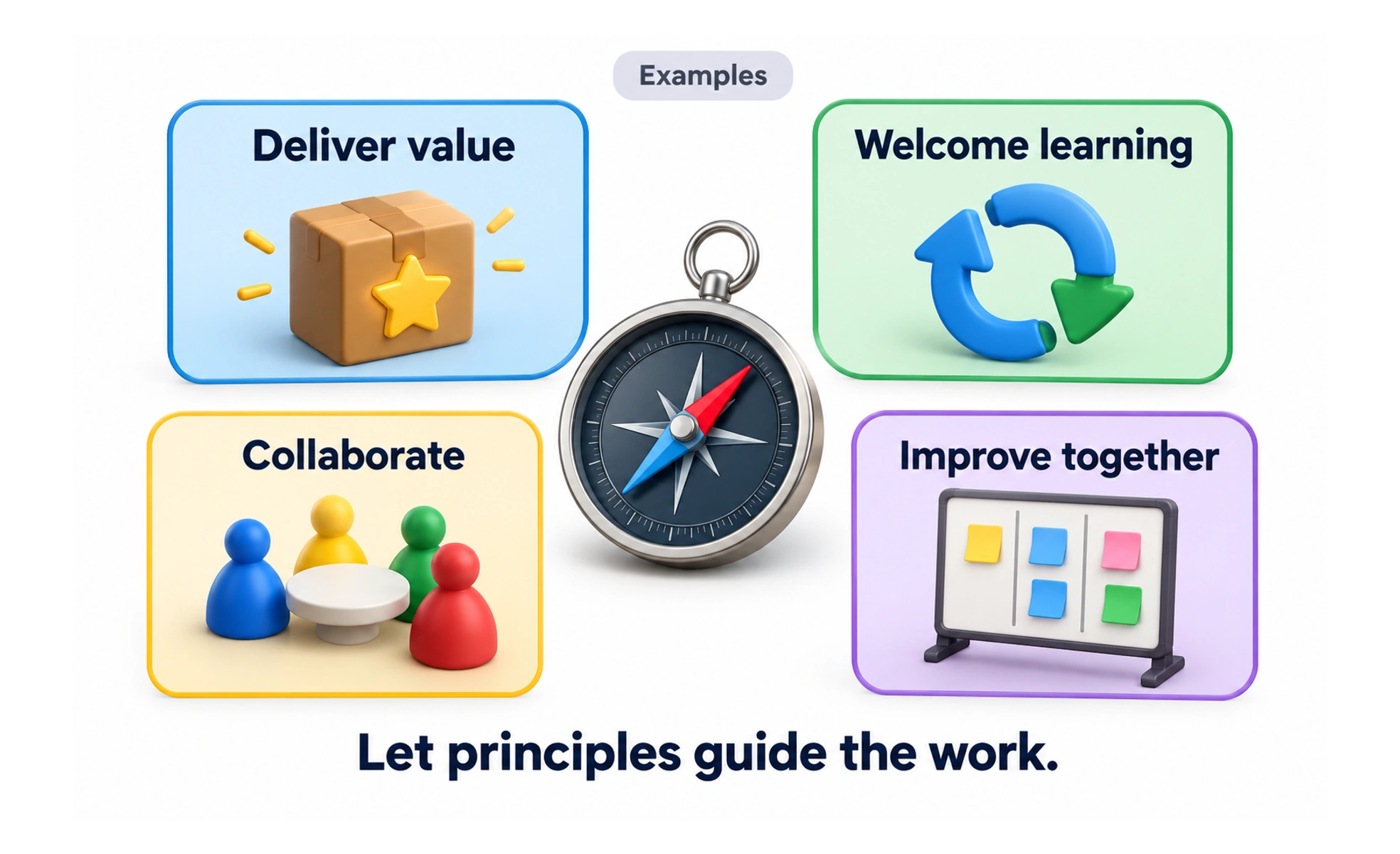
The principles behind the Agile Manifesto describe an approach to software work. They are not a required meeting schedule. A team can hold daily stand-ups and still struggle to learn or deliver anything useful.
Make progress visible through useful work
Instead of waiting until every idea is finished, choose a small piece of the product that can answer an important question. Keep it usable enough to learn from.
Imagine a team improving appointment changes. It could first let customers move one type of appointment, then learn where they get stuck. A collection of disconnected screens might show activity without helping a customer complete the task.
Use feedback to make the next decision
After trying the change, customers may reveal a need the team missed: moving an appointment also affects transport arrangements. The team can investigate that need and adjust what comes next.
Being adaptable does not mean accepting every request immediately. Discuss what changed, why it matters and which existing work would be displaced. A visible priority decision is more helpful than adding requests to an ever-growing list.
Keep the work sustainable
Short delivery cycles lose their value if each release creates avoidable errors or leaves the team exhausted. Include the time needed to understand the problem, build it well and check the result.
Designers can support this by bringing questions into the work early, sharing unfinished ideas and describing the states that a small release must handle. Engineering can explain constraints before the team commits to a solution that cannot work.
Look for learning, not a label
At the end of a cycle, ask what users could do, what evidence arrived and what the team will change. If nothing could be tried, the work may have been sliced too broadly or around internal departments.
Choose practices that help the team coordinate and improve. Calling a process Agile does not make its outcomes better; inspect the actual experience of delivering the work.
Frequently asked questions
Key takeaways
- Use small releases to answer practical questions.
- Treat feedback as a reason to reconsider priorities.
- Allow time for quality and a sustainable pace.
- Evaluate the way of working through its outcomes.