

Agile approaches organize work around small deliveries, collaboration, and learning from feedback. They help teams adapt a plan as they discover more about the problem and the product.
A cook tastes and adjusts a dish as it develops. Short learning cycles similarly let a team improve its approach before a large amount of work is committed.
Work in useful increments
Break work into pieces that can be completed, evaluated, and improved. A useful increment should reveal something about the product or deliver value, rather than merely divide a large project into disconnected tasks. Keep quality expectations clear so frequent delivery does not become frequent rework.
Choose practices for the situation
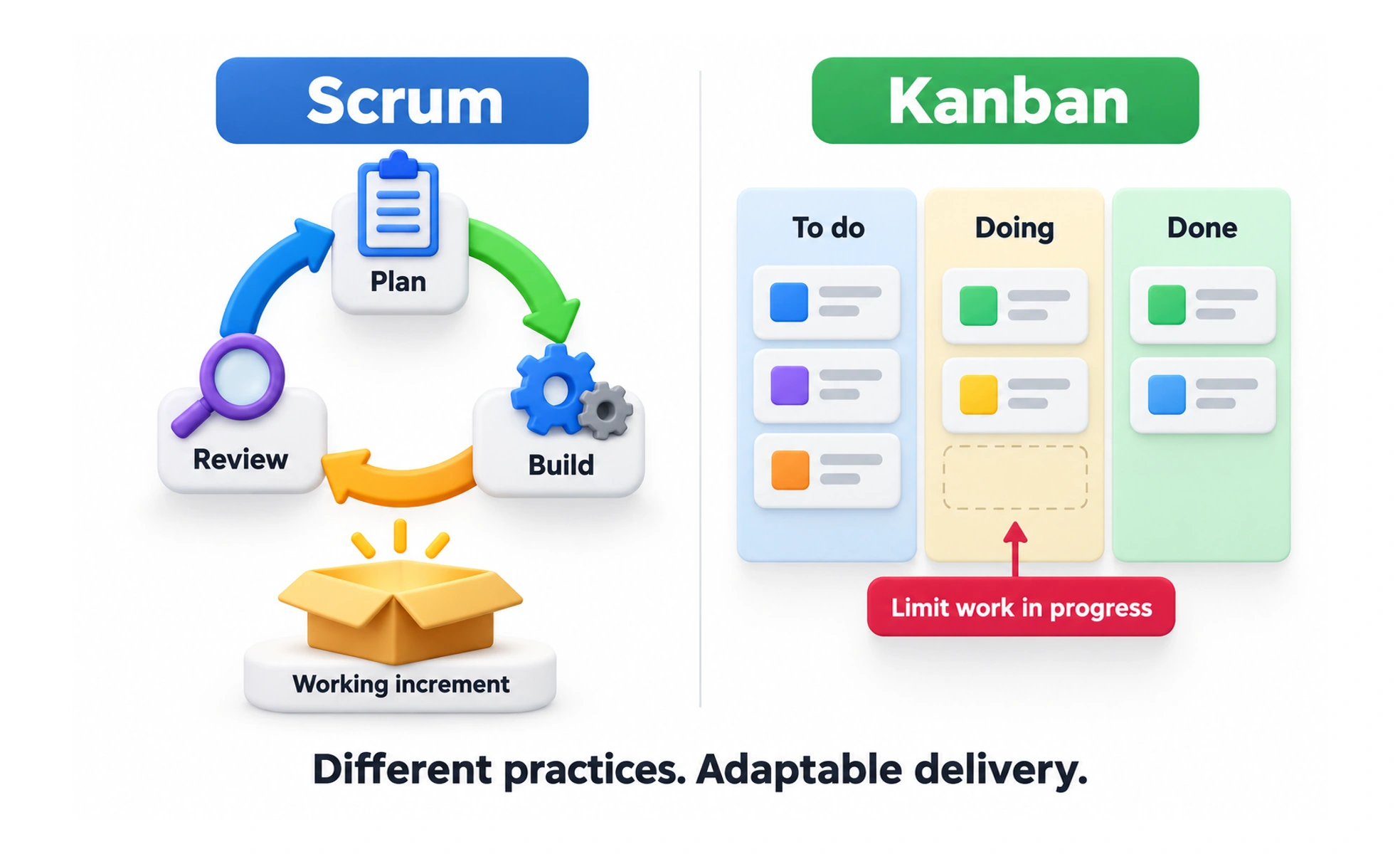
Scrum, Kanban, and other approaches provide different structures for organizing work. Understand the purpose of a practice before adopting its meetings or terminology. Teams with different constraints may need different ways to plan, limit work in progress, and gather feedback.
Keep planning and documentation useful
Agile work still needs clear goals, technical understanding, and shared decisions. Plan enough to make responsible choices, then revise the plan when evidence changes. Keep documentation that helps people build, operate, and understand the product instead of treating documentation itself as a measure of progress.
Example: improving onboarding
A team can investigate one onboarding barrier, release a focused improvement, and observe whether new learners reach a useful lesson more easily. The findings inform the next change. Shipping unrelated features every two weeks would not create the same learning loop simply because the calendar is regular.
Frequently asked questions
Key takeaways
- Deliver small increments that support value and learning.
- Understand the purpose of each adopted practice.
- Maintain clear goals and useful documentation.
- Adapt using evidence while preserving quality.